
Pre Stretched Screen Printing Frame Guide: What It Is, Benefits & How to Choose
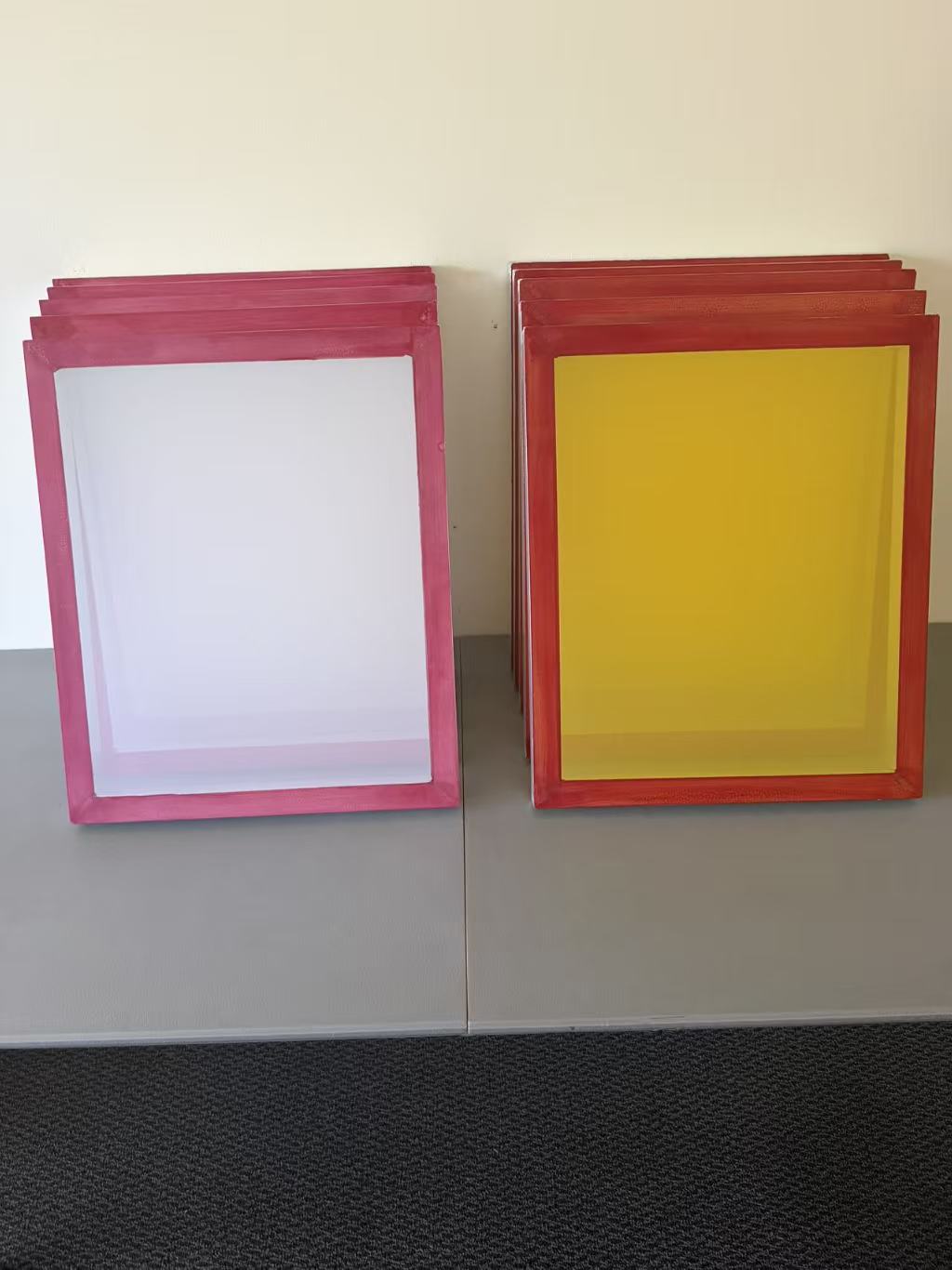
A pre stretched screen printing frame is an aluminum frame that arrives with screen mesh already tensioned and permanently bonded to it, so it is ready to expose and print without a separate stretching step. Mesh tension is typically factory-calibrated to 20–25 N/cm for consistent registration. Unlike wood frames wrapped and stapled by hand, pre-stretched aluminum frames resist warping and loosening over repeated wash-and-reclaim cycles. They are sold in standard sizes with mesh counts from 110 to 305, making them the standard choice for shops that want repeatable, professional prints without owning a stretching machine.

What Is a Pre-Stretched Screen Printing Frame?
A pre-stretched screen printing frame is a ready-to-use printing screen: an aluminum tube frame with polyester mesh already stretched to spec, glued and heat-bonded along the inside channel, then trimmed. You buy it, degrease it, coat it with emulsion, expose your artwork, and print — there is no stretching machine, no clamps, and no waiting for glue to cure.
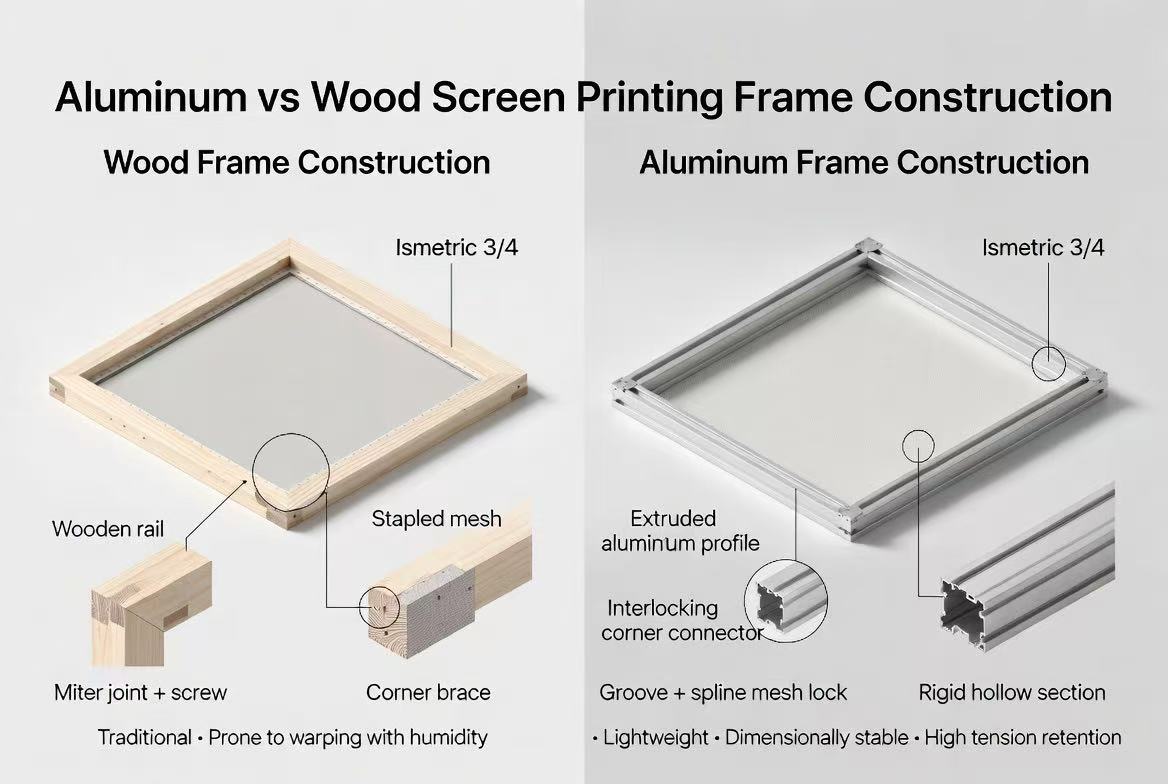
That's the core difference from a bare aluminum frame, which ships empty so you can stretch your own polyester screen mesh onto it (or re-mesh it later). It's also different from a traditional wood frame, which is stapled by hand and has no real tension consistency from one screen to the next.
Standard Construction
Most professional-grade pre-stretched frames on the market — including SHL Supply's pre-stretched aluminum frames — share the same basic build:
Aircraft-grade aluminum tube for the frame body, so it won't warp, swell, or rot the way wood can after repeated washouts. A sandblasted exterior surface that gives emulsion, tape, and blockout better adhesion. A reinforced corner joint that locks tension evenly on all four sides instead of concentrating stress at the staples, which is the most common failure point on wood frames. And monofilament polyester mesh, pre-stretched to 20–25 N/cm and bonded at the factory rather than by hand on a shop floor.

Why Tension Matters
Mesh tension is measured in newtons per centimeter (N/cm) with a tension meter. Below roughly 15 N/cm, mesh sags, off-contact distance becomes inconsistent, and you get poor registration and ink bleed under the stencil edges. Above about 28 N/cm, the mesh and the corner joints themselves come under stress that can crack a bond or warp a cheaper frame over time. Factory pre-stretched frames are built to sit inside the sweet spot — commonly 20–25 N/cm — every time, which is difficult to replicate consistently with a hand-stretched wood frame.

Benefits of Pre-Stretched Screen Printing Frames
Consistent Tension for Sharper Prints
Because the mesh is stretched and bonded under controlled, repeatable conditions, every frame in a batch holds close to the same tension. That means less trial-and-error dialing in squeegee pressure and angle from screen to screen, and sharper halftone and fine-line reproduction.
No Warping or Swelling
Aluminum doesn't absorb moisture from washout booths or humid shop air, so the frame stays square instead of cupping or twisting the way wood eventually does.
Saves Time and Equipment Cost
A stretching machine, tension meter, glue, and the labor to run them add real cost to an in-house stretching program. Buying pre-stretched frames removes that step entirely — you're printing the same day the frame arrives.
Repeatable Registration for Multi-Color Jobs
Multi-color and simulated-process jobs depend on every screen in the set holding the same registration pass after pass. Even, factory-set tension across a set of frames makes that far more predictable than screens stretched individually by hand.
Common Applications
Apparel and T-Shirt Printing
The most common use case: standard tee, hoodie, and youth-size graphics on manual or automatic presses, typically in the 110–200 mesh range for bold to medium-detail artwork.
Promotional and Product Printing
Koozies, tote bags, signage, and other promotional items often call for finer mesh (200–280) to hold small text and logos cleanly.
Industrial and Graphic Screen Printing
Circuit boards, decals, and fine-detail graphic work push into the highest mesh counts (280–305) for the tightest possible line resolution and simulated-process color work.
Mesh count is the single biggest variable in how a pre-stretched frame performs on a given job — it's worth understanding before you order. Our companion guide on how mesh count affects screen printing results and our screen printing mesh size chart both go deeper into matching mesh to artwork and ink type.
How to Choose the Right Pre-Stretched Frame
1. Frame Size
Match the frame to your largest regular print area, with margin for the platen clamps and off-contact travel. Standard sizes like 20"×24" (printable area under roughly 14"×18") and 23"×31" (printable area under roughly 17"×25") cover most tee and promotional work; jumbo prints, jackets, and multi-panel jobs need the larger option.
2. Mesh Count
Lower counts (110–160) lay down more ink for bold, opaque graphics and thick plastisol deposits. Mid-range counts (180–230) balance detail and ink coverage for most everyday tee work. Higher counts (280–305) are built for halftones, fine line art, and process-color printing where detail matters more than ink volume.
3. Tension Level
Confirm the tension spec (look for a stated N/cm range like 20–25) rather than taking "high tension" at face value — it's a marketing phrase without a number behind it. A stated, factory-tested range is the difference between a frame you can trust for registration and one you're guessing about.
4. Pre-Stretched vs. Bare, Re-Meshable Frames
If you print one or two mesh counts repeatedly, pre-stretched frames are the faster, lower-labor option. If your shop needs to swap mesh counts often or wants to reuse frames indefinitely, bare aluminum frames built for re-meshing paired with your own mesh fabric roll give you more long-term flexibility, at the cost of needing a stretching setup.
5. Domestic Stock vs. Custom Sizes
Standard sizes ship fastest. If your press or job calls for a nonstandard frame dimension or mesh combination, ask about custom and OEM options before you commit to a standard size that will fight your equipment.
Common Mistakes to Avoid
A few habits quietly shorten the life of an otherwise good frame. Using one mesh count for every job leads to washed-out bold prints or clogged fine detail — match mesh to the artwork instead. Stacking frames flat traps moisture between screens and can dent the mesh; store them vertically, on edge. Letting ink dry in the mesh between runs permanently clogs the openings, so wash out screens promptly. Re-tensioning a pre-stretched frame by hand to "fix" a slack feel usually stresses the corner joints instead of solving the problem, and can void a warranty. Printing a large image on an undersized frame crowds the image area and causes off-contact flooding at the edges. And aggressive, non-mesh-safe reclaiming chemicals break down the glue bond at the corners faster than normal wash-reclaim-print cycles should.
FAQs
Is a pre-stretched frame better than stretching my own?
For most shops, yes — factory tensioning is more consistent than hand-stretching, and it removes the cost of a stretching machine and tension meter. Shops that need to change mesh counts frequently or want frames they can re-mesh indefinitely may still prefer bare, re-meshable frames.
What mesh count should I start with?
110–160 for bold, thick-ink graphics; 200–230 for detailed art and general tee work; 280–305 for halftones and simulated process. See our mesh count guide for job-by-job recommendations.
How long does a pre-stretched frame last?
With normal use and mesh-safe reclaiming, aluminum pre-stretched frames commonly hold usable tension through hundreds of wash-and-reclaim cycles — well beyond the practical lifespan of a wood frame.
Can I re-mesh a pre-stretched aluminum frame once the mesh wears out?
Yes, provided the aluminum frame itself is undamaged. The tube can be stripped and re-stretched with new mesh, which is why many shops treat the frame as a long-term asset separate from the mesh on it.
What tension should I look for?
20–25 N/cm is a widely used target range for general screen printing. Ask any supplier for the stated N/cm range rather than relying on a "high tension" label alone.
What sizes are available?
Common stock sizes include 20"×24" and 23"×31", with custom and OEM sizes available for nonstandard press setups — ask before ordering if your job doesn't fit a standard frame.
Do pre-stretched frames work with both plastisol and water-based ink?
Yes. Look for a frame rated for both water-based and solvent-based inks so corrosion resistance isn't a limiting factor as your shop's ink mix changes.
How fast can I get pre-stretched frames in the U.S.?
Suppliers with domestic warehouse stock can typically ship standard sizes within 48 hours, versus weeks for overseas freight on custom orders.
Ready to Order Pre-Stretched Frames?
SHL Supply stocks pre-stretched aluminum screen printing frames in standard sizes with mesh counts from 110 to 305, ready to ship from our Santa Fe Springs, CA warehouse within 48 hours — with local pickup available if you're nearby. Need a size or mesh combination outside our standard lineup? We offer custom sizing and OEM frame builds for shops with nonstandard press setups or recurring bulk orders.
Browse the full pre-stretched frame lineup, pair it with squeegee blades and the rest of our screen printing supplies catalog, or contact our team for a custom size or OEM quote.

Leave a comment
This site is protected by hCaptcha and the hCaptcha Privacy Policy and Terms of Service apply.