
How to Choose the Right Mesh Count for Screen Printing
To choose the right screen printing mesh count, match it to three things: your ink type and deposit needs, how much detail is in the artwork, and the fabric color you're printing on. As a starting point, use 110–160 mesh for bold graphics and dark garments that need heavy, opaque ink coverage; 180–230 mesh for standard tee graphics and most everyday jobs; and 280–305 mesh for halftones, fine line art, and simulated process work where detail matters more than ink volume. Getting this one spec right affects registration, ink lay-down, and how clean your finished print looks more than almost any other setup decision.
What Is Mesh Count?
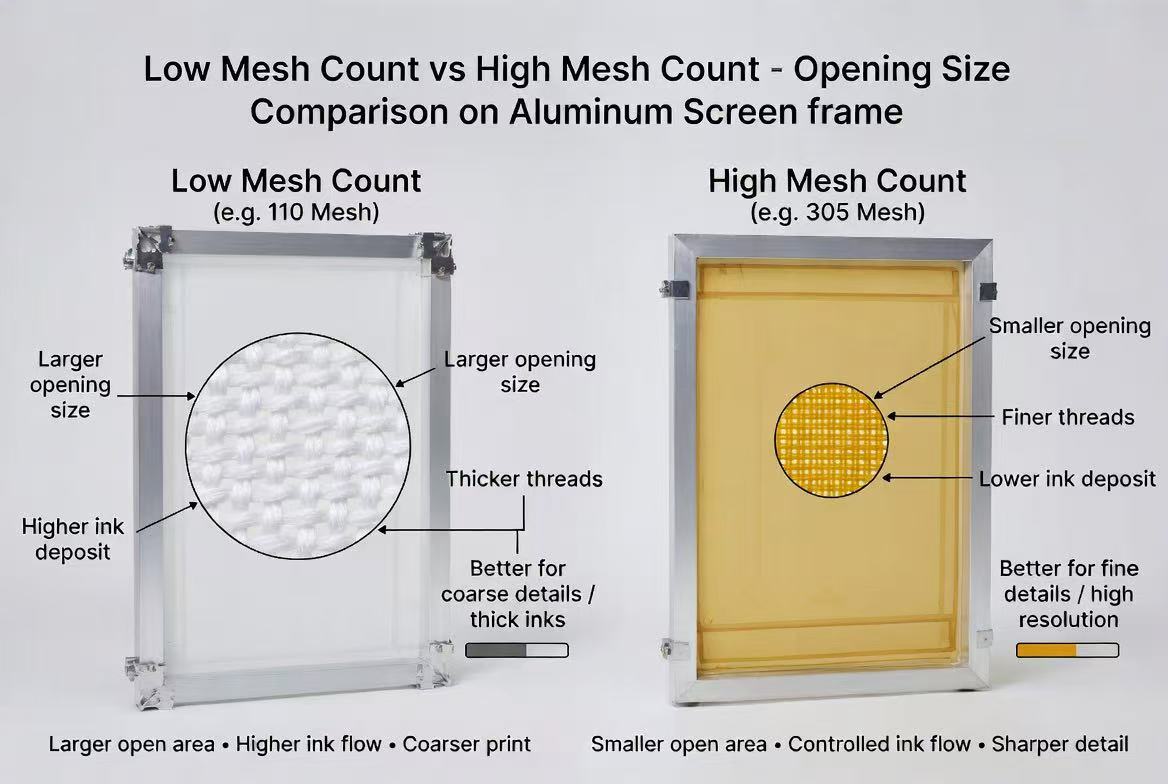
Mesh count is the number of threads woven into one linear inch of screen printing mesh, in both directions. A 110 mesh screen has about 110 threads per inch; a 305 mesh screen has about 305. More threads per inch means smaller openings between them — which is the entire reason mesh count matters for print quality.
Smaller openings let less ink pass through per print stroke, which is why low mesh counts (large openings) lay down thick, opaque ink and high mesh counts (small openings) lay down thin layers capable of holding fine detail. Every mesh count decision comes back to that one tradeoff: ink volume versus resolution.

Mesh Count by Common Application
110–160 mesh is the range for bold one- or two-color graphics, thick plastisol deposits, and printing on dark garments that need a heavy, opaque underbase. 180–230 mesh is the everyday range for standard tee graphics — enough detail for most logos and text while still laying down solid color. 280–305 mesh is built for halftones, fine line art, small text, and simulated process or CMYK work, where holding detail matters more than ink thickness.
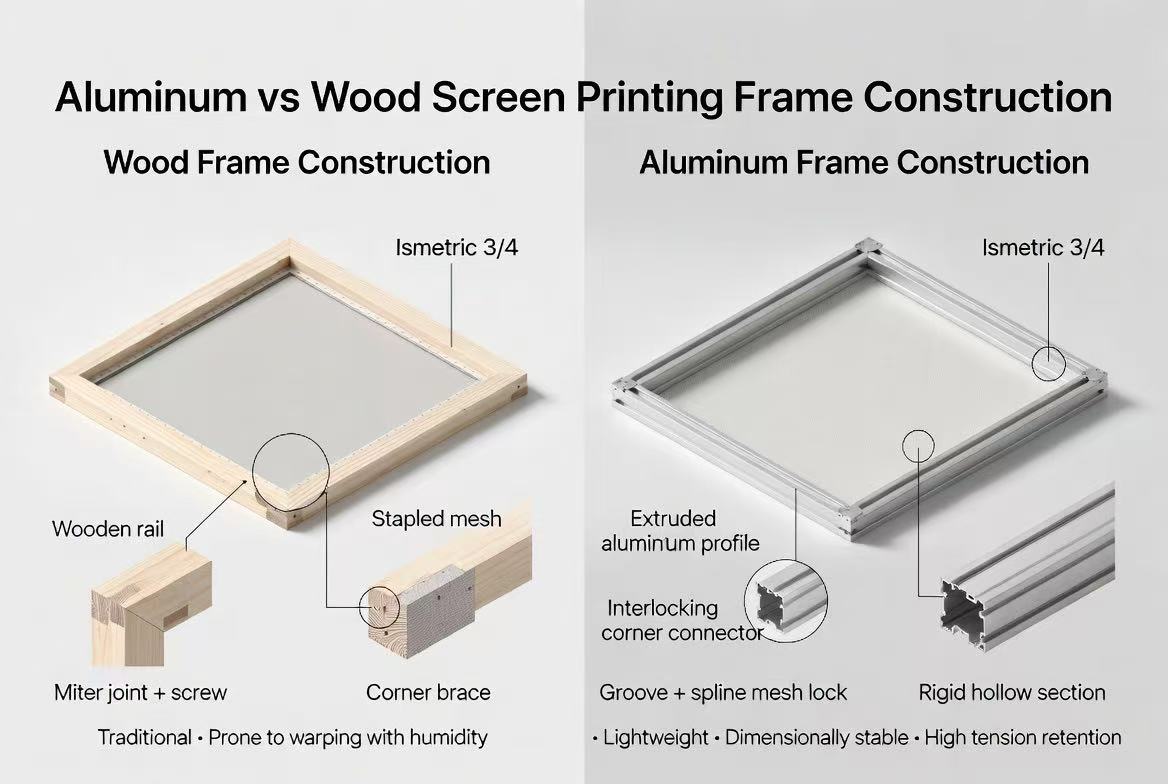
These ranges line up with the mesh counts available on SHL Supply's pre-stretched aluminum frames (110, 160, 200, 230, 280, and 305), so you can match a frame to the job directly off this chart. For a deeper breakdown by ink and fabric type, see our companion guides on how mesh count affects screen printing results and our full screen printing mesh size chart.
How to Choose the Right Mesh Count

1. Start With Ink Type
Thick plastisol ink needs more open mesh to pass through cleanly — lean toward lower counts (110–200) unless the artwork demands more detail. Thinner inks like water-based or discharge can run on higher counts (200–280) since they flow through smaller openings more easily.
2. Match Artwork Detail Level
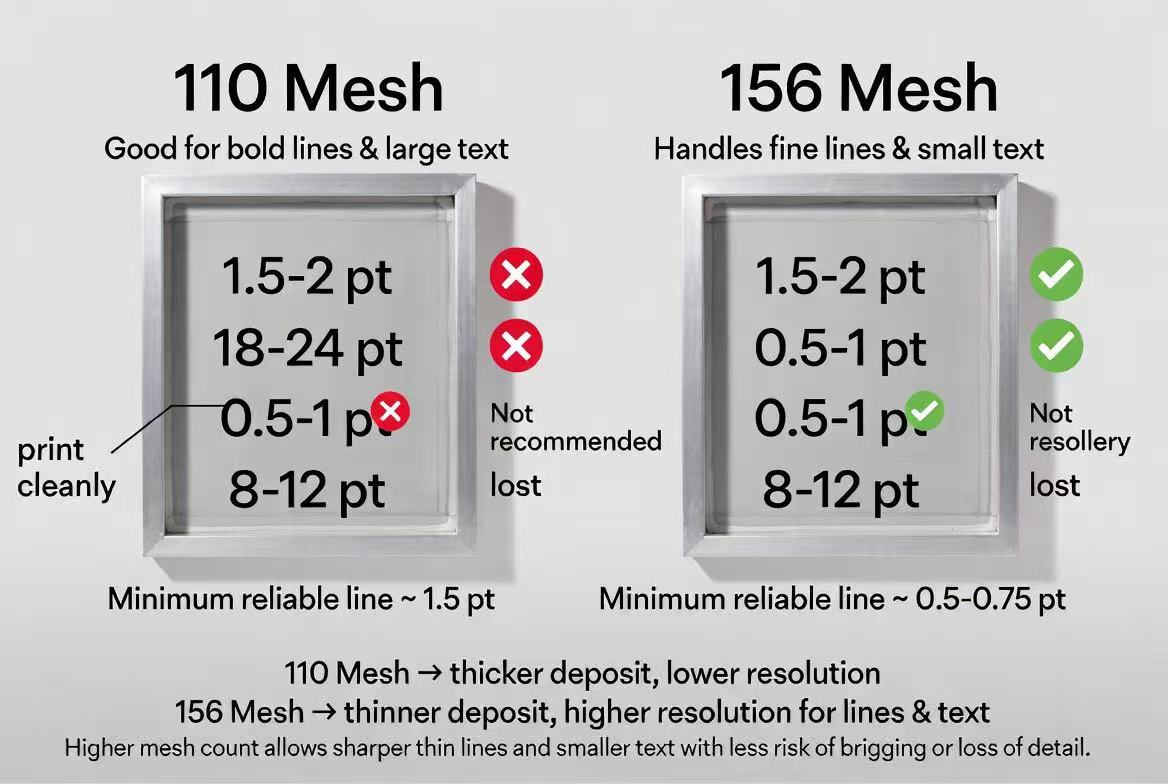
Bold logos and block text hold up fine on low mesh counts. Small text, thin outlines, and halftone gradients need the finer openings of 230+ mesh to reproduce cleanly — printing detailed art on too low a mesh count is one of the most common causes of blurry or filled-in prints.
3. Account for Fabric Color
Dark garments usually need an opaque white or color underbase to make the top colors pop, and that underbase needs a lower mesh count (110–160) to lay down enough ink for full coverage. Light garments can skip the underbase and use a higher mesh count, since opacity is less of a concern.
4. Keep Multi-Color Sets Consistent
For simulated process or CMYK jobs, using a consistent mesh count across your color stations (with the underbase as the deliberate exception) keeps ink deposit and registration predictable from screen to screen. Mixing mesh counts arbitrarily across a color set is a common source of muddy or inconsistent color builds.
Common Mistakes When Choosing Mesh Count
Using the same mesh count for every job regardless of artwork, which either washes out fine detail or under-deposits ink on bold graphics. Ignoring fabric color and using a high mesh count on a dark garment, resulting in a thin, see-through print. Guessing at tension instead of checking it — a low mesh count screen with poor tension can perform worse than a properly tensioned higher count screen. Mixing mesh counts across a multi-color set without a reason, which throws off registration and ink balance. And not accounting for ink type, since plastisol and water-based inks behave differently at the same mesh count.

FAQs
What mesh count is best for beginners?
180–200 mesh is a reasonable all-purpose starting point for standard tee graphics — detailed enough for most designs while still forgiving on ink deposit.
Can I use one mesh count for every job?
You can, but it means compromising either on ink coverage for bold graphics or on detail for fine artwork. Most shops keep at least two or three mesh counts on hand to cover their typical job range.
What mesh count is best for dark shirts?
110–160 mesh for the white or color underbase, since dark garments need a heavier, more opaque ink layer to block the fabric color underneath.
What mesh count should I use for halftones?
230–305 mesh, depending on how fine the halftone dot pattern is. Finer dot patterns and simulated process work generally push toward the higher end of that range.
Does mesh count affect print durability?
Indirectly. Too low a mesh count for a detailed design can cause ink bridging and detail loss, while too high a count for the ink type can starve the print of enough ink to cure and adhere properly. Matching mesh count to ink and artwork supports both looks and durability.
Do I need different mesh counts for plastisol vs. water-based ink?
Often yes. Water-based and discharge inks are thinner and can run on higher mesh counts than plastisol would for the same design, since they pass through smaller openings more easily.
How is mesh count different from thread diameter?
Mesh count is threads per inch; thread diameter is how thick each individual thread is. Two screens with the same mesh count can still behave differently if their thread diameters differ, since that changes the open area available for ink.
Every Mesh Count, Ready to Ship
SHL Supply stocks pre-stretched aluminum screen printing frames in 110, 160, 200, 230, 280, and 305 mesh, plus polyester mesh fabric rolls if you stretch your own on a bare aluminum frame — all shipped from our Santa Fe Springs, CA warehouse within 48 hours, with local pickup available. Need a mesh count or frame combination outside our standard lineup? We offer custom and OEM builds on request.
Browse the full mesh count lineup, add squeegee blades from our screen printing supplies catalog, or contact our team for help matching mesh count to your next job.

Leave a comment
This site is protected by hCaptcha and the hCaptcha Privacy Policy and Terms of Service apply.