
Aluminum vs Wood Screen Printing Frames: Which Should You Choose?
Aluminum screen printing frames use a lightweight metal tube that holds mesh tension consistently and resists warping, moisture, and rot, while wood frames are cheaper upfront but stretched by hand, prone to swelling in humid or wet shop conditions, and lose tension faster over repeated wash-and-reclaim cycles. For shops printing regularly, aluminum frames cost more per frame but last far longer and register more consistently, making them the standard for professional and production work. Wood frames still make sense for one-off jobs, students, or hobbyists on a tight budget who don't need long-term durability.
What's the Difference Between Aluminum and Wood Screen Printing Frames?
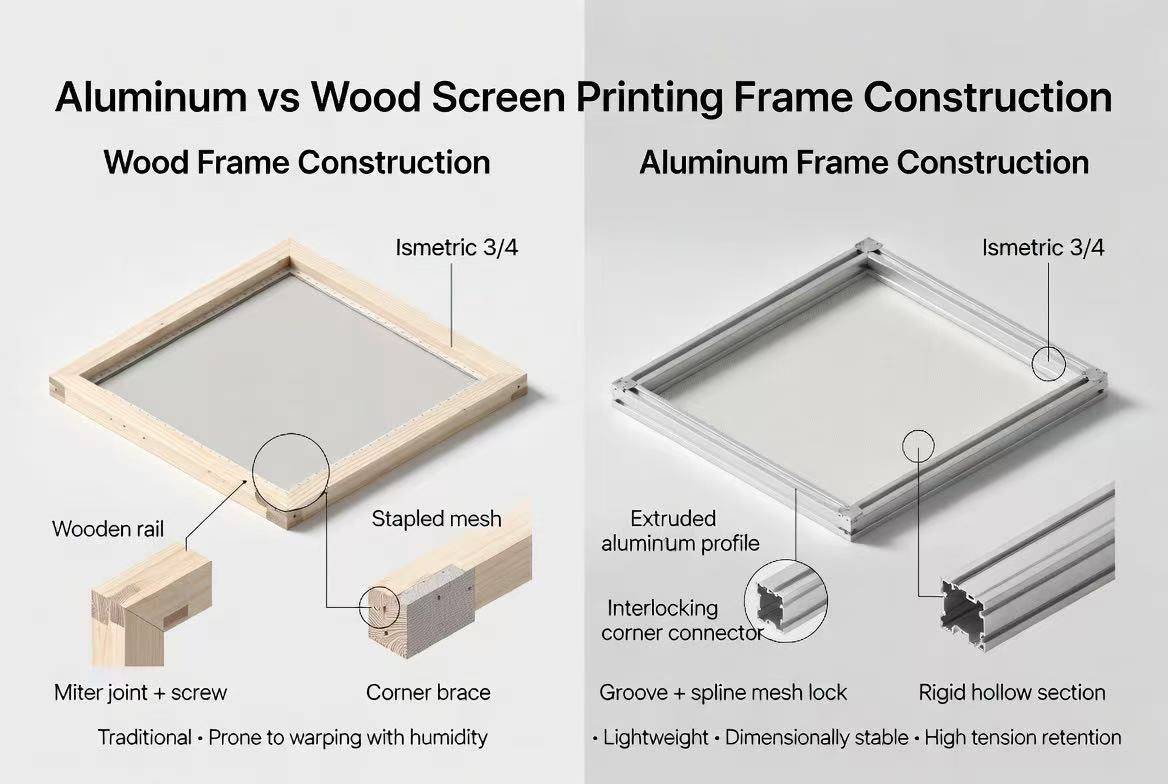
Both frame types do the same job — hold stretched mesh at the right tension so you can expose a stencil and pull ink through it. The difference is in the material and how the mesh gets attached.
Aluminum frames use a hollow aluminum tube, typically sandblasted for adhesion, with mesh either pre-stretched and bonded at the factory or hand-stretched onto a bare re-meshable aluminum frame using a stretching machine and glue. Wood frames use a solid or laminated wood tube with mesh stapled directly to the wood and sealed with glue or lacquer, almost always done by hand on the shop floor.
That construction difference is what drives every practical difference between them: tension consistency, moisture resistance, weight, and how long the frame lasts in daily use.
Aluminum Screen Printing Frames: Pros and Cons
Pros
Aluminum won't warp, swell, or rot from washout water or shop humidity, so it holds registration consistently over its working life. Factory pre-stretched aluminum frames hold tension in a tight, repeatable range (commonly 20–25 N/cm) instead of varying screen to screen. The bonded corner joint distributes tension evenly on all four sides rather than concentrating stress at staples, which is the most common failure point on a wood frame. Aluminum is also lighter per equivalent frame size, and the bare tube can be re-meshed repeatedly, so a single frame can outlast many mesh replacements.
Cons
Aluminum frames cost more upfront than wood, whether bought pre-stretched or bare. And if the tube itself is bent or dented in a serious drop, it's harder to repair than simply re-stapling a wood frame.
Wood Screen Printing Frames: Pros and Cons

Pros
Wood frames are inexpensive and easy to find, which makes them a reasonable entry point for students, hobbyists, or anyone printing occasionally rather than running daily production. They're also simple to build and re-mesh yourself with basic tools if you're comfortable stapling and gluing mesh by hand.
Cons
Wood absorbs moisture from washout booths and humid air, which causes cupping and twisting over time — once a wood frame warps, registration suffers permanently. Hand-stapled mesh tension varies from screen to screen and is difficult to verify without a tension meter. Staples work loose with repeated wash-and-reclaim cycles, and a loosened corner usually means the frame is done. Wood frames are also heavier and bulkier than an aluminum frame of the same working size.
Aluminum vs Wood: Side-by-Side Comparison
The clearest way to see the difference is in how each frame holds tension over repeated use. Aluminum frames decline gradually and stay well within a printable range for hundreds of cycles. Wood frames start lower and drop off quickly as the wood absorbs moisture and the staples work loose — many wood frames fall below a usable tension well before 75 wash-and-reclaim cycles.
That tension curve is also why aluminum frames are typically treated as a long-term shop asset — re-meshed and reused for years — while wood frames are usually treated as consumable and replaced once tension or registration drifts.
Which Frame Is Right for Your Shop?
Production shops printing daily or weekly runs are almost always better served by aluminum — the consistent tension and long lifespan pay for the higher upfront cost quickly once you factor in labor and replacement frequency. Multi-color and simulated-process jobs benefit even more, since registration across a screen set depends on every frame holding tension the same way.
Wood frames still have a place for classroom settings, one-off craft projects, or anyone testing screen printing before investing in equipment. If you outgrow that stage, moving to pre-stretched aluminum frames or bare aluminum frames with your own mesh is a straightforward upgrade.
How to Choose Between Aluminum and Wood
Production Volume
Printing weekly or running multi-color jobs favors aluminum's tension consistency. Occasional single-color printing can get by on wood.
Budget
Wood wins on upfront cost per frame. Aluminum tends to win on cost-per-print once you account for how many wood frames you'll replace over the same period.
Storage and Shop Environment
Humid shops, washout booths, and shared spaces where frames sit for days between uses are hard on wood. Aluminum is the safer choice anywhere moisture is a factor.
Mesh Count Needs
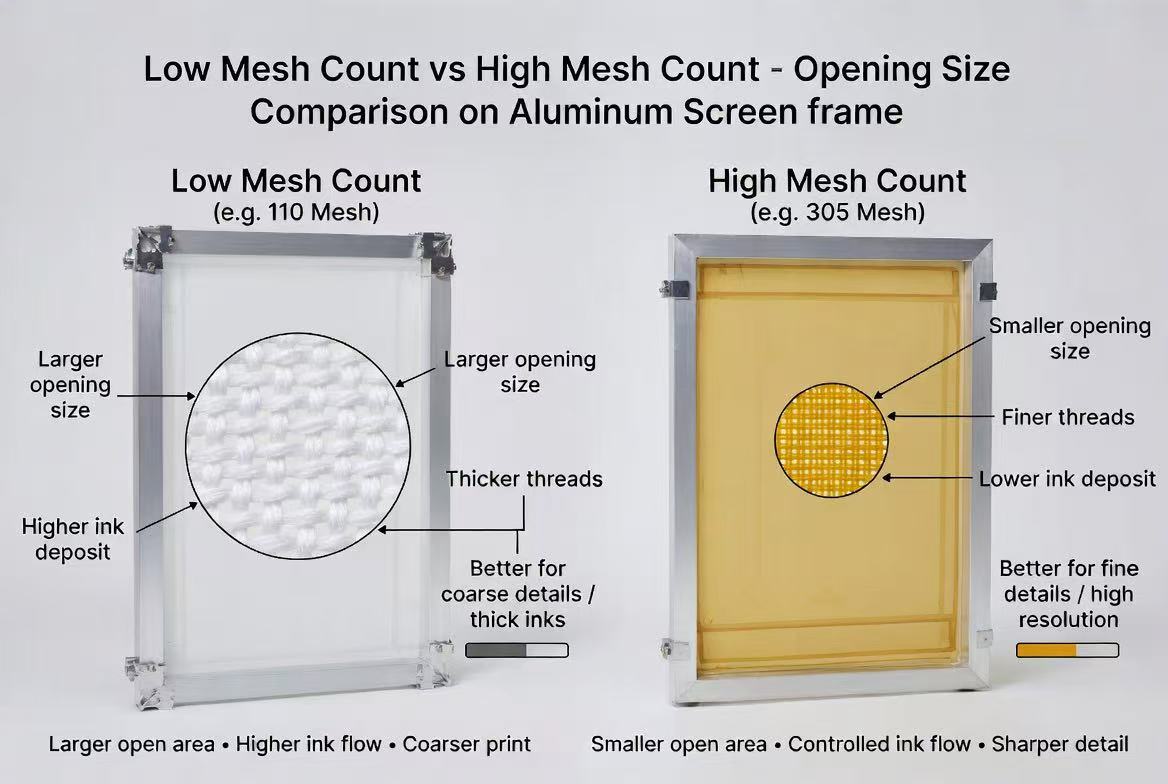
Whichever frame material you choose, matching mesh count to the job still matters more than the frame material itself for print quality. See our guide on how mesh count affects screen printing results and our screen printing mesh size chart to match mesh to your artwork.
Common Mistakes When Comparing or Switching Frame Types
Assuming "high tension" on a listing means the same thing across suppliers — always look for a stated N/cm range rather than the phrase alone. Storing either frame type flat, which traps moisture against wood and can dent mesh on aluminum; store frames vertically, on edge. Skipping a tension meter when hand-stretching mesh on a wood or bare aluminum frame, which makes it impossible to know if you're in a printable range. Reclaiming a wood frame with harsh, non-mesh-safe chemicals, which accelerates staple and glue failure. And buying wood frames for a production schedule that actually calls for aluminum, then re-buying wood frames every few months instead of paying once for aluminum.
FAQs
Is aluminum really better than wood for screen printing?
For regular or production printing, yes — aluminum holds tension more consistently and lasts far longer. For occasional or one-off printing, wood is a reasonable, lower-cost option.
How much more do aluminum frames cost than wood?
Aluminum frames typically cost more per frame upfront than wood. The gap narrows or reverses over time because aluminum frames last for hundreds of wash-and-reclaim cycles instead of tens.
Do wood frames really warp that easily?
Yes, especially in humid shops or when frames sit wet after washout. Even sealed wood absorbs some moisture over repeated exposure, and once a frame cups or twists, registration suffers permanently.
Can I convert a wood frame setup to aluminum without buying a stretching machine?
Yes — pre-stretched aluminum frames arrive with mesh already tensioned and bonded, so you can switch without owning a stretching machine or tension meter.
Is a bare aluminum frame better than a pre-stretched one?
Neither is universally "better" — bare frames give you flexibility to change mesh counts yourself, while pre-stretched frames save labor and guarantee factory-consistent tension. Shops that stretch their own mesh often still choose aluminum tubing for the frame itself, for the same warping and durability reasons.
How do I know if my frame's tension is too low?
Sagging mesh, inconsistent off-contact distance, ink bleeding under stencil edges, or a noticeably "loose" feel when you press on the mesh are all signs tension has dropped below a printable range. A tension meter gives an exact reading.
Are aluminum frames harder to store than wood?
No — if anything, aluminum frames are easier to store since they're lighter and don't need to be kept away from moisture the way wood does. Store either type vertically rather than flat.
Ready to Switch to Aluminum Frames?
SHL Supply stocks pre-stretched aluminum screen printing frames in standard sizes with mesh counts from 110 to 305, plus bare aluminum frames for shops that stretch their own mesh — all shipped from our Santa Fe Springs, CA warehouse within 48 hours, with local pickup available. Need a nonstandard size or a bulk order? We offer custom sizing and OEM frame builds on request.
Browse the full aluminum frame lineup, pair it with polyester screen mesh and squeegee blades from our screen printing supplies catalog, or contact our team for a custom size or OEM quote.

Leave a comment
This site is protected by hCaptcha and the hCaptcha Privacy Policy and Terms of Service apply.