110 Mesh vs 156 Mesh: Which One Is Better?
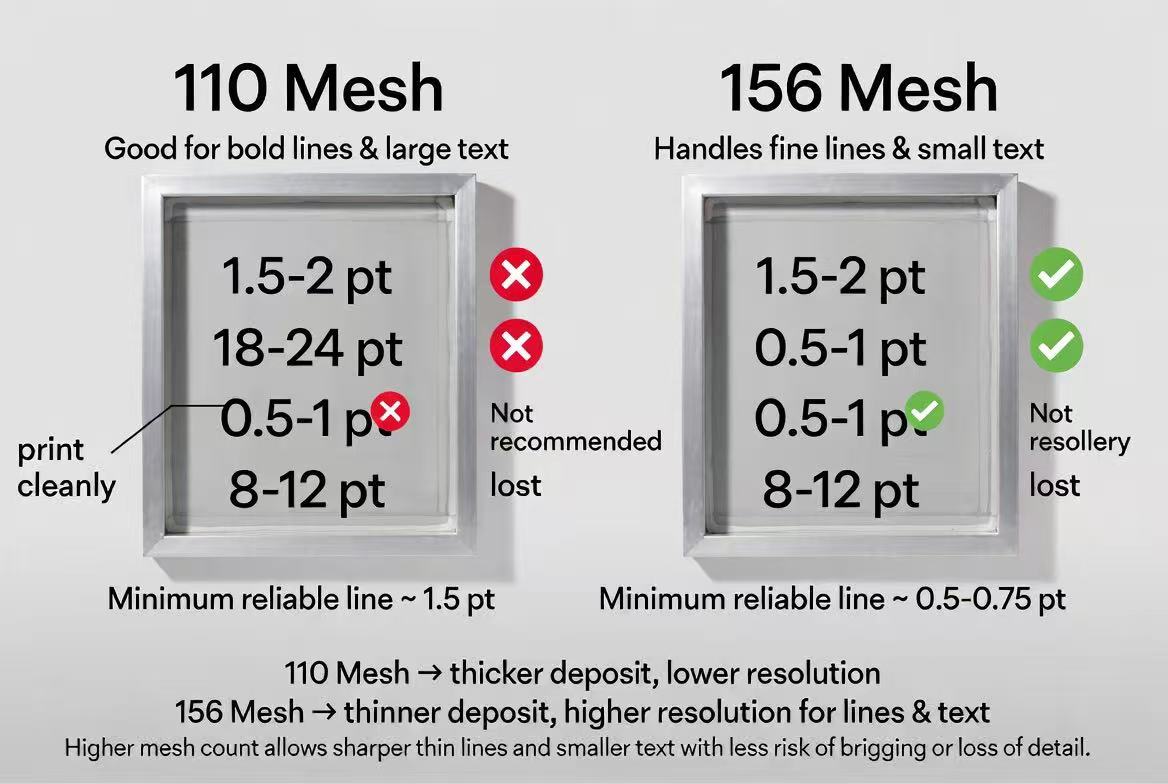
110 mesh and 156 mesh are both low-count screen printing meshes built for heavy ink deposits, but they aren't identical. 110 mesh has the largest openings of the common mesh counts and lays down the most ink, making it the standard choice for opaque underbases on dark garments and bold, thick one-color graphics. 156 mesh sits just above it — still a heavy-deposit mesh, but with enough extra thread density to hold slightly finer lines and text while still printing solid, opaque color. Neither is "better" across the board; the right pick depends on how much detail your artwork has and whether you're printing an underbase or a top color.

What's the Difference Between 110 and 156 Mesh?
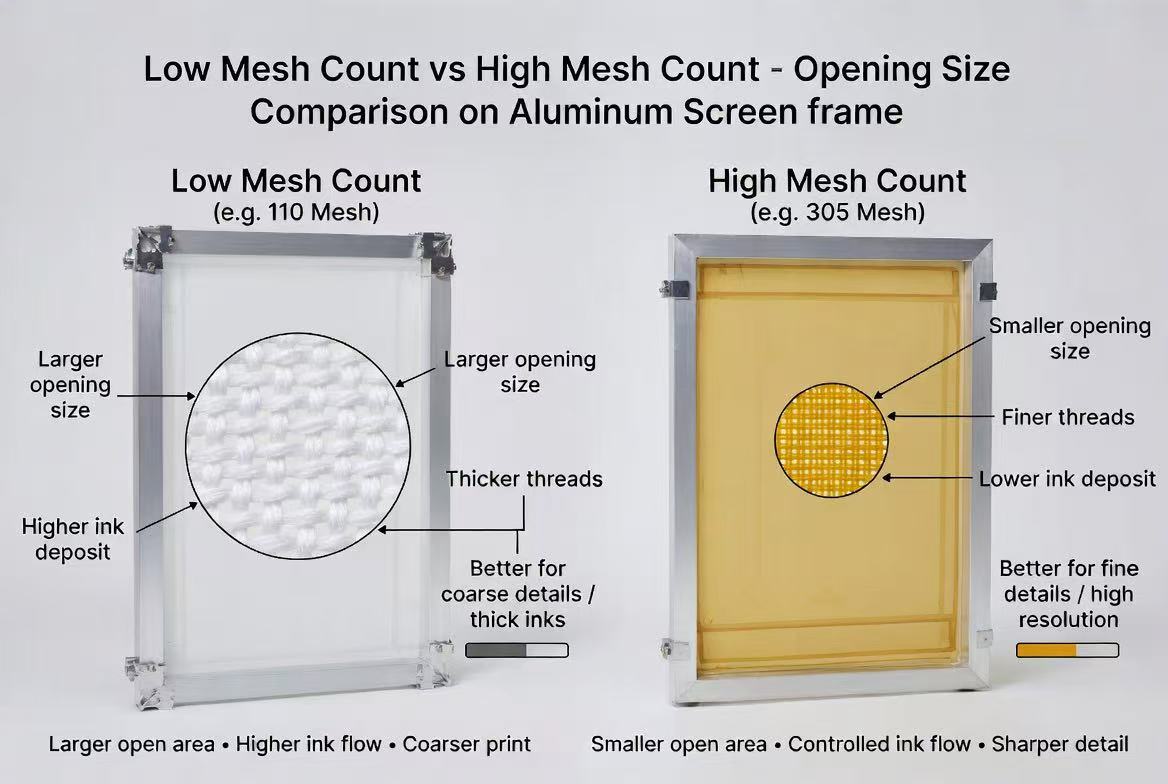
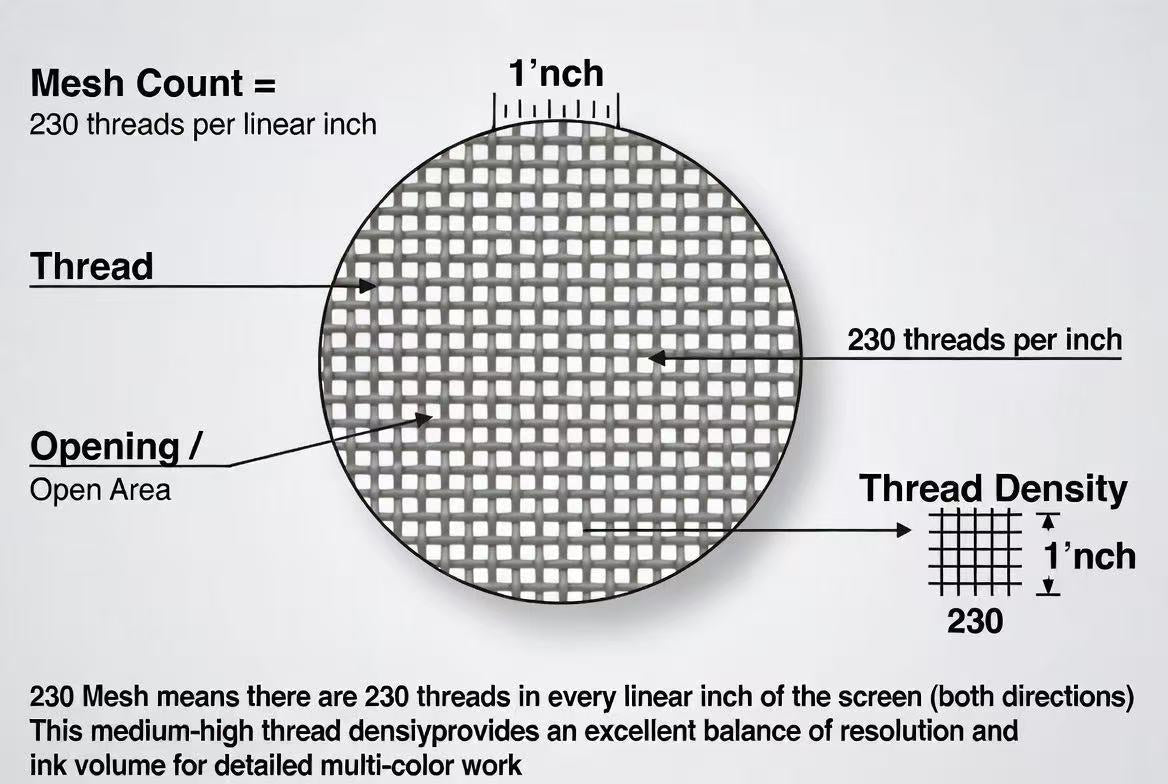
Both are low mesh counts relative to the full range used in screen printing (which runs up to 305+ for fine detail work), so both fall into the "heavy ink deposit" category. The difference between them comes down to thread density: 156 mesh has roughly 40% more threads per linear inch than 110 mesh, which makes its openings somewhat smaller.
Smaller openings mean less ink passes through per stroke, so 156 mesh holds slightly finer lines and smaller text more cleanly than 110 mesh — while still printing enough ink to stay opaque on most jobs. 110 mesh keeps the largest openings of the two, which is why it remains the default for underbases and glitter or shimmer inks that need the biggest possible opening to pass through cleanly.
110 Mesh: Pros, Cons, and Best Uses
110 mesh lays down the heaviest ink deposit of any commonly stocked mesh count, which makes it the standard for white or color underbases on dark garments, bold one- or two-color logos, and specialty inks like glitter, shimmer, or high-density that need maximum open area to pass through the screen. The tradeoff is detail: small text, thin outlines, and fine line art tend to fill in or lose their crisp edges at 110 mesh.
156 Mesh: Pros, Cons, and Best Uses
156 mesh keeps most of 110's ink-laying power while holding noticeably cleaner small text and thinner lines, which makes it a good fit for standard one- to two-color tee graphics that include some fine detail — logos with text, outlined artwork, or designs that mix bold shapes with finer elements. It's less ideal as an underbase mesh on very dark garments, where 110's larger openings still deliver more reliable opacity in a single pass.
Best Use Cases for Each
A common production pattern uses both mesh counts together rather than picking one over the other: print the opaque underbase with 110 mesh, flash-cure it, then print the detailed top color with 156 mesh for a sharper finished edge.
How to Choose Between 110 and 156 Mesh
Start With the Job
If you're printing an opaque underbase on a dark garment, or running glitter, shimmer, or high-density ink, 110 mesh is the safer default. If you're printing a standard one- or two-color design with any small text or fine lines, 156 mesh will hold that detail more cleanly while still laying down solid color.
Check the Artwork, Not Just the Ink
Bold shapes and thick block letters print fine on either mesh. The deciding factor is usually the smallest detail in the design — thin outlines, small type, or fine linework push the decision toward 156 mesh.
Consider Whether You Need Both
For multi-layer prints on dark garments, stocking both 110 and 156 mesh frames lets you use the right mesh for each layer instead of compromising on either opacity or detail. For a broader look at how mesh count fits into an entire job, see our guides on how mesh count affects screen printing results and how to choose the right mesh count.
Common Mistakes
Using 110 mesh for a design with fine text or thin outlines and wondering why the detail fills in — that's a mesh count mismatch, not a technique problem. Using 156 (or higher) mesh for a heavy underbase on a very dark garment and getting a thin, translucent base coat. Assuming one mesh count works for every layer of a multi-color print instead of matching mesh to each layer's job. And not checking actual tension on either mesh count — a poorly tensioned 156 mesh screen can underperform a well-tensioned 110 mesh screen even on detailed art.
FAQs
Is 156 mesh finer than 110 mesh?
Yes. 156 mesh has more threads per inch than 110 mesh, which means smaller openings and the ability to hold slightly finer detail, though both are considered low, heavy-deposit mesh counts.
Can I use 156 mesh instead of 110 for an underbase?
You can, but 110 mesh's larger openings generally give more reliable opacity in a single pass on dark garments. 156 can work for lighter dark colors or when you're willing to add a second underbase pass.
Which mesh count is better for glitter ink?
110 mesh, since glitter particles need the largest possible opening to pass through the screen without clogging.
Do 110 and 156 mesh need different squeegee pressure?
Not dramatically, but many printers use slightly firmer pressure and a sharper squeegee angle on the finer 156 mesh to avoid over-depositing ink and losing detail.
Can I print the same design entirely on 156 mesh instead of using both?
Often yes, if the design doesn't require a full opaque underbase on a very dark garment. Many one- and two-color designs on lighter garments print fine entirely on 156 mesh.
Is 110 or 156 mesh more common in shops?
Both are common. Production shops that print on dark garments regularly often keep 110 mesh on hand for underbases and a slightly higher count like 156 or 160 for top colors.
Does SHL Supply stock 156 mesh specifically?
Our pre-stretched frame lineup currently stocks 110 and 160 mesh — 160 is the closest stocked equivalent to 156 and performs almost identically for top-color and standard detail work. Contact us if your job specifically requires 156.
Ready to Order the Right Mesh Count?
SHL Supply stocks pre-stretched aluminum screen printing frames in 110 and 160 mesh (our closest stocked match to 156), plus 200, 230, 280, and 305 for finer work — all shipped from our Santa Fe Springs, CA warehouse within 48 hours, with local pickup available. Need 156 mesh specifically or another custom combination? We offer custom sizing and OEM builds on request.
Browse the full mesh count lineup, add polyester screen mesh or a bare aluminum frame for your own stretching, pick up squeegee blades from our screen printing supplies catalog, or contact our team for help matching mesh count to your next job.

Leave a comment
This site is protected by hCaptcha and the hCaptcha Privacy Policy and Terms of Service apply.