
Beyond Stickers: 6 More Products You Can Make With a UV DTF Printer
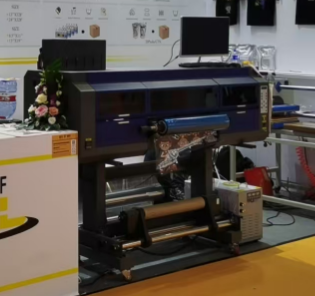
Everything up to this point — what UV DTF is, why it's taking off, how it compares to vinyl and DTF, and how to set up production — has centered on one product: the die-cut sticker. But a UV DTF printer doesn't actually know or care that it's making "a sticker." It's printing full-color, UV-cured graphics onto adhesive film, and that film can be cut, sized, and applied to essentially any hard, non-porous surface. Once that clicks, the die-cut sticker starts to look less like the whole business and more like the first product in a much wider lineup.
This article walks through six more products the same core equipment can produce — including one that isn't a sticker at all, and closes the loop with the TPU embroidery side of what we cover on this site..
1. Tumbler & Water Bottle Wraps
A tumbler wrap is the same UV DTF film and printer as a small die-cut sticker — just sized and gang-sheet-laid-out to cover most or all of a tumbler's surface (common sizes track standard 16oz, 20oz, and 40oz tumblers) instead of a single small logo. This is arguably the single hottest UV DTF product category right now, driven heavily by gifting, weddings, and corporate swag: a full-wrap design turns a $10 blank tumbler into a $25–$40 personalized gift with essentially the same production time as a small sticker.
Because it's the same core process, adding wraps to a sticker-focused shop doesn't require new equipment — just wider film (to cover full-wrap sizes) and gang-sheet templates cut to match popular tumbler dimensions. Wedding and event season tends to spike demand for this category specifically (custom favor tumblers, bridal party gifts, team or group orders), which makes it a good product to have ready before peak booking months rather than scrambling to add it once requests start coming in.
2. Phone Case Decals
Phone case decals are a smaller, faster product with a built-in reason for repeat purchases: people update their phone case designs the way they update outfits, and a new phone (or a scratched case) creates a natural reorder trigger. The appeal for a shop is turnaround speed — a phone case decal is a small print, quick to cut, and cheap enough in materials to test a lot of designs without much risk.
This category also pairs well with seasonal and trend-driven designs, since the low cost per piece makes it reasonable to print small batches tied to a holiday, trend, or fandom moment and retire them quickly if they don't sell. Because the file setup barely changes between a phone case decal and a small sticker, this is usually the easiest add-on category for a shop already producing stickers — it's really a sizing and cut-file decision more than a new production skill.
3. Packaging & Labels
Not every UV DTF product has to be the star of the order — plenty of the opportunity here is B2B: branded labels and packaging accents for other small businesses. A candle maker, a soap company, a bakery, or any small consumer brand needs branded labels on boxes, jars, or containers, and UV DTF's no-minimum production means a shop can offer custom label runs of 50 or 100 units that a traditional label printer wouldn't touch profitably.
This is a good category for building recurring revenue rather than one-off sales — a packaging client that reorders every time they restock inventory is a steadier income stream than one-time gift buyers. It's also a lower-competition angle than consumer-facing stickers, since most small brands looking for label printing aren't searching for "UV DTF" by name — they're searching for "custom product labels" or "branded packaging," so a shop that positions this as a labeling service rather than a UV DTF product can pick up B2B clients who'd never think to look for a sticker shop.
4. Signage & Wall Decor
Moving up in size and price point, UV DTF works well for smaller-format signage and decorative pieces — acrylic or metal desk signs, mirror and tile decals, small storefront or office signage, and home decor accents. This is a higher-ticket, more B2B/design-client-oriented use case than tumblers or phone cases: a single custom sign or decorative install can be priced well above a handful of stickers, even though the production process (print, cut, apply) is fundamentally the same.
For shops looking to move upmarket from small consumer gifts toward business and interior-design clients, signage is usually the natural next step once the core sticker workflow is dialed in — the design and production skills carry over directly, the main change is working with larger substrates and, often, direct client consultations rather than online listings.
5. Automotive & Helmet Decals
Car windows, body panels, and helmets combine two of UV DTF's core strengths: curved-surface compatibility and weather resistance. This is a category where the durability story matters more than almost anywhere else — a decal on a helmet or a car door needs to survive sun, rain, and temperature swings, which is exactly the "waterproof, scratch-resistant, 2–5 year durability" pitch covered in Article 7.
It's also a category with a built-in, enthusiastic customer base: car and motorsport communities are heavy buyers of custom decals, and helmet customization has a similar niche following, both of which tend to be receptive to a shop that can turn around a custom design quickly without the cost of traditional vinyl wrap shops.
6. TPU Embroidery & Patches — The Apparel Connection
This last one is different from the other five, and it's worth slowing down on: the same UV printer and printhead used for UV DTF stickers can also produce TPU heat-transfer patches — the raised, embroidery-look logos and labels you see on hats, jerseys, and jacket patches.
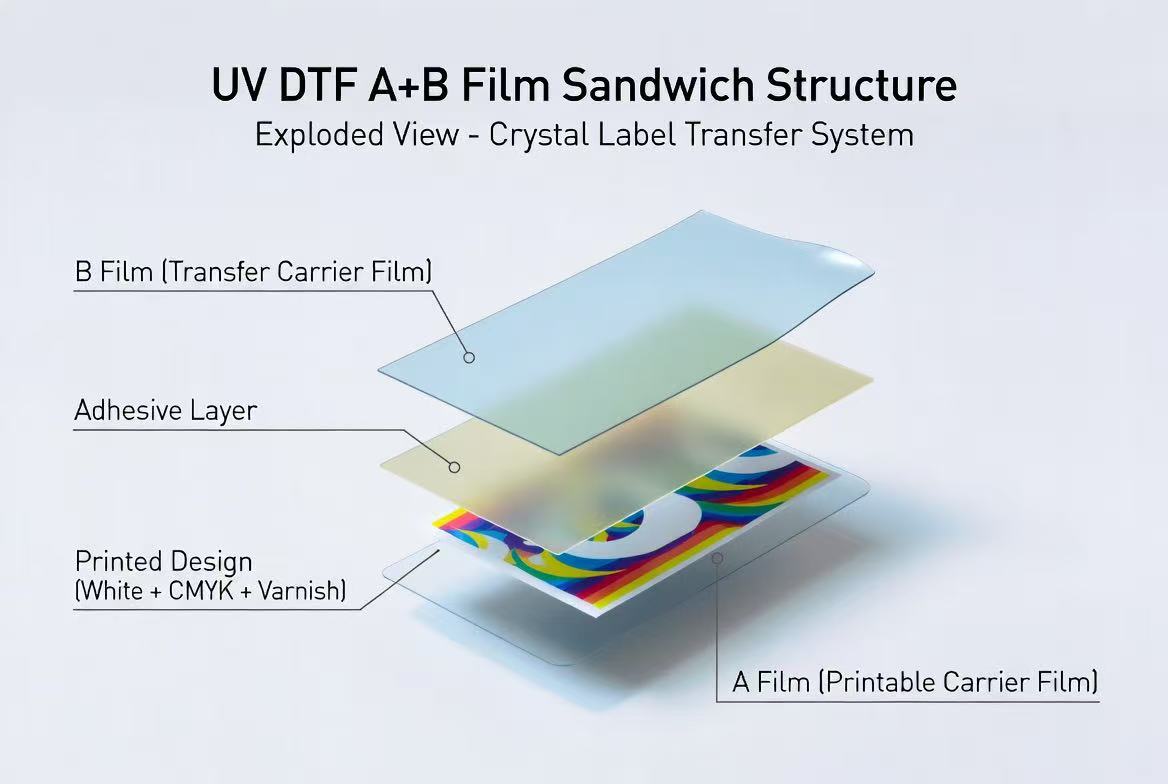
The printer side is nearly identical. Both processes print full-color graphics with variable white ink layering onto a specialty film using the same printhead hardware (an Epson i3200-U1 setup handles both). What changes is the film and the finishing step. UV DTF stickers use AB film and are applied by hand with pressure alone — no heat. 3D TPU film, by contrast, is a heat-transfer material: after printing, it's applied with a heat press (roughly 140–160°C for 10–15 seconds) rather than peeled and pressed on cold. The result is a durable, flexible, embossed-looking graphic bonded permanently into fabric — built to survive 50+ industrial wash cycles and stretch with the garment, which is exactly what a patch or team logo needs and exactly what a UV DTF sticker's cold-peel adhesive isn't designed for.
In other words: same printer, same core printing technology, different film and a heat-press finishing step swapped in for hand pressure — and suddenly you've gone from hard-surface gift products to apparel decoration (team jerseys, branded hats, jacket patches, and labels). If you've read our TPU embroidery series (starting with Part A, Article 5), this is the other half of that story: everything covered there about UV-printed TPU patches runs on the same equipment foundation as the UV DTF sticker workflow covered in this series.
The Full Product Matrix
Here's how all ten articles in this series — hard-surface stickers and TPU embroidery/patches together — map onto one underlying equipment set:
| Hard Surface (UV DTF / AB Film) | Fabric (TPU Film + Heat Press) | |
|---|---|---|
| Small format | Die-cut stickers, phone case decals | Small logo patches, hat labels |
| Medium format | Tumbler/bottle wraps, packaging labels | Jersey numbers, jacket patches |
| Large/premium format | Signage, wall decor, automotive & helmet decals | Team uniform sets, branded apparel runs |
The point of laying it out this way: a shop that owns one UV DTF printer with the right film inventory isn't choosing between a "sticker business" and an "apparel decoration business" — it can serve both, switching between hard-surface and fabric jobs by swapping film rather than buying a second machine.
Advice for Entrepreneurs & Print Shop Owners
If you're deciding what to add to an existing print shop, or what to launch a new one around, the practical path most shops take is to start with one core printer and one film type, get comfortable with production and sales for a few months, then expand sideways into adjacent products using the same machine rather than immediately buying more equipment.
For most sellers, that means starting with die-cut stickers or tumbler wraps (the highest-demand, fastest-to-learn category), then adding phone case decals and packaging labels once the core workflow is solid — both are low-risk, low-material-cost additions that reuse the exact same film and settings. Signage and automotive decals are a natural next step for shops that want to move toward higher-ticket, more B2B-oriented work. TPU embroidery is the biggest strategic expansion on this list, since it opens an entirely separate market (apparel and team decoration) — worth considering once hard-surface production is profitable and you're ready to add a second film type and a heat press to the lineup.
The equipment math works in your favor here: because UV DTF and TPU both run on the same printhead technology, a shop that starts with a UV DTF printer (like the ones covered in Article 9) isn't locked out of the apparel side later — it's usually a matter of adding film and a heat press, not replacing the printer.
FAQ
Can I use the same UV DTF printer for stickers and TPU embroidery? Largely yes — both processes print with the same core UV printhead technology (commonly Epson i3200-U1). What differs is the film (AB film for stickers vs. 3D TPU film for patches) and the application method (hand-pressed for UV DTF, heat-pressed for TPU). Check your specific printer's compatibility with TPU film before switching, but most UV DTF printers built for sticker production can also run TPU film.
What's the most profitable product to start with using a UV DTF printer? Tumbler and water bottle wraps are generally the strongest starting point — high demand, strong perceived value relative to material cost, and the same production process as smaller stickers. Die-cut stickers are the easiest entry point for testing designs before committing to full wraps.
Do tumbler wraps and phone case decals need different film than stickers? No — they use the same UV DTF AB film as any other UV DTF sticker. The difference is size and layout (a wrap is a larger, full-coverage design; a phone case decal is typically a smaller, precisely-sized cut) rather than a different material.
How do I decide which UV DTF products to offer first? Start with whichever product matches demand you can already see — existing customer requests, a gap you've noticed in your local market, or a product category you see performing well on Etsy or social platforms. From there, expand into adjacent categories (stickers → wraps → packaging → signage) that reuse the same equipment and skills rather than requiring a new setup each time.
Ready to see the full range of what one setup can produce? Explore the full SHL equipment lineup — from UV DTF printers and AB film to TPU heat transfer film — or talk to a specialist about the right product mix for your shop.

Leave a comment
This site is protected by hCaptcha and the hCaptcha Privacy Policy and Terms of Service apply.