
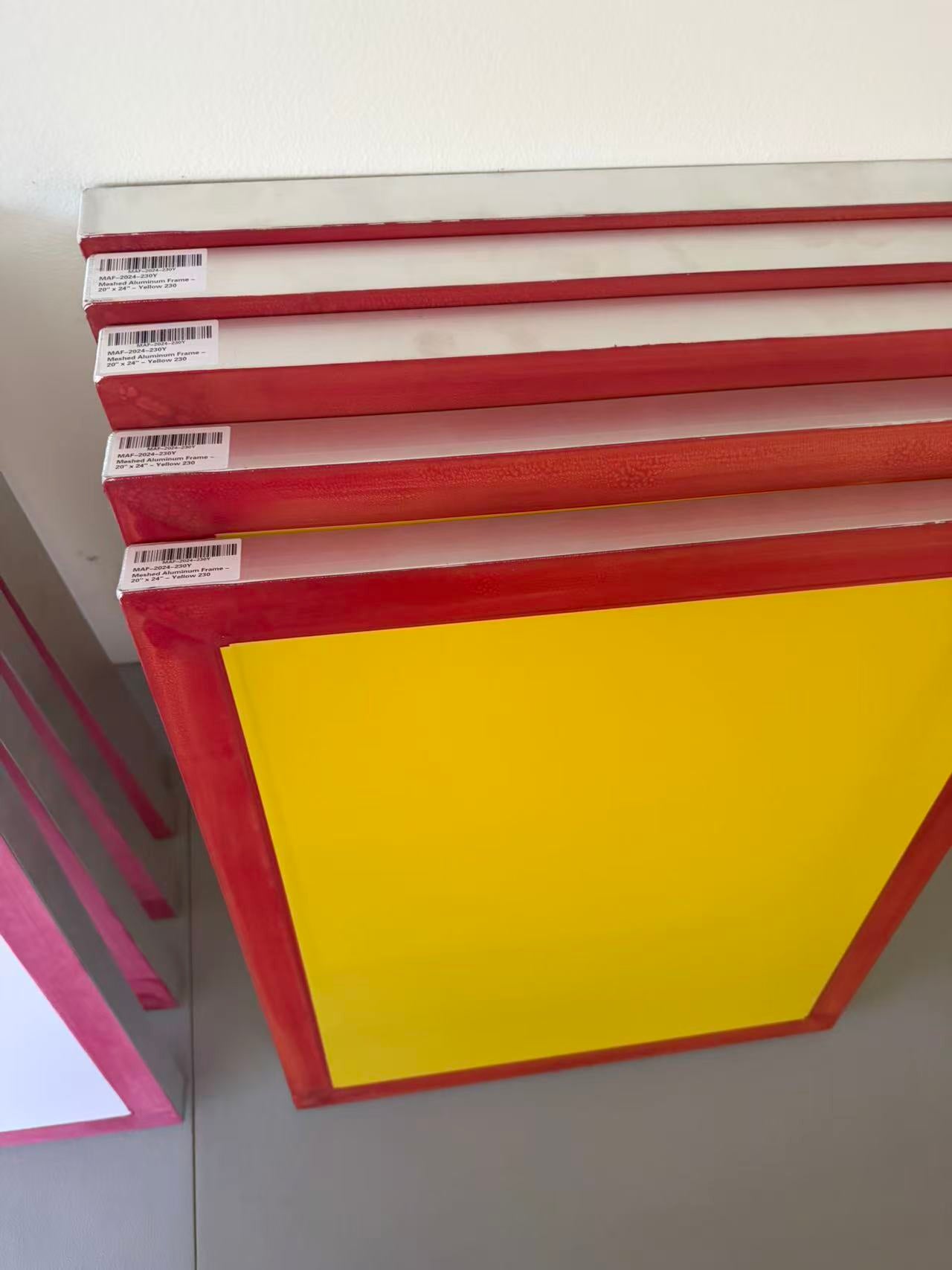
The best screen printing frames for t-shirt printing are pre-stretched aluminum frames in the 20"×24" size range, with 20–25 N/cm of factory-calibrated tension and a mesh count matched to the job — typically 110–160 for underbases and bold graphics, 180–200 for everyday tee designs, and 230+ for fine detail and halftones. Aluminum resists warping from repeated washouts, bonded corners hold tension more evenly than hand-stapled wood, and a pre-stretched screen saves the time and inconsistency of stretching mesh in-house. For most shops, one or two mesh counts in this size range cover the large majority of t-shirt orders.
What Makes a Good T-Shirt Printing Frame?
A frame built for t-shirt work needs four things right: the material, the construction, the tension, and the size. Aluminum tubing holds its shape through years of washouts and reclaiming, where wood frames slowly warp, swell, or rot. Bonded or welded corner joints keep tension even across the whole screen instead of drifting as staples work loose. A stated tension spec — not just a "high tension" marketing claim — tells you what you're actually buying, and 20–25 N/cm is the range that keeps registration consistent print after print. Get those four right and the frame becomes a dependable tool instead of a recurring source of print problems.
Aluminum vs Wood, Pre-Stretched vs Hand-Stretched
Wood frames are cheaper up front, but they absorb moisture from washout stations and humid shops, which warps them out of square and loosens staples over time — exactly the kind of drift that shows up as blurry registration on a multi-color tee job. Aluminum frames cost more initially but hold their shape and tension for years, which is why most production shops standardize on them. For a closer look at the tradeoffs, see our full aluminum vs wood screen printing frame comparison.
The same logic applies to stretching. A factory pre-stretched screen is tensioned on calibrated equipment, so every frame in a batch comes out consistent. Hand-stretching with a hobbyist stretcher tends to leave uneven tension across the mesh — tighter in some spots, slacker in others — which shows up as registration that drifts from print to print, even within a single run. If you're new to pre-stretched screens, our guide on what a pre-stretched screen printing frame is covers how they're made and why the tension holds up better.
What Size Frame Is Best for T-Shirt Printing?
20"×24" is the workhorse size for t-shirt printing. It comfortably fits youth and adult tee graphics, clears most standard chest and back print areas, and fits the platens on virtually every manual press on the market. Shops that regularly print full-back designs, jacket backs, or other oversized artwork keep a 23"×31" or larger frame on hand as well, but it's typically a secondary size rather than the default — sizing up across the board just adds unnecessary bulk and cost for jobs that don't need it.
Mesh Count for T-Shirt Printing
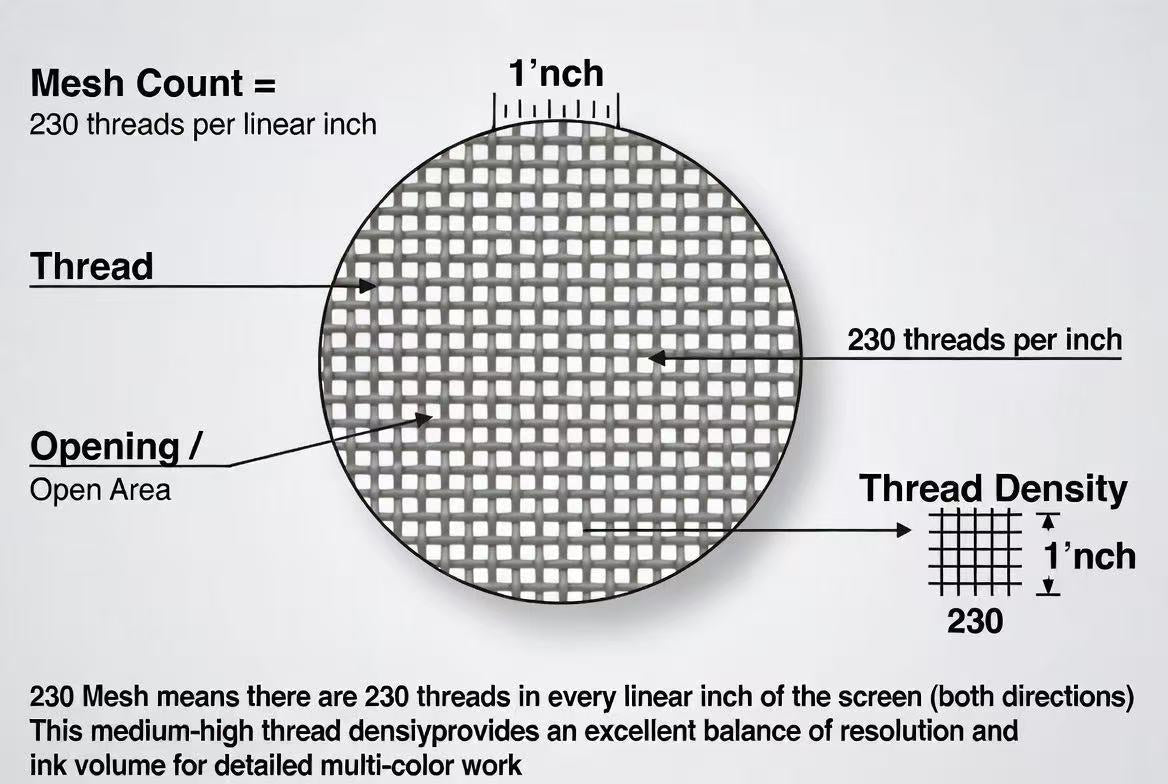
Mesh count controls how much ink the screen lays down and how much fine detail it can hold, so it matters as much as frame size. 110–160 mesh handles white underbases on dark garments and bold, thick single-color graphics where ink volume matters more than fine detail. 180–200 mesh is the everyday range — it's what most standard tee designs print through, balancing solid color coverage with reasonable detail. 230 mesh and up is for small text, fine linework, halftones, and gradient shading, where a lower count would blur the detail together. For a deeper walkthrough of how mesh count affects your results, see how to choose the right mesh count.
Common Applications: Which Frame Fits Your Shop
A beginner or small shop printing occasional runs generally only needs one frame: 20"×24" at 200 mesh covers the majority of starter jobs on a single pre-stretched screen. Shops that regularly print on dark garments need two frames working together — a 110 mesh underbase frame for opaque white, plus a 160 mesh frame for the detailed top color. Detailed designs with small text or halftones do best on 230–280 mesh at slightly higher tension, since fine detail is more sensitive to slack. Multi-color and production shops typically keep a full matched set — 110, 230, 280, and 305 mesh — so registration stays consistent across every station. Jumbo or oversized prints call for a 23"×31" or larger frame at 160–200 mesh, and performance or synthetic fabric jobs do better on 230+ mesh, since the thinner ink deposit avoids the stiff, cracked feel a heavy ink layer leaves on athletic wear.
On the Press: Why Frame Quality Matters
Frame quality shows up the moment you clamp into the press. A warped wood frame or an unevenly tensioned screen won't sit flush against the platen the same way twice, which means every print run starts with a slightly different registration baseline. A well-built aluminum, pre-stretched frame locks in square consistently, so the setup you dial in on print one still holds by print two hundred.
How to Choose the Right Frame
Before you order, run through five checks: material (aluminum, not wood, for long-term stability), construction (pre-stretched with bonded corners rather than hand-stapled mesh), a stated tension spec in the 20–25 N/cm range, a 20"×24" size for most tee work, and a mesh count that actually matches the jobs you print most. Skipping any one of these tends to show up later as an avoidable print quality problem.
Common Mistakes
Buying wood frames because they're cheaper, then replacing them within a year once they warp or lose tension. Choosing a single mesh count for every job instead of matching mesh to underbase, detail, or fabric needs. Assuming a "high tension" screen is a real spec rather than a marketing phrase — always look for an actual N/cm number. Sizing up to a larger frame than needed, which adds unnecessary cost and weight to a press that's mostly printing standard tee graphics. And hand-stretching mesh to save money, then fighting inconsistent registration that a factory pre-stretched screen would have avoided.
FAQs
What is the best frame size for t-shirt printing?
20"×24" is the most common size — it fits standard tee print areas and virtually every manual press platen. A 23"×31" or larger frame is useful as a secondary size for full-back or jumbo designs.
Should I use aluminum or wood frames for t-shirt printing?
Aluminum. It resists warping from repeated washouts and moisture exposure, and bonded corners hold tension more evenly over time than hand-stapled wood frames.
What mesh count is best for t-shirt designs?
180–200 mesh covers most everyday tee graphics. Use 110–160 for underbases and bold single-color art, and 230 or higher for fine detail, small text, or halftones.
Do I need pre-stretched frames, or can I stretch my own?
Pre-stretched frames are recommended for most shops. Factory tensioning on calibrated equipment is more consistent than hand-stretching, which tends to leave uneven tension and drifting registration.
How many frames does a small shop need to start?
One 20"×24" frame at 200 mesh covers most starter jobs. Add a 110 mesh underbase frame once you start regularly printing on dark garments.
What tension is good for a t-shirt printing frame?
Look for a stated spec in the 20–25 N/cm range. That's high enough for consistent registration without being unnecessarily difficult to print through.
Can the same frame work for both light and dark shirts?
A mid-range mesh count like 180–200 works well on light and medium garments. For dark shirts, pairing a 110 mesh underbase frame with a higher mesh top-color frame gives more reliable opacity than one frame alone.
Ready to Order the Best Frames for T-Shirt Printing?
SHL Supply stocks pre-stretched aluminum screen printing frames in the sizes and mesh counts covered above — 20"×24" and 23"×31", in 110, 160, 200, 230, 280, and 305 mesh — all shipped from our Santa Fe Springs, CA warehouse within 48 hours, with local pickup available. Need a size outside our standard lineup, or a matched multi-mesh set for a production shop? We offer custom sizing and OEM builds on request.
Browse the full frame and mesh count lineup, learn more about how mesh count affects screen printing results, compare aluminum vs wood frames in more depth, add polyester screen mesh or a bare aluminum frame, pick up squeegee blades from our screen printing supplies catalog, or contact our team for help matching a frame setup to your shop.

Leave a comment
This site is protected by hCaptcha and the hCaptcha Privacy Policy and Terms of Service apply.