

Pre Stretched Screen Printing Frame Guide: Everything You Need to Know
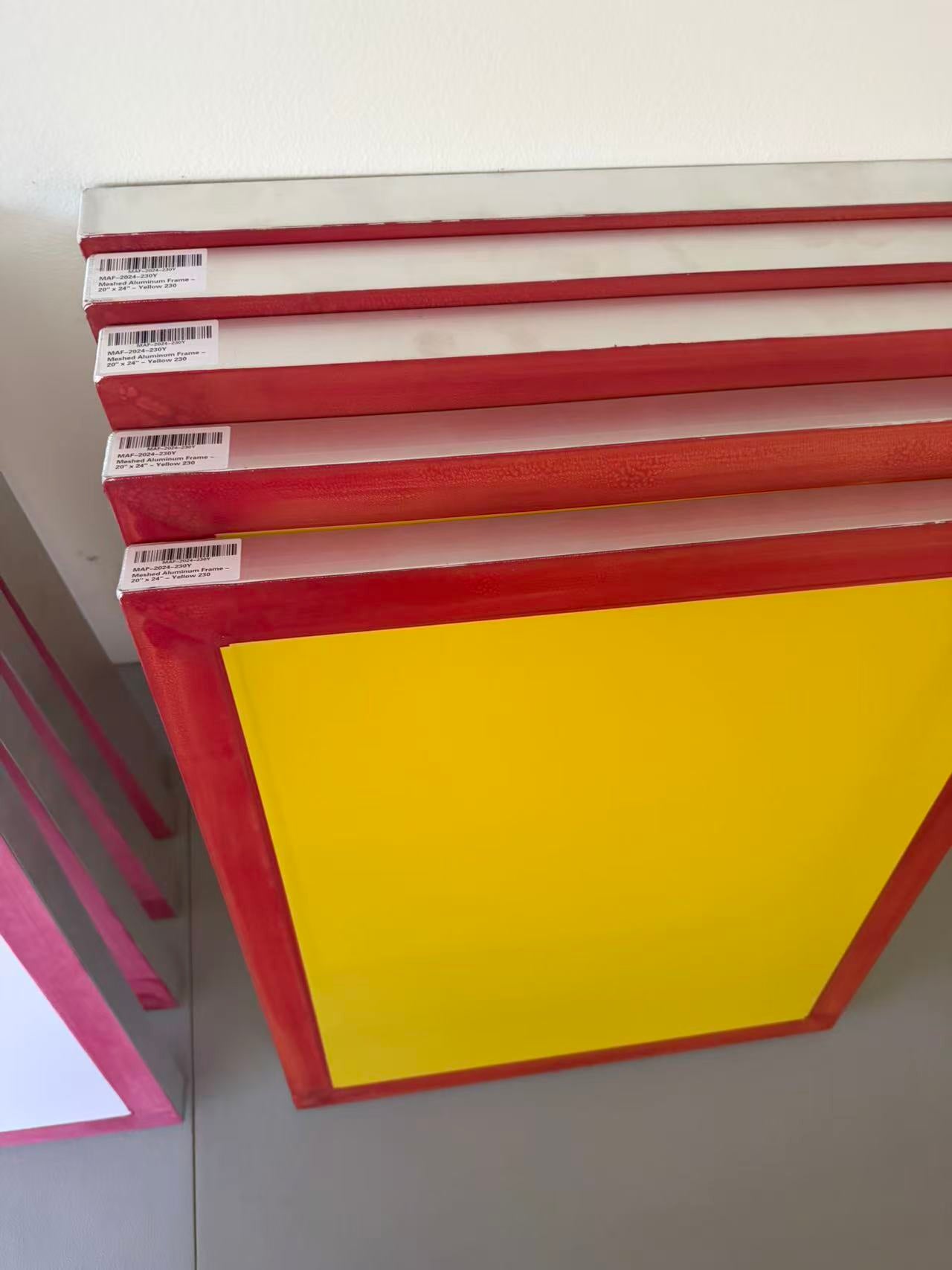
A pre-stretched screen printing frame is an aluminum frame that arrives with mesh already tensioned and bonded at the factory, so it's ready to expose and print without any manual stretching. It saves setup time, delivers consistent tension (typically 25+ N/cm), and holds registration better than hand-stretched wood frames. Pre-stretched frames come in various sizes and mesh counts, and — with basic cleaning and storage care — a well-made aluminum frame can be reclaimed and reused for years before it ever needs re-meshing.

What Is a Pre-Stretched Screen Printing Frame?
A pre-stretched screen printing frame pairs a rigid aluminum frame with polyester (or occasionally nylon) mesh that's already been stretched to the correct tension and glued into place using screen-grade adhesive. Instead of buying raw frame stock and mesh separately and stretching it yourself with a pneumatic or mechanical stretcher, you get a screen that's ready for degreasing, coating with emulsion, and exposing straight out of the box.
These frames are the standard choice for garment decorators, promotional product shops, and hobbyist printers alike, because they remove the biggest variable in screen prep: getting even, repeatable tension across the whole mesh surface.
Benefits of a Pre-Stretched Screen Printing Frame
Compared to stretching your own screens, a factory pre-stretched aluminum frame offers a few clear advantages worth calling out in plain terms:
- Consistent, tested tension. Frames typically ship at 25 N/cm or higher, the range most shops consider optimal for sharp detail and accurate registration.
- Faster turnaround. Skip the stretching step entirely — degrease, coat, expose, and print the same day.
- Better registration on multi-color jobs. Even tension keeps the mesh from shifting between colors, which is where blur and mis-registration usually come from.
- Lightweight and warp-resistant. Aluminum won't absorb water or swell the way wood frames can during reclaiming, so the frame stays square print after print.
- Reclaimable and reusable. A properly cared-for aluminum frame can go through dozens of coat-expose-reclaim cycles before the mesh needs replacing.
Common Applications
Pre-stretched frames show up anywhere screen printing happens at production speed: t-shirt and apparel decoration, promotional merchandise (tote bags, hats, koozies), poster and fine-art printing, textile and label printing, and printed electronics or industrial masking where consistent mesh tension affects deposit thickness. Shops running manual presses and automatic presses both rely on pre-stretched frames to keep changeover time low between jobs.

How to Choose the Right Screen Printing Frame
Picking the right frame comes down to three variables working together: frame size (matched to your press and largest print area), mesh count (matched to your ink and design detail), and tension level (matched to how demanding your registration needs are).
High Tension Screen Printing Frames Explained
"High tension" refers to how tightly the mesh is stretched across the frame, measured in Newtons per centimeter (N/cm) with a tension meter. As a rough guide: readings under 18–19 N/cm are considered too low for anything beyond single-color, low-detail work; 20–24 N/cm is usable but can still let the mesh shift on longer runs; 25 N/cm and above is generally treated as the target for crisp halftones and reliable multi-color registration. Pre-stretched frames are tension-tested at the factory specifically so you don't have to guess — or invest in your own meter — before your first print run.

Yellow Mesh vs. White Mesh
Yellow and white mesh are woven from the same polyester, but yellow mesh is dyed to absorb more light and reduce UV scatter during exposure. That matters most at higher mesh counts (roughly 90T and up): yellow mesh holds fine lines, small type, and halftone dots more accurately, while white mesh performs almost identically at lower mesh counts used for bold, simple designs. If your shop prints a lot of detailed or simulated-process artwork, yellow mesh is the safer default; for spot-color apparel work, white mesh is perfectly adequate and usually less expensive.

Matching Mesh Count to Your Ink and Design
Mesh count (threads per inch/cm) controls how much ink passes through and how much fine detail the screen can hold. Lower counts (around 60–110) lay down heavier deposits — good for glitter, foil adhesive, and thick plastisol on dark garments. Mid-range counts (around 156–200) are the everyday choice for standard apparel printing. Higher counts (230–305+) are built for fine detail, halftones, and simulated process work where less ink and sharper edges matter more than coverage.

Frame Lifespan & Maintenance
A pre-stretched frame is a reusable tool, not a single-use consumable — but how long it stays production-ready depends heavily on handling, cleaning, and storage between jobs.
How Long Does a Pre-Stretched Screen Last?
There's no fixed expiration date on a frame — most aluminum pre-stretched screens go through a repeating cycle of degrease, coat, expose, print, and reclaim, and can be re-coated and reused for years as long as the mesh holds its tension and stays free of pinholes or ghost images. The screen effectively "ages out" only when tension drops below a usable level or the mesh is physically damaged, at which point re-meshing (or replacing the frame) is the practical option. Frames that are cleaned promptly, dried fully, and stored properly between jobs last considerably longer than ones left inked-up or stacked flat.
Why Screen Mesh Loses Tension
Tension loss usually comes from a combination of factors rather than one single cause. On the frame side, water absorbed during reclaiming can cause slight frame flex (more of an issue with wood than aluminum), and mesh that isn't bonded with proper screen-making adhesive can creep loose over time. On the mesh side, repeated squeegee strokes gradually stretch the fabric, heat softens polyester and makes it stretch more easily during printing, and pushing mesh past its elastic limit causes permanent deformation. Excessive squeegee pressure, too much off-contact distance, and a misaligned platen all accelerate the process. Choosing a rigid aluminum frame and printing within recommended pressure and off-contact settings goes a long way toward preserving tension longer.
How to Clean Aluminum Screen Printing Frames
A simple four-step routine keeps frames in rotation for the long haul:
- Rinse ink residue with press wash immediately after printing, before ink dries in the mesh.
- Apply a degreaser to both sides of the screen to strip oils and residue before re-coating with emulsion.
- Reclaim the emulsion with an emulsion remover and a soft-bristle brush, then rinse thoroughly.
- Dry flat and inspect the mesh under light for pinholes, ghost images, or thin spots before the next coat.

How to Store Screen Printing Frames Properly
Storage habits between jobs matter almost as much as cleaning technique. Store frames vertically in a dedicated rack rather than stacking them flat, where the mesh can sag or get crushed. Keep frames out of direct sunlight and away from big swings in humidity, both of which stress the mesh and can degrade adhesive over time. Leave an inch or two of space between frames so mesh surfaces never touch, and keep reclaiming chemicals and solvents stored well away from clean, mesh-ready screens.

Common Mistakes to Avoid
- Skipping degreasing. Oils left on the mesh cause emulsion "fish-eyes" and poor stencil adhesion.
- Using the wrong tape. General-purpose masking or packing tape breaks down faster than screen printing tape and lets ink bleed around the edges.
- Over-tightening squeegee pressure. Excess pressure accelerates mesh stretch and shortens tension life.
- Stacking frames flat in storage. This is one of the fastest ways to sag mesh and dent frame corners between uses.
- Ignoring humidity. Damp storage areas slow drying and can weaken the adhesive bond between mesh and frame over time.
- Guessing at tension instead of checking it. A quick tap test (low tension sounds dull, like a bass drum; high tension sounds sharp, like a snare) or a tension meter reading takes seconds and avoids wasted prints.
FAQs
What size pre-stretched screen printing frame do I need?
Match the frame's inner (printable) dimension to your largest planned design plus a margin for registration, then confirm it fits your press's clamp or hinge system. Most apparel shops keep a mix of sizes (commonly in the 20"x24" and 23"x31" range) to cover youth, adult, and jumbo prints.
Can I re-stretch a pre-stretched aluminum frame myself?
Once the original mesh loses tension or gets damaged, most aluminum frames can be re-meshed using a mechanical or pneumatic stretcher and screen-grade adhesive, or sent to a re-meshing service. It's more involved than buying a new pre-stretched screen, but it's a reasonable option for larger or specialty frame sizes.
What mesh count is best for t-shirt printing?
For standard plastisol apparel printing, 156–200 mesh is the common all-purpose range. Go lower (60–110) for heavy deposits like glitter or thick coverage on dark shirts, and higher (230–305+) for fine detail, small text, or halftones.
How do I know if my screen tension is too low?
Low tension mesh flexes and shifts under the squeegee, which shows up as blurred edges, soft halftones, ink build-up on the underside of the screen, and registration drift on multi-color jobs. A tension meter reading below ~20 N/cm, or a dull "thud" instead of a sharp "snap" on a tap test, both point to low tension.
Is yellow mesh worth the extra cost?
For higher mesh counts and detailed artwork, yes — the reduced light scatter during exposure noticeably improves fine-line and halftone accuracy. For lower mesh counts and simple spot-color designs, white mesh performs similarly and costs less.
How many prints can I get from one pre-stretched frame before re-meshing?
There's no single number — it depends on ink type, squeegee pressure, off-contact distance, and how well the frame is cleaned and stored between jobs. A well-maintained aluminum frame typically goes through many reclaim cycles and years of use before tension drops enough to require re-meshing.
Can pre-stretched frames be reclaimed and reused?
Yes — that's the normal lifecycle. Print, clean, degrease, reclaim the emulsion, dry, inspect, and re-coat for the next job. The frame and mesh are reused repeatedly until tension or mesh condition no longer supports quality prints.
What's the difference between a static pre-stretched frame and a roller/retensionable frame?
A static pre-stretched frame is glued at a fixed tension and re-meshed when it eventually loses tension. A retensionable (roller) frame lets you re-tighten the mesh yourself over its lifespan, which can extend usable life but adds cost and setup complexity. Most shops starting out, or running standard production, use static pre-stretched frames for simplicity.
Related Guides & Products
- Shop Pre-Stretched Screen Printing Frames
- Shop Aluminum Screen Printing Frames
- Shop Screen Mesh (Yellow & White)

Leave a comment
This site is protected by hCaptcha and the hCaptcha Privacy Policy and Terms of Service apply.