
If your shop offers screen restretching or remesh services — or you're simply tired of paying full price for a brand-new pre-stretched screen every time tension drops — you already know the real cost driver isn't the frame, it's the mesh. A bare aluminum frame can be re-stretched dozens of times over its working life. For most Los Angeles-area screen printers, the question isn't "should we restretch," it's "where do we source bare frames and bulk mesh fast enough to keep a remesh program running without waiting weeks on backordered stock."
- Why LA Printers Are Building a Restretch/Remesh Program
- Bare Frame vs. Pre-Stretched Screen
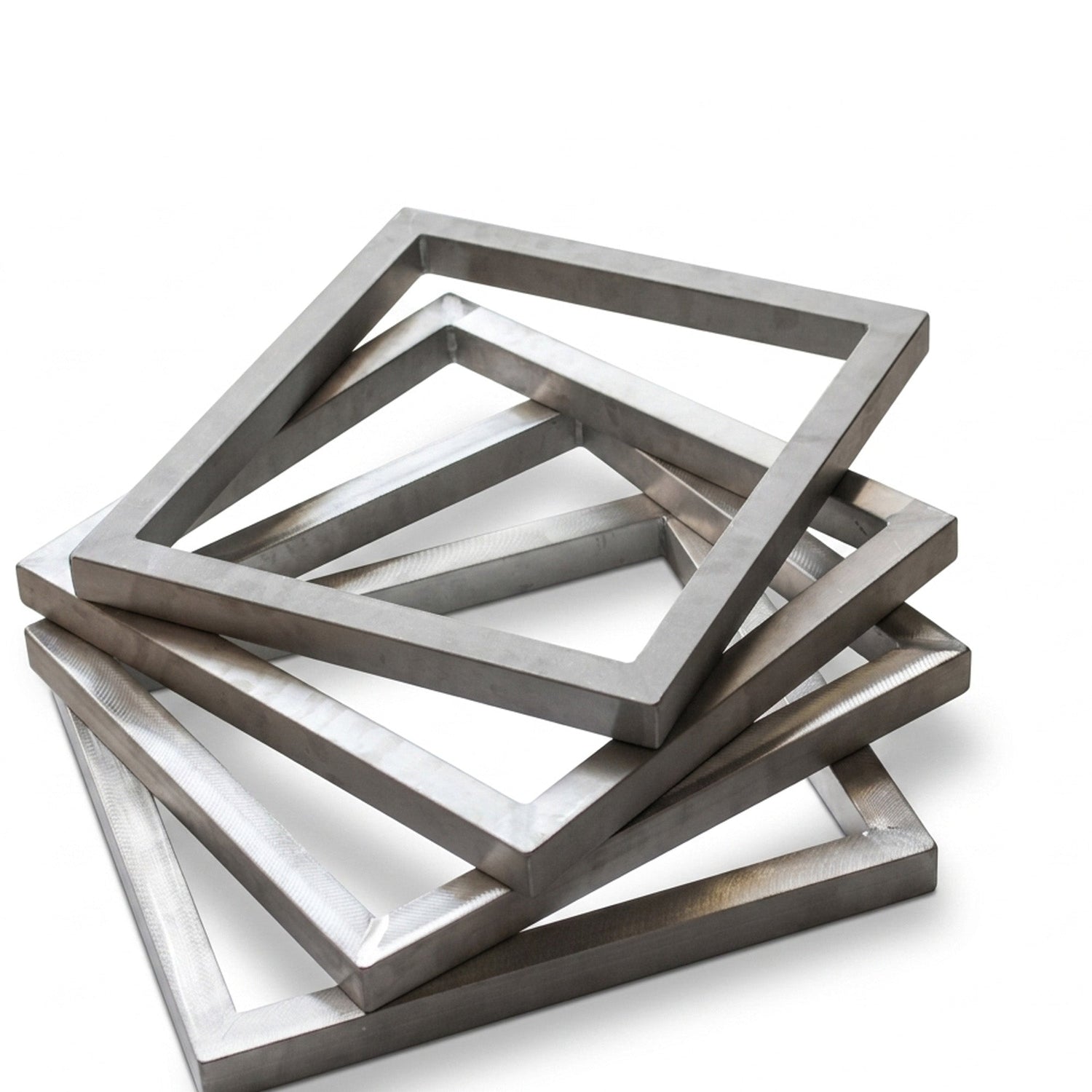
- Bare Aluminum Frame Specifications
- Polyester Mesh Roll Specifications
- How to Restretch & Remesh a Frame (Step-by-Step)
- Choosing the Right Mesh Count
- Completing Your Remesh Station
- Frequently Asked Questions
- Fast Local Supply for LA Shops
Why More LA Screen Printers Are Building a Restretch/Remesh Program
Buying a brand-new pre-stretched screen every time a customer's mesh loses tension adds up fast — especially for shops running high screen counts across multiple presses. A restretch program built around bare frames and bulk mesh rolls changes the math:
Frames Get Reused, Not Replaced
A quality welded aluminum frame goes through many remesh cycles before retirement, amortizing frame cost across dozens of jobs.
Mesh Is the Real Consumable
Buying mesh by the roll instead of pre-mounted is significantly cheaper per screen at real production volumes.
Faster Turnaround for Customers
Shops stocking bare frames and mesh can turn around a re-tensioning request same-day instead of waiting on a new screen shipment.
Full Mesh Count & Color Control
Restretching in-house means picking the exact count (110–420) and color for each job — not whatever came pre-mounted.
Bare Aluminum Frames vs. Pre-Stretched Screens: What's the Difference?
Both frame types serve different points in a shop's workflow. Here's how to think about which one you need:
| Bare Aluminum Frame | Pre-Stretched Screen | |
|---|---|---|
| Mesh included? | No — designed for you to stretch/remesh | Yes — arrives ready to expose and print |
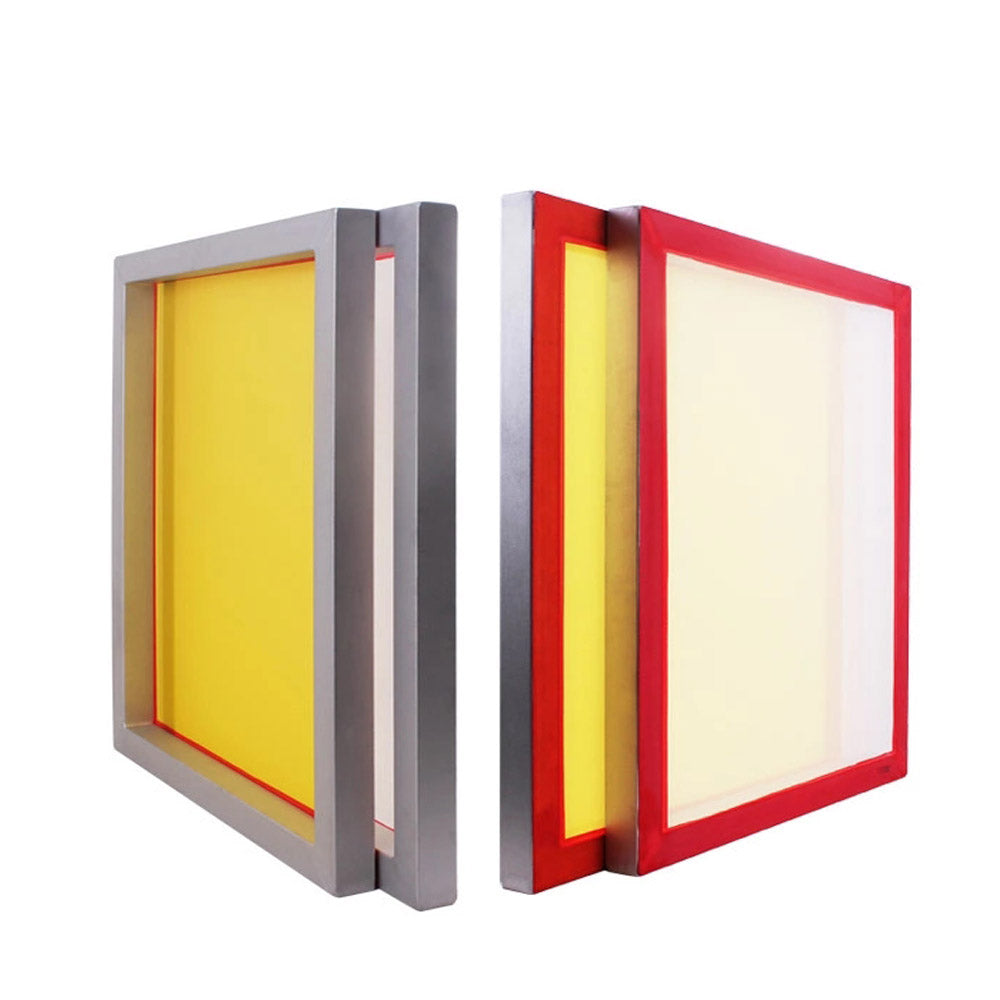
| Best for | Shops & remesh services doing their own tensioning | Shops that want a screen ready to use immediately |
| Cost over time | Lower per-screen cost across multiple remesh cycles | Higher per-screen cost, no reuse of mounting labor |
| Mesh flexibility | Full control — remesh to any count/color per job | Fixed at whatever count shipped on the frame |
| Use case | Restretch programs, high-volume shops, remesh services | New accounts, backup screens, no stretching equipment |
Not Set Up to Stretch Screens Yet?
If your shop doesn't have a stretching table or tension meter, our pre-stretched aluminum screen printing frames (110–305 mesh, ready to expose) are the faster path to a finished screen. If you're building or running a remesh operation, the bare frame + mesh roll combination below is where the real savings live.
Bare Aluminum Frame Specifications
Built specifically for stretching and remeshing — not repurposed pre-stretched stock — so the tube profile, welds, and surface finish are optimized for holding tension through repeated remesh cycles.
| Spec | Small | Medium | Large |
|---|---|---|---|
| Outer Dimension | 20" x 24" | 23" x 31" | 25" x 36" |
| Tube Profile | 1.4" | 1.5" | 1.5" |
| Tube Wall Thickness | 1/18" | 1/16" | 1/14" |
| Weight | 1.1 lbs | 1.4 lbs | 1.6 lbs |
6063T5 Aluminum Alloy
Rigidity without excess weight.
Full TIG-Welded Corners
All four corners welded — no weak points that flex under tension.
Airtight & Watertight
100% sealed construction prevents internal corrosion over time.
Sandblasted Surface
Frosted finish maximizes adhesive bonding when mesh is glued down.
Compatible with manual stretching setups and automatic equipment, including M&R and ROQ systems.
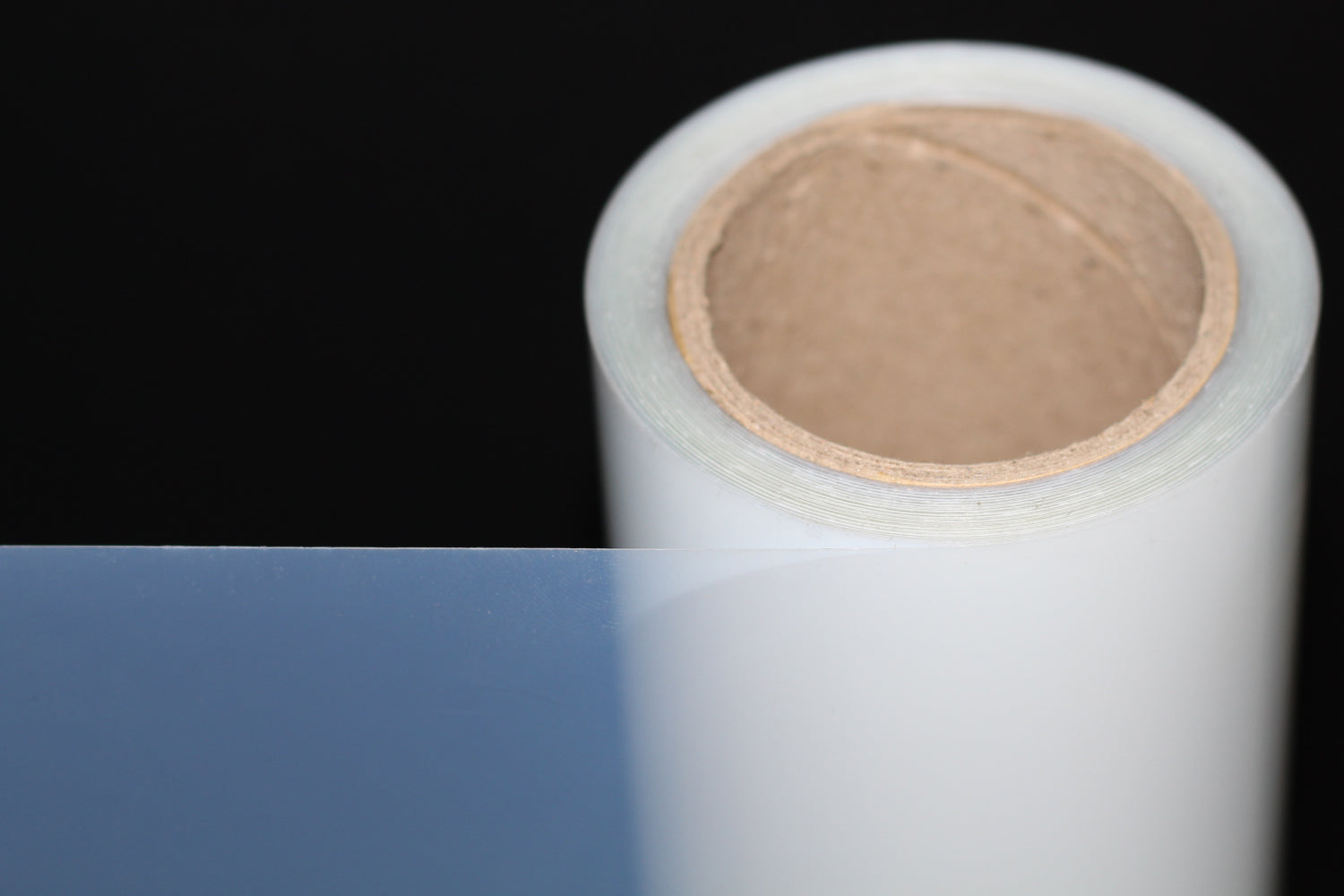
Polyester Mesh Roll Specifications
Sold by the roll so your shop always has the exact count and color on hand for whatever job comes through the door.
| Spec | Detail |
|---|---|
| Material | 100% high-strength polyester monofilament |
| Mesh Count Range | 110–420 |
| Roll Size | 65" width x 50 yards |
| Colors | White, Yellow (yellow reduces light scatter for finer detail) |
| Construction | High-stability, low-elongation weave holds tension through production |
| Surface Treatment | Specially treated for superior emulsion adhesion |
| Compatible Substrates | Textiles, plastics, glass, ceramics, metals |
How to Restretch and Remesh an Aluminum Screen Frame
Here's the standard workflow professional shops use to turn a used bare frame back into a production-ready screen.
Remove the Old Mesh
Cut away the existing mesh close to the frame edges, then peel off the remaining strips. Don't reuse old mesh — once tension has dropped, it won't hold a consistent count again.
Clean the Frame Thoroughly
Strip off all old adhesive, emulsion, and ink residue from the gluing surface. Leftover residue is one of the most common causes of mesh lifting later — a clean, sandblasted surface gives fresh adhesive the best possible grip.
Cut Mesh to Size — Oversized
Cut your polyester mesh a few inches larger than the outer frame dimensions on every side, so there's enough excess to grip in a stretching clamp.
Stretch the Mesh
Using a mechanical, pneumatic, or hydraulic stretching table, clamp the mesh and pull it taut evenly on all sides. Uneven pulling creates warped weave patterns that throw off registration.
Verify Tension With a Meter
Check tension at the center and corners, in both directions. General benchmark: below 20 N/cm is only suitable for low-detail work, 20–25 N/cm signals a screen nearing end of life, and 25+ N/cm is the target for production-quality printing. No meter? A taut screen sounds like a snare drum when tapped; a loose one sounds duller, like a bass drum.
Bond the Mesh to the Frame
With mesh held at target tension, apply adhesive (spray or two-part epoxy) to the gluing surface and press the mesh down evenly. Let it cure fully before releasing the clamps — releasing too early is a common cause of tension loss.
Trim the Excess
Once fully cured, trim the excess mesh around the outer edge with a utility knife, leaving a clean edge ready for taping, blockout, and emulsion coating.
Choosing the Right Mesh Count for Remesh Jobs
Since remeshing gives you full control over count and color, match it to the job:
Completing Your Remesh Station
A remesh program runs on more than frames and mesh. Round out your setup with:
Keep pre-stretched screens on hand as loaners or backups while a customer's frame is in your remesh queue, stock multiple mesh counts and colors so you're never turning away a job, and finish every freshly remeshed screen with a sharp, chemical-resistant squeegee blade to put that new tension to work on press.
Frequently Asked Questions
How many times can a bare aluminum frame be remeshed?
A quality welded aluminum frame — like a 6063T5 alloy frame with airtight, watertight construction — can typically go through many remesh cycles over its working life, as long as the gluing surface is properly cleaned between remeshes and the frame isn't bent or damaged. This is the core economic advantage of running a restretch program instead of buying new pre-stretched screens every time.
Is it cheaper to remesh a frame or buy a new pre-stretched screen?
For shops doing any real volume, remeshing is almost always cheaper per screen. You're paying for mesh (a bulk-priced consumable) instead of a frame, mesh, and mounting labor every single time. The upfront cost is a stretching table and tension meter, which pays for itself quickly once you're running more than a handful of screens a month.
What tension should I target when remeshing a screen?
As a general benchmark, aim for 25+ N/cm for production-quality printing. Tension in the 20–25 N/cm range still works for less detailed jobs but is approaching the point where the screen should be retired or remeshed again. Below 20 N/cm, only basic single-color, low-detail work is realistic.
What adhesive should I use to bond mesh to a bare frame?
Most shops use either a dedicated screen-stretching adhesive spray or a two-part epoxy, depending on their process and equipment. Whichever you choose, a clean, sandblasted gluing surface is critical for a strong, long-lasting bond — residue from old adhesive or emulsion is the most common cause of premature mesh failure.
Can I mix mesh counts and colors on the same batch of bare frames?
Yes — that's the main advantage of buying bare frames and mesh separately instead of pre-stretched screens. Order one roll of mesh per count/color you commonly use (white for general work, yellow for finer detail where reduced light scatter matters) and remesh frames to whatever spec each job calls for.
Do you sell to shops that offer remesh services to other printers, not just their own production?
Yes. Many of our Los Angeles-area customers are dedicated remesh service providers buying bare frames and mesh in bulk to remesh screens for other local shops. We offer wholesale/distributor pricing for accounts running consistent volume — reach out directly to set up a standing order.
Are your bare frames compatible with automatic screen printing equipment?
Yes. The frames are compatible with manual stretching tables as well as automatic systems including M&R and ROQ equipment, so shops running automated stretching lines can integrate them directly into existing production.
What's your return policy if a frame arrives damaged?
Every order is backed by a money-back guarantee. Defective or damaged items receive free returns; non-defective returns are accepted subject to a 15% restocking fee.
Local to Los Angeles? Get Bare Frames and Mesh Fast, With Real Support
Running a restretch or remesh program only works if your supply chain keeps up with demand — and that's exactly where a lot of shops get stuck waiting on backordered frames or mesh from overseas suppliers. SHL Supply stocks bare aluminum frames and bulk polyester mesh rolls at our own warehouse and ships every order within 48 hours, with local pickup available for shops in and around the LA area.
SHL Supply
Ready to stock up? Grab bare frames and mesh for your remesh queue, keep a few pre-stretched screens on hand as loaners, and finish the setup with a squeegee blade.
Shop Bare Frames Shop Mesh Rolls Shop Pre-Stretched Screens Shop Squeegees

Leave a comment
This site is protected by hCaptcha and the hCaptcha Privacy Policy and Terms of Service apply.