
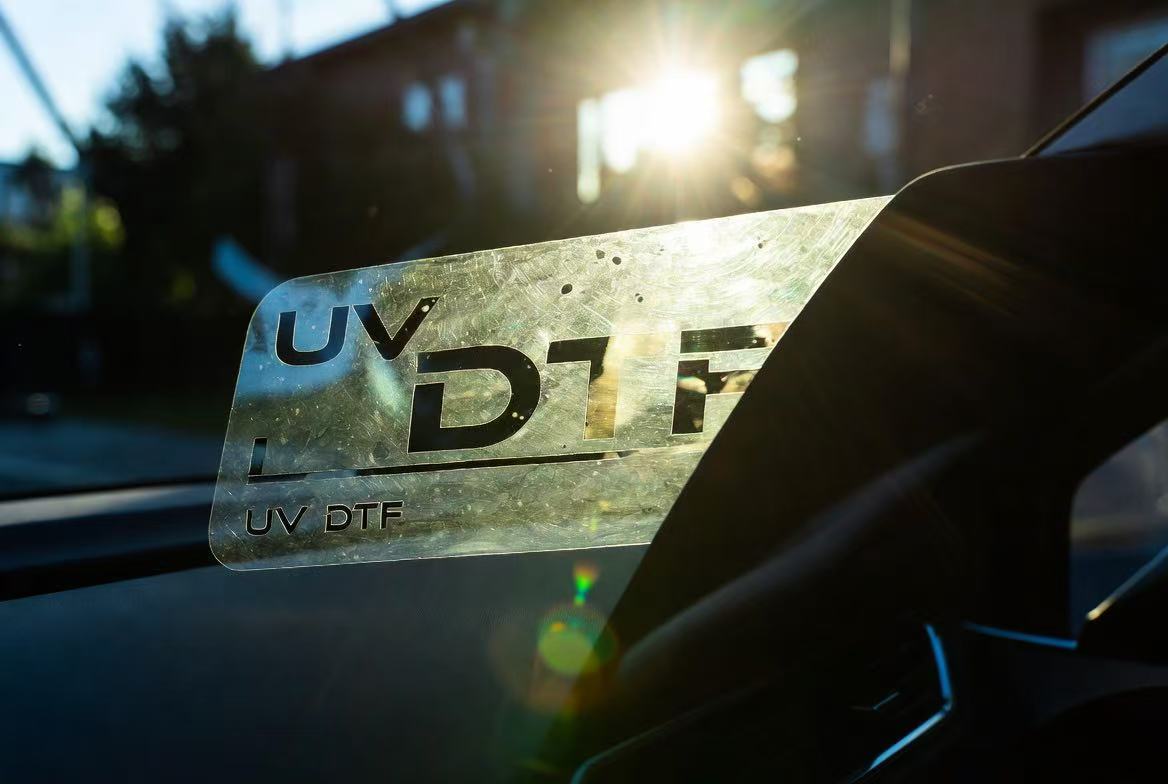
A car decal that looked perfect on install day and turns visibly yellow within a few months. A batch of outdoor signage stickers that faded unevenly while an indoor decoration from the same print run still looks new. If you sell or print UV DTF transfers for outdoor use, UV DTF print yellowing outdoor complaints are one of the fastest ways to lose a repeat customer — and one of the most common causes has nothing to do with your printer settings at all.
This guide breaks down what real UV degradation looks like, how long you should actually expect different applications to last, the three reasons prints yellow early, and a simple way to test ink quality before you commit to a large order.
The 90-Day Sun Test: What Yellowing Actually Looks Like
The clearest way to evaluate ink quality is a direct sun exposure test — mount identical prints from different ink sources outdoors, in the same orientation and angle, and check them at set intervals (30, 60, and 90 days is a good baseline).

What to look for when you run this test yourself:
- Yellowing concentrated in white or light areas — this is the clearest early sign of pigment breakdown or varnish failure, since white ink and clear varnish have the least protection against UV degradation.
- A shift from glossy to dull/chalky — this indicates the varnish layer is degrading, exposing the color layer beneath to direct UV exposure it wasn't designed to handle alone.
- Uneven fading across a single print — often points to inconsistent varnish coverage rather than the ink formula itself.
- Color holding steady but the surface feeling brittle or cracked — this points more toward under-curing than UV exposure, since a fully cured varnish layer should stay flexible even as it ages.
Indoor vs Outdoor Durability Table
Expected lifespan varies significantly by application. Use this table as a general planning benchmark — actual results depend heavily on ink quality, varnish coverage, and local climate/sun exposure.
| Application | Typical Expected Lifespan | Primary Aging Factor | Recommended Maintenance |
|---|---|---|---|
| Car decals / vehicle graphics | 2–4 years outdoors (quality ink); under 1 year with poor-quality ink or thin varnish | Direct UV exposure, temperature cycling, car wash chemicals | Hand wash, avoid abrasive brushes, inspect edges quarterly |
| Outdoor signage | 2–5 years, depending on sun exposure angle and climate | Constant UV exposure, weather/moisture cycling | Inspect for edge lifting and surface dulling every 3–6 months |
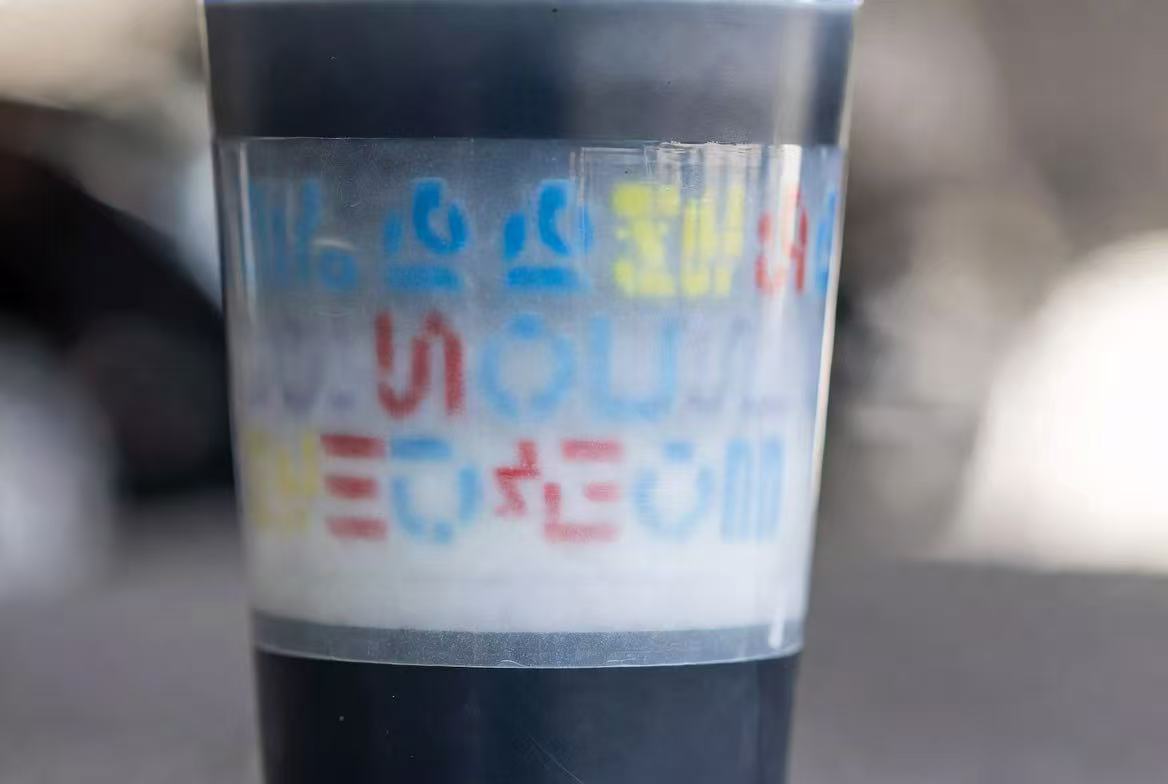
| Drinkware / tumblers | 1–3 years with regular use and washing | UV exposure (if used outdoors), dishwasher heat and detergent chemicals, physical abrasion | Hand wash when possible; avoid prolonged direct sun storage |
| Indoor décor / signage | 5+ years | Indoor lighting (UV content is much lower), dust, incidental handling | Dust and clean gently; minimal maintenance required |
The common thread: every outdoor or high-UV-exposure application depends heavily on ink and varnish quality, while indoor applications are far more forgiving — which is exactly why yellowing complaints concentrate almost entirely on outdoor and vehicle work.
3 Reasons UV DTF Prints Yellow Early
Non-Weatherable Pigments
Not all pigments are created equal. Some color and white pigments are formulated for indoor/short-term use and simply aren't lightfast — meaning their molecular structure breaks down under sustained UV exposure, shifting color or yellowing regardless of how well the print was cured or how thick the varnish layer is. This is a raw material choice made at the ink manufacturing stage, and it's invisible on day one — a non-weatherable ink can look identical to a premium one when it's fresh.
Missing or Too-Thin Varnish Layer
The varnish (clear/gloss) layer is the print's primary UV barrier. If it's applied too thin, inconsistently, or skipped in an attempt to save ink cost, the color and white layers underneath are left directly exposed to UV radiation with essentially no protection. This is one of the most common — and most avoidable — causes of early yellowing, and it's purely a process and formulation issue, not something the printer hardware controls.
Under-Curing Leaves Residual Chemical Reaction
UV DTF ink and varnish cure through photoinitiators that react to UV/LED light exposure. If the print doesn't receive enough light energy — due to a degrading UV lamp, print speed set too fast, or too few passes — the curing reaction doesn't fully complete. The surface can look and feel cured, but residual uncured resin continues reacting slowly over time, under continued light and heat exposure, contributing to premature yellowing, tackiness, or a soft/brittle surface months after printing.
How to Test Ink Quality Before a Big Order
Don't commit to a large production run on a new ink source without testing outdoor durability first. Here's a simple, low-cost method:
- Print identical small samples using the ink you're evaluating, including a solid white panel, a light color panel, and a full CMYK+varnish combination panel — these are the areas most sensitive to UV degradation.
- Mount the samples outdoors at a consistent angle, ideally facing the same direction as your typical end-use application (e.g., vertical for signage, angled for vehicle graphics).
- Photograph the samples on day one under consistent lighting, so you have a true baseline to compare against later.
- Check and photograph again at 30, 60, and 90 days. Note any yellowing, dulling, cracking, or color shift, and compare directly against your day-one photos.
- Run a faster accelerated test if you need answers sooner. A UV lamp accelerated-aging box (even a basic UV curing lamp used at a safe distance for controlled short sessions) can approximate weeks of sun exposure in a matter of hours, though it's not a perfect substitute for real outdoor conditions.
- Cross-check against the supplier's own claims. If a supplier advertises UV-fade resistance for outdoor use, ask directly whether that claim is based on real exposure testing and over what time period — a supplier confident in their formula should be able to answer specifically.
The Varnish Layer's Real Job — Not Just Gloss
Most people think of the varnish layer purely as a finishing touch — the thing that makes a UV DTF print look shiny and "finished." That's true, but it undersells what the layer is actually doing. Varnish is the print's primary chemical barrier against UV radiation, moisture, and everyday abrasion. Without adequate varnish coverage, the ink layers beneath — including the white base, which is especially vulnerable — are left directly exposed to the exact conditions that cause yellowing and fading.
This is why two prints can use the exact same CMYK and white ink and still age completely differently: the one with full, even varnish coverage protects its color layer for years, while the one with thin or inconsistent varnish coverage starts breaking down within months, even indoors under strong window light.
Premium UV DTF Ink — Built for Outdoor Durability
Cheap ink almost always shows up as fast outdoor fading — it's one of the most common ways shops discover, the hard way, that not all UV DTF ink is built for the same use case. A formula engineered for UV resistance across every channel, paired with proper varnish coverage, is what actually determines whether a print holds up outdoors for years or fails within months.
SHL Premium UV DTF Ink — CMYK + White + Varnish, 1000ml Set
- Full 6-bottle set: Cyan, Magenta, Yellow, Black, White, and Varnish (clear/gloss) — everything needed for a complete, protected print
- Waterproof, scratch- and UV-fade resistant once fully cured — formulated for outdoor use, drinkware, and frequently handled items
- Compatible with Epson XP600, i3200U1, TX800, and DX5/DX7 printhead families
- Instant UV/LED cure with a soft, flexible resin formula that stays durable rather than brittle over time
- 7-day money-back guarantee
Pairing a UV-resistant ink formula with correct varnish coverage and full curing — not just one or the other — is what actually solves outdoor yellowing complaints for good.
Order Locally, Get Support Locally
Because we stock and ship ink from our own facility, you're not waiting weeks on a formula that crossed an ocean before you can even start testing it — and if a batch doesn't perform the way it's supposed to, you're talking directly to the people who made it, not a reseller.
SHL LA Supply — 12155 Mora Dr, Santa Fe Springs, CA 90670
Phone: 562-203-5165 | Email: info@shl-supply.com
Hours: Monday–Friday, 9:00am–5:00pm (PT)
Shipping: Orders ship within 48 hours; free shipping on orders over $799; local pickup available at our Santa Fe Springs location
After-Sales: Backed by our money-back guarantee — report any defect within 5 days of receipt for a free replacement or return, no 15–35% restocking fee applied to defective items
FAQ
How soon does a UV DTF print start to yellow or fade?
With a quality, UV-resistant ink and proper varnish coverage, visible yellowing typically shouldn't appear for at least 1–2 years of outdoor exposure, and often longer depending on climate and sun intensity. With non-weatherable pigments or a thin/inconsistent varnish layer, visible yellowing can start showing up within weeks to a few months — which is why the 90-day sun test is worth running before committing to a large order.
How often should outdoor UV DTF decals be replaced?
For most outdoor applications — vehicle graphics, signage — plan on a realistic lifespan of 2–5 years with quality ink and proper application, and inspect visually every few months for early signs of dulling, edge lifting, or color shift. Replacing proactively at the first sign of fading, rather than waiting until it's obvious to customers, protects your reputation for durability.
Can the varnish layer be recoated on its own?
In most cases, no — not effectively, and not without specialized equipment. Varnish is applied and cured as part of the original print process, bonding directly to the ink layer beneath it. Attempting to recoat varnish over an aged or partially degraded print typically won't restore full protection or a uniform finish. It's far more reliable to get the varnish coverage right the first time than to plan on touch-ups later.
Does storing prints in humid or overcast conditions speed up aging?
Humidity and lack of direct sun don't accelerate UV-specific degradation the way direct sunlight does, but humidity can contribute to other problems — like adhesion issues and edge lifting — especially if a print wasn't fully cured. Overcast conditions still transmit significant UV radiation, so "not in direct sun" doesn't mean "no UV exposure" — outdoor prints continue aging on cloudy days, just somewhat more slowly.
Worried about edges lifting or peeling on top of fading concerns? Read our companion guide, UV DTF Sticker Edges Curling Days Later? The Delayed Lift Problem, for the full cure-time protocol and stress-testing methods that catch adhesion failures before they reach customers.
New to UV DTF and comparing it to traditional DTF printing? See our full breakdown in UV DTF vs Traditional DTF.

Leave a comment
This site is protected by hCaptcha and the hCaptcha Privacy Policy and Terms of Service apply.