
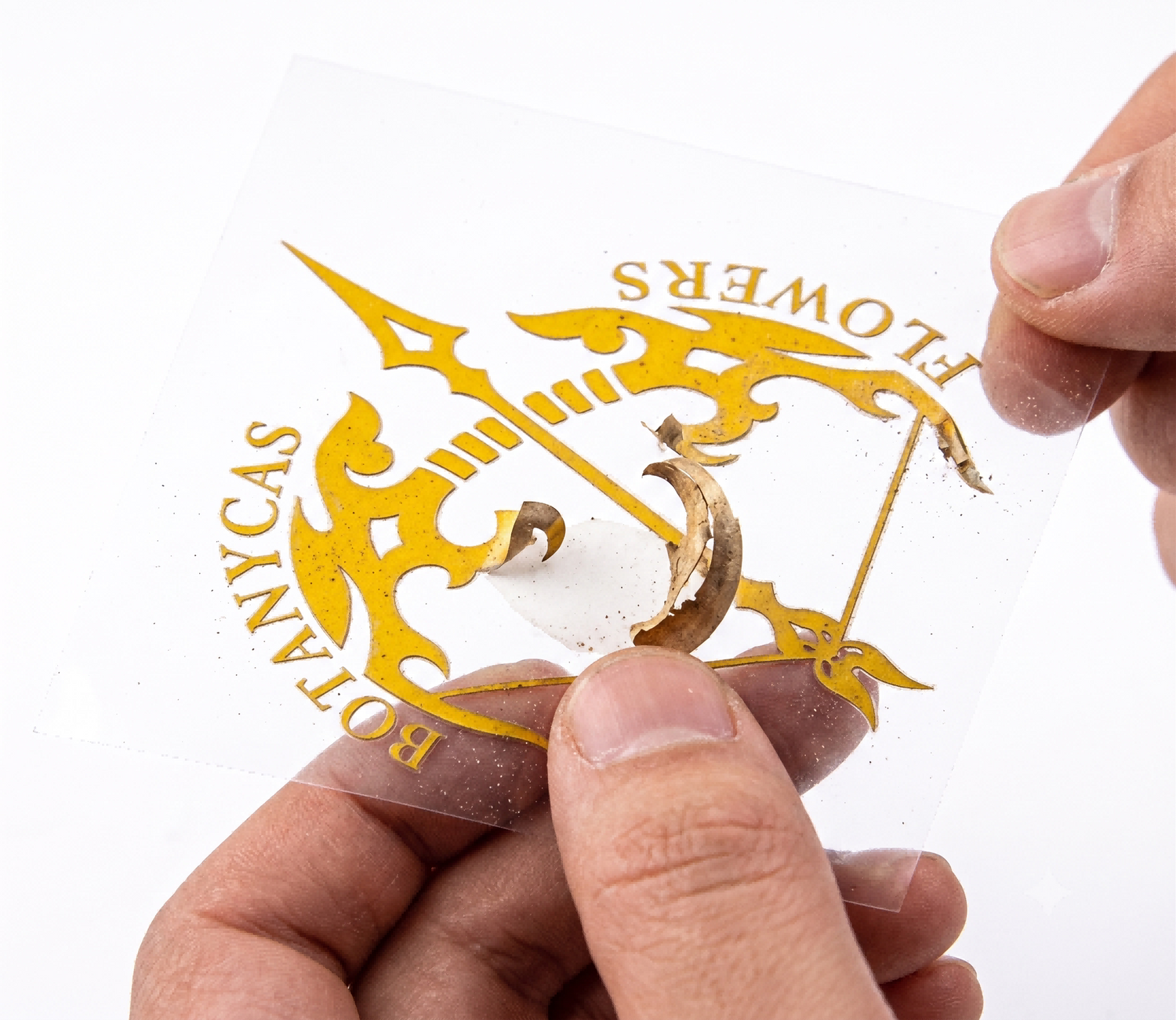
Why "It Looked Fine When It Shipped" Isn't Good Enough
Of all the ways a UV DTF transfer can fail, delayed lift is the one that does the most damage to a shop's reputation — because it doesn't show up on your bench. It shows up in your customer's inbox three days later, after the order has shipped, after the invoice is paid, and after you've already moved on to the next batch. By the time you hear about it, you're not troubleshooting one bad piece — you're often looking at an entire run that all left the shop with the same invisible problem.
This is exactly why delayed lift deserves its own diagnostic process, separate from the immediate application mistakes covered in our substrate adhesion guide. A transfer that fails on the bench is annoying but cheap — you catch it, you redo it, nothing ships. A transfer that fails after it's in a customer's hands is a refund, a re-print, shipping cost twice over, and — the part that actually costs you repeat business — a customer who now associates your shop with product that "doesn't hold up."
3 Delayed-Failure Patterns
Not all delayed failures look the same, and they don't all have the same fix. Use this table to diagnose which pattern you're actually looking at before assuming the batch is a total loss.
| Symptom | Typical Time Window | Root Cause | Reversible? |
|---|---|---|---|
| Edge curling (starts at corners and edges, spreads inward) | 1–3 days after application | Transfer handled, packed, or stacked before the adhesive finished curing; or thermal expansion mismatch from temperature swings in transit | Often, if caught early — reheating and re-pressing the edges can restore the bond before it fails completely |
| Total or sudden full detachment | 3–7 days after application | Substrate surface contamination or low surface energy that wasn't visible during a quick inspection (see our substrate guide for the materials most likely to cause this) | No — the transfer needs to be removed and reapplied to a properly prepped substrate |
| Localized bubble that slowly grows | Gradual, over 3–7+ days | Trapped air or moisture under the film that continues to expand, especially with heat exposure (a hot car, a warm storeroom) | Sometimes — small bubbles caught early can be pierced with a pin and re-pressed; bubbles that have migrated to an edge usually can't be saved |
The 24-Hour Adhesive Cure Window Explained
Here's what a lot of shops don't realize: a pressure-sensitive adhesive doesn't reach full bond strength the moment you finish pressing it down. The adhesive continues to "wet out" — flowing microscopically into the texture of the substrate and building molecular contact — for hours after application, with bond strength continuing to develop over a window that industry adhesive testing typically evaluates from 24 hours out to a full week for true long-term performance.
What that means in practical terms: a transfer that looks perfectly bonded 20 minutes after application hasn't actually finished bonding yet. If it gets boxed, stacked under other product, or flexed during packing before that cure window has passed, you're applying real mechanical stress to a bond that hasn't reached its full strength — and that's exactly the kind of stress that shows up as edge curling two or three days later, once the item is already in transit or in a customer's hands.
The fix is procedural, not material: build a minimum 24-hour hold after application before packing or shipping any UV DTF run, especially larger batches or anything that will sit stacked or under pressure during transit.
How to Stress-Test a Batch Before Shipping
Before a full production run goes out the door, pull a sample piece and run it through this before committing the whole batch to boxes.
Test 1: Temperature Cycling
Move the test piece between a warm environment (a car interior on a sunny day, or a spot near a heat vent — roughly 100–120°F) and normal room temperature, repeating the cycle 3–4 times over a few hours. Thermal expansion and contraction is exactly what a shipped product will experience in a delivery truck or a customer's car, and it's one of the fastest ways to expose a marginal bond before it's your customer's problem instead of yours.
Test 2: The Fingernail Press Test
After the full 24-hour cure window, run a fingernail firmly along every edge and seam of the test piece. Any edge that lifts, wrinkles, or shows resistance to lying flat under light pressure is a sign the bond hasn't fully set — don't ship that batch yet.
Test 3: Edge and Corner Stress Test
Corners and edges are always where a marginal bond fails first, since they have the least surface area holding them down. Gently try to lift each corner of the test piece with a fingernail. A properly cured transfer resists this; one that peels back easily is telling you something about the whole batch, not just that piece.
Run all three tests on a sample from every batch, not just the first run of a new design — substrate changes, film storage conditions, and even shop temperature on a given day can all shift results batch to batch.
Why This Comes Back to the Adhesive Layer, Too
A shop can follow every step above perfectly and still see inconsistent results if the adhesive layer itself isn't formulated consistently from roll to roll. Batch-to-batch adhesive variation is one of the hardest problems to catch, because it doesn't show up as a defect on day one — it shows up exactly as the delayed failures in the table above, days after a batch has already shipped.
Our UV DTF AB Film Roll is formulated for consistent adhesive performance roll to roll, so the 24-hour cure window and stress tests above behave predictably instead of turning into a guessing game every time you open a new roll. A few storage notes that protect that consistency: keep rolls sealed until use, store them flat or upright (never leaning under pressure), and keep them in a moderate, stable-humidity environment — a roll that's absorbed moisture or been compressed in storage will not adhere the same way a properly stored roll does, no matter how well you follow the cure and stress-test process above. Available in 12" and 24" widths, 328 ft per roll, sold as A film, B film, or the combined A+B set.
Frequently Asked Questions
How soon after applying a UV DTF transfer can I box it for shipping?
Give it a minimum of 24 hours before packing or stacking, and longer if the batch will be stacked under weight or shipped somewhere with significant temperature swings in transit. This isn't overly cautious — it's the window most pressure-sensitive adhesives need to build real bond strength, and shipping too early is one of the most common causes of edge curling that shows up after the product has already left your shop.
A transfer already shipped and the edges are lifting — can it be saved?
Sometimes, if it's caught early. Gently reheating the lifted area (a low-heat hair dryer works for small sections) and pressing it firmly back down can restore the bond if the adhesive hasn't fully failed yet. If the lift has progressed to full detachment, or if it's a contamination/substrate issue rather than a cure-time issue, reapplication on a properly prepped surface is the more reliable fix — see our substrate adhesion guide to rule out the material itself before reapplying.
Does summer heat in a car make edge curling worse?
Yes. A hot car interior can easily exceed 120–140°F, which stresses a marginal bond through thermal expansion and contraction in exactly the way described in the temperature cycling test above. If your product line includes tumblers or drinkware that customers are likely to leave in a car, it's worth specifically running the temperature cycling test on those items before a production run ships, not just the fingernail and edge tests alone.
Order Direct From a US-Based Supplier — Fast Shipping, Real Support, Real Backup When Something Goes Wrong
Building in a 24-hour cure window only works if your supply chain doesn't leave you scrambling for film mid-batch. SHL Supply ships every order within 48 hours from our own warehouse — no customs delays, no overseas lead times, so a proper cure schedule never has to compete with a tight deadline.
SHL Supply 12155 Mora Dr, Santa Fe Springs, CA 90670 Phone: 562-203-5165 | Email: info@shl-supply.com Hours: Monday–Friday, 9:00 AM – 5:00 PM (local pickup available)
We back every order with a straightforward, no-surprises policy: a money-back guarantee on all orders, free returns on any defective film or ink, and a flat 15% restocking fee on non-defective returns — no hidden conditions buried in fine print. If a batch behaves inconsistently and you're not sure whether it's a technique issue or a material issue, our support team will help you work through it directly rather than just pointing you back to a return form.
Ready to build a more reliable production process? Browse the UV DTF AB Film Roll and the rest of our UV Printing Materials collection — in stock and ready to ship. And if you're still narrowing down whether a lift issue is substrate-related, our substrate adhesion guide and our guide on How to Print on Tumblers with UV DTF Film cover the surface prep and application steps that prevent most of these problems before they start.


Leave a comment
This site is protected by hCaptcha and the hCaptcha Privacy Policy and Terms of Service apply.