
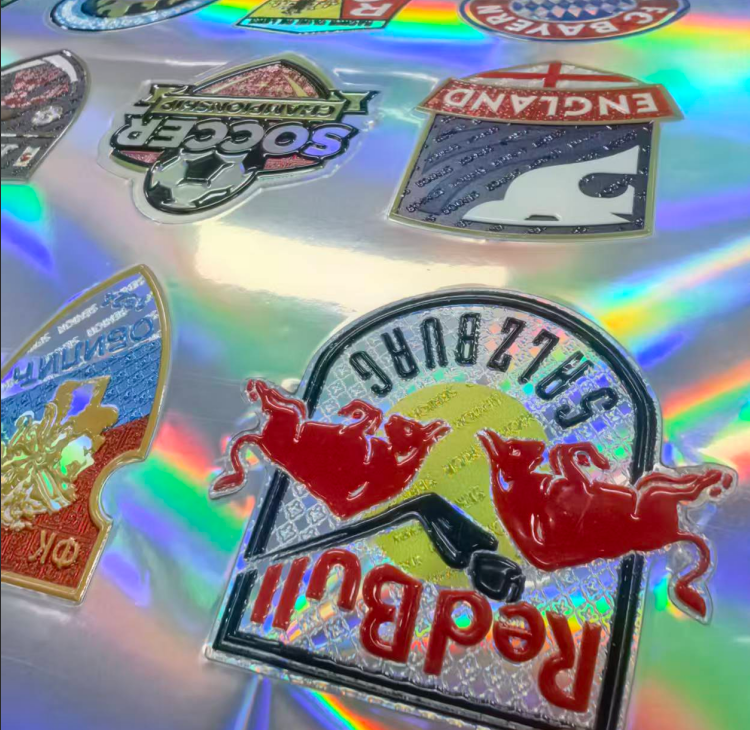
Quick Answer: Use the SHL 24-Inch UV DTF Printer to stack multiple passes of white UV ink onto SHL 3D TPU Heat Transfer Film, building a raised embossed structure. Add CMYK color and varnish on top, cut each patch, then heat-press onto your jersey at 150–160 °C for 10–15 seconds. The result: a professional-grade, flexible, wash-resistant 3D logo patch — no molds, no MOQ.
1. What Is a 3D TPU Jersey Logo Patch?
A 3D TPU jersey logo patch is a multi-layered, digitally printed badge made from thermoplastic polyurethane (TPU) film — a material prized for its elasticity, abrasion resistance, and strong heat-activated adhesion. Unlike flat heat transfer prints or screen-printed graphics, the "3D" in 3D TPU refers to a physically raised, tactile embossed texture that you can both see and feel.
The embossed effect is created by a UV DTF printer that precisely stacks multiple layers of white UV-curable ink onto the TPU film surface before applying color. Each ink pass adds real physical height. Once the raised white base is cured, CMYK color layers and a protective varnish coat are printed on top — creating a patch that is simultaneously a full-color graphic and a sculpted, three-dimensional object.
The finished patch is then die-cut and transferred onto jerseys, apparel, or accessories using a standard heat press machine.
Key Characteristics of a 3D TPU Heat Transfer Patch
- Raised, tactile texture — embossing depth is controlled by white ink pass count (4×, 6×, or 10×)
- Soft and flexible — stretches 5–20% with the fabric; does not crack or peel under repeated flexion
- 50+ wash cycle durability — UV-cured ink chemically bonded to TPU film resists cracking, fading, and delamination
- Full CMYK color + gradients — photographic-quality color, exact Pantone matching, metallic gold/silver foil options
- No molds required — 100% digital workflow; change designs between prints with zero tooling cost
- No minimum order quantity — one patch or one thousand, same efficient process
2. Why 3D TPU Patches Are Replacing Traditional Jersey Logo Methods
Sports teams, streetwear brands, and corporate uniform suppliers are rapidly switching to 3D TPU patches. Here's why:
🏆 Unparalleled Durability
Sportswear endures sweat, friction, intense washing, and physical contact. TPU is flexible enough to bend and recover with the fabric, while UV-cured inks resist cracking and color loss through 50+ wash cycles.
🎨 Superior Visual Impact
The glossy, raised 3D surface catches light at every angle. Full CMYK color, gradient support, and optional gold/silver foil effects produce a premium look that flat DTF or embroidery simply cannot match.
⚡ No Molds, No MOQ
Traditional silicone logos require $500–$2,000 in mold costs per design. 3D TPU patches are 100% digital — change the design between prints for zero cost. Ideal for small teams, limited editions, and startups.
🤸 Lightweight & Comfortable
TPU patches are thinner and lighter than embroidery. The smooth surface doesn't irritate skin during athletic activity. The patch conforms to the garment rather than fighting it.
💰 High-Margin for Print Shops
The same logo size that earns $3–5 as a flat DTF transfer can command $10–20 as a 3D TPU patch — because customers can see and feel the difference. It is one of the highest-margin services in apparel decoration today.
🏭 Fast Small-Batch Production
UV DTF printing is direct and digital — no powder shaking, no curing oven, no mold wait times. Small batches produce as efficiently as large runs, making on-demand customization fully viable.
3. Equipment & Materials You Need
Getting consistent, professional-quality 3D TPU jersey patches requires the right combination of printer, film, and ink. Standard sign-making UV printers loaded with hard UV ink will crack when the TPU flexes. Entry-level XP600-head printers cannot maintain the ink density required for reliable multi-pass white ink stacking.
The Printer: SHL 24-Inch UV DTF Printer with Foil Attachment
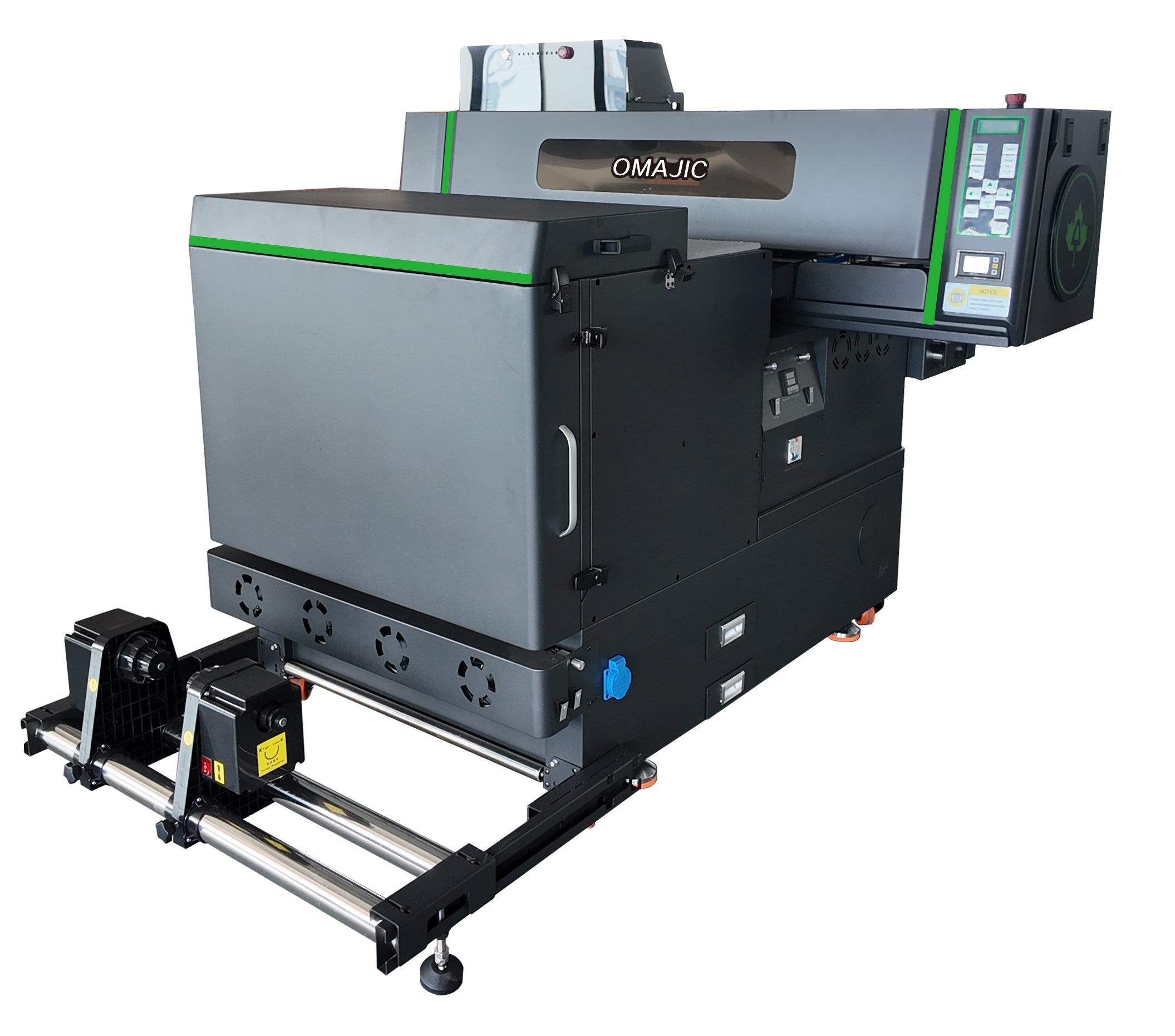
SHL's 24-inch UV DTF Printer is a roll-to-roll industrial system built specifically for high-build white ink applications, including 3D TPU patch production. It features 3× Epson i3200-U1 industrial-grade UV printheads — the same heads used in professional production environments worldwide.
Full Technical Specifications
| Specification | Detail |
|---|---|
| Printhead | 3× Epson i3200-U1 (industrial UV-grade) |
| Print Width | 24 inches (600 mm) |
| Ink Channels | CMYK + White + Varnish + Gold Varnish (foil channel) |
| Print Speed | 4-pass: 9 m²/hr | 6-pass: 6 m²/hr |
| RIP Software | PhotoPrint (white ink layer control, ICC profiles, color management) |
| Processor | Intel i7-8750H · 64 GB / 128 GB RAM · 15.6" 1080p touch screen |
| Power | 3,500 W |
| Lamination | Integrated Film A + Film B inline auto-lamination |
| Ink Alert | Auto anti-shortage monitoring (real-time alerts) |
| Package | 2,300 × 900 × 700 mm · 230 kg |
Why Epson i3200-U1 Beats XP600 for 3D TPU Printing
When stacking 6× or 10× white ink passes to build a raised 3D base, printhead consistency is everything. The i3200-U1 delivers:
- Finer, more consistent droplets — sharper edges on complex logos
- 3× faster print throughput than XP600-based printers
- Industrial lifespan — significantly longer than consumer-grade heads
- Stable high-density white ink output across every pass — no banding, no uneven embossing height
Gold Foil Attachment: Unlock a Premium Product Tier
The integrated foil attachment and dedicated gold varnish ink channel let you combine raised 3D embossing with metallic gold or silver foil accents in a single automated print run. Foil TPU patches command 2–4× the price of standard patches and have virtually no competition from DTF shops or embroiderers.
👉 View the SHL 24-Inch UV DTF Printer →
The Film: SHL 3D TPU Heat Transfer Film
SHL's 3D TPU Heat Transfer Film is not standard PET DTF film. It is a specialty dual-layer material engineered for UV printing and fabric heat transfer.
Full Material Specifications
| Property | Specification |
|---|---|
| Structure | 300 µm TPU printing surface + 100 µm PVC release layer |
| Available Finishes | White · Silver · Gold · Glow-in-Dark · Holographic |
| Stretch Ratio | 5%–20% (moves naturally with fabric) |
| Wash Resistance | Level 3 — anti-cracking, anti-fading, 50+ wash cycles |
| Heat Transfer Temp | 140–160 °C (300–320 °F) |
| Press Time | 10–15 seconds, firm pressure |
| Ink Compatibility | Soft UV ink (UV-LED curable, flexible) |
| Printer Compatibility | All UV DTF printers with soft UV ink |
The 300 µm TPU layer is significantly thicker than standard HTV or PET DTF film — this is what gives the UV ink a substrate to build physical height on. The 100 µm PVC release layer peels cleanly after pressing, leaving crisp edges with zero ghosting or adhesive residue.
4. Step-by-Step: How to Make 3D TPU Jersey Logo Patches with a UV DTF Printer
The full workflow from artwork to finished patch takes 20–40 minutes depending on patch complexity and order size. Here is exactly what to do at each stage.
Use Adobe Illustrator, CorelDRAW, or Photoshop. Key settings for 3D TPU output:
- Minimum 300 DPI for any raster elements; vector preferred for logos
- Create a dedicated white ink layer for areas you want physically raised — separate from the color layer
- Mark which areas get which white ink multiplier: 4× (subtle texture), 6× (medium raised), 10× (bold, pronounced embossing)
- Plan your varnish layer: gloss varnish for high-shine finish; matte varnish for flat tactile texture; no varnish for raw TPU surface
- For gold foil accents, add a spot color layer that the foil attachment will target separately
This is the most critical step for achieving a true 3D effect:
- Import your artwork and assign the SHL TPU Film media profile
- Set white ink pass count on your emboss layer: 4×, 6×, or 10×
- Set CMYK + varnish to print as a single layer on top of the completed white build
- Enable the gold varnish channel if using foil accents
- Adjust ink limits for soft UV ink on TPU to prevent over-saturation
The printer executes each white ink pass automatically, UV-curing between passes to build physical height. No manual steps between passes are required.
- Load the SHL 3D TPU Heat Transfer Film roll with the TPU printing surface facing up
- Set media tension to the correct range — loose tension causes layer misregistration in multi-pass builds
- Run a full nozzle check and clean any blocked channels before starting production
- Print a small test patch first to verify embossing height and color accuracy before committing to a full run
- Use 6-pass or higher for 3D TPU patches — slower passes give UV-LED lamps enough dwell time to fully cure each white ink layer before the next is applied
- Monitor the first few patches off the roll for consistent embossing height and color
- The integrated inline laminator automatically bonds Film B to Film A as the roll advances — no separate laminator needed
- Vinyl cutter with contour cutting — best for geometric shapes, team numbers, simple logos. Follows a printed registration mark automatically.
- Laser cutter — best for complex shapes: mascots, crests, organic forms. Cleanest possible edge quality.
- Cut through the TPU layer only — leave the PVC release liner intact for handling and heat press positioning.
| Parameter | Setting |
|---|---|
| Temperature | 150–160 °C (300–320 °F) |
| Press Time | 10–15 seconds |
| Pressure | Firm (medium-high) |
| Special Cases | Structured hats: use a dual-heated (top + bottom) press |
| Peeling | Peel the PVC release liner while still warm |
For jerseys and athletic wear made from polyester or nylon, the TPU adhesive bonds exceptionally well. Peeling the liner while warm ensures the adhesive edge lays perfectly flush to the fabric surface.
Before fulfillment, verify each patch for:
- ✅ Even embossing height across the entire raised area — no flat spots or dips
- ✅ Clean edge adhesion — no lifting, bubbling, or carrier residue at the patch perimeter
- ✅ Color accuracy — compare to your design proof; check varnish coverage is consistent
- ✅ Flex test — gently bend the fabric at the patch; a correctly applied SHL TPU patch flexes without cracking or lifting
5. Full Comparison: 3D TPU vs Silicone vs DTF vs Embroidery
Before choosing a jersey logo method, it's worth understanding exactly how they compare across every dimension that matters for a real print business.
| Feature | 3D TPU Patch (UV DTF) |
Liquid Silicone Logo | DTF Transfer | Embroidery |
|---|---|---|---|---|
| 3D / Raised Texture | ✅ Yes | ✅ Yes | ❌ Flat only | ❌ Flat only |
| Full CMYK + Gradients | ✅ Yes | ❌ Limited colors | ✅ Yes | ❌ No gradients |
| Gold / Foil Effects | ✅ Yes (foil attachment) | ❌ No | ❌ No | ❌ No |
| Mold / Setup Cost | ✅ Zero | ❌ $500–$2,000+ per design | ✅ Zero | ✅ Low |
| Minimum Order Quantity | ✅ 1 unit | ❌ High MOQ | ✅ 1 unit | ⚠️ Medium |
| Wash Durability | ✅ 50+ cycles | ✅ Excellent | ⚠️ Average (cracks/peels) | ✅ Good |
| Feel on Skin | ✅ Soft, smooth | ⚠️ Rubbery / stiff | ⚠️ Plastic film feel | ❌ Rough / scratchy |
| Flexibility | ✅ 5–20% stretch | ⚠️ Limited | ⚠️ Minimal | ❌ Rigid |
| Production Speed | ✅ Fast — direct digital print | ❌ Slow — mold forming + curing | ⚠️ Moderate — powder + cure | ❌ Slow — thread change |
| Design Change Cost | ✅ $0 — fully digital | ❌ New mold required | ✅ $0 | ✅ Low |
| Matte / Gloss Options | ✅ Both (varnish layer) | ⚠️ Limited | ❌ No | ❌ No |
| Best For | Premium small-batch custom logos | Mass production, simple shapes | Budget flat transfers | Heritage / traditional look |
3D TPU vs Silicone: The Clear Winner for Custom Work
Silicone logos rival 3D TPU patches on texture and durability — but require a physical mold for every single design, costing hundreds to thousands of dollars and weeks of lead time. With SHL's UV DTF printer and TPU film, you change designs between jobs for zero additional cost, making small-batch and on-demand production fully profitable.
3D TPU vs DTF: Dimensional Quality Wins Every Time
DTF transfers have become popular for their color range, but they are fundamentally flat. In the athletic and fashion market, the absence of tactile dimension positions DTF as the budget option. 3D TPU patches command significantly higher retail prices and outlast DTF dramatically in high-frequency wash environments like sports jerseys.
3D TPU vs Embroidery: Modern Replaces Traditional
Embroidery has heritage and craftsmanship associations, but it's heavy on thin jersey fabric, limited to thread colors, slow to produce, and rough against skin. 3D TPU patches deliver a cleaner, more modern athletic aesthetic with far greater design complexity, at faster speeds and lower per-unit cost for small batches.
6. Applications Beyond Jersey Logos
While jersey logo patches are the most visible application, 3D TPU heat transfer patches have a wide range of profitable use cases:
| Industry | Specific Applications |
|---|---|
| Sports & Teamwear | Football, basketball, soccer, esports jerseys; team crests; player number patches |
| Streetwear & Fashion | Brand chest logos, sleeve patches, back graphics, limited-edition garments |
| Footwear | Tongue labels, heel badges, toe box logos on athletic and lifestyle sneakers |
| Outdoor & Gear | Backpacks, cycling apparel, fitness wear, hats, tents, gloves |
| Corporate Workwear | Safety vests, uniform jackets, polo shirts, hi-vis clothing |
| Promotional Products | Trade show merchandise, branded tote bags, event giveaways |
The SHL 3D TPU Heat Transfer Film is also available in Gold, Silver, Glow-in-Dark, and Holographic finishes — opening specialty product lines in limited-edition sportswear and high-visibility gear that no competitor in your market can easily replicate.
7. Why Choose SHL Supply for Your UV DTF Printer and TPU Film?
There are overseas vendors who sell UV DTF printers and TPU film. Here is why sourcing from SHL Supply in Los Angeles produces measurably better outcomes for U.S. print shops and apparel businesses.
🏫 In-Person Training at Our Santa Fe Springs, CA Facility
This is the single biggest advantage SHL offers that virtually no other UV DTF supplier — domestic or overseas — can match. When you purchase the SHL 24-inch UV DTF Printer, you are invited to come to our facility at 12155 Mora Dr, Santa Fe Springs, CA 90670 for hands-on training with our technicians.
Training covers:
- Full machine setup, calibration, and TPU film media profile configuration
- White ink layering setup in PhotoPrint RIP for 3D embossing (4×, 6×, 10× pass configuration)
- Heat press parameters for different fabric types — jerseys, nylon, cotton blends, structured hats
- Contour cutting setup for your vinyl cutter or laser cutter
- Daily and weekly maintenance to protect your i3200-U1 printheads
- Troubleshooting common issues: banding, white ink clogging, registration errors
You leave with a fully working production workflow — not a manual to decipher alone. For businesses new to UV printing, this can save months of trial-and-error and thousands in wasted consumables.
🚚 Same-Day / Next-Day Shipping from Los Angeles Stock
SHL's 3D TPU heat transfer film, soft UV inks, and all accessories are stocked locally in Los Angeles. This means:
- Same-day or next-day shipping on consumables for urgent production runs
- No 3–6 week ocean freight delays from overseas suppliers
- No customs delays, import duties, or unpredictable landed costs
- Film rolls available in 24-inch width to match your printer out of the box — no waste trimming
When a customer places a rush order for a tournament or brand launch, your ability to fulfill it on time depends on having supplies arrive before the deadline — not after.
🛠️ Responsive U.S.-Based After-Sales Support
UV DTF printers are sophisticated production machines, and technical issues will occasionally arise. SHL's after-sales support team is US-based, English-speaking, and available during your business hours — not communicating through a 12-hour time-zone gap to an overseas factory.
Support coverage includes:
- Print quality troubleshooting: banding, white ink clogging, color shifts, layer misregistration
- RIP software configuration guidance specific to 3D TPU film workflows
- Replacement parts sourcing and expedited fulfillment
- Priority support queue for all UV printer purchasers
🤝 Transparent Wholesale Pricing — One Price for Everyone
SHL's core philosophy is flat, transparent wholesale pricing. Whether you are ordering a single roll of TPU film or a full printer package, you receive the same pricing that a large-volume customer receives. No hidden markups, no negotiation required, no tiered pricing tiers.
8. Frequently Asked Questions
What is a 3D TPU jersey logo patch?
A 3D TPU jersey logo patch is a flexible, embossed badge made from thermoplastic polyurethane (TPU) film. A UV DTF printer stacks multiple passes of white UV ink to build a physically raised 3D structure, then adds CMYK color and varnish on top. The finished patch is heat-pressed onto fabric at 150–160°C for 10–15 seconds, bonding permanently to the garment.
Can any UV printer make 3D TPU patches?
No. You need a UV printer that supports soft (flexible) UV ink and multi-pass white ink layering — minimum 4× passes for any perceptible embossing. Standard sign-making UV printers loaded with hard UV ink produce patches that crack the moment the TPU is flexed. The SHL 24-inch UV DTF Printer is fully configured and tested for soft UV ink on TPU film.
How many washes can a 3D TPU patch withstand?
SHL's 3D TPU Heat Transfer Film is rated Level 3 wash resistance — tested at 50+ wash cycles with no cracking, peeling, or significant fading, provided the patch was applied at the correct parameters. For maximum garment life, recommend end-customers wash inside out, cold or warm cycle, no high-heat tumble drying.
What is the minimum order quantity for 3D TPU patches?
There is no minimum. The UV DTF process is 100% digital — no molds, no screens, no setup fees. You can produce a single custom patch for an individual athlete or a production roll of 500+ for a team — using the same machine, the same film, and the same workflow.
What fabrics are compatible with 3D TPU heat transfer patches?
Polyester, nylon, spandex blends, and poly-cotton mixes bond strongest — these are the dominant materials in athletic jerseys, outerwear, and activewear. Pure cotton is compatible; use a Teflon sheet during pressing and extend dwell time by 3–5 seconds for best adhesion.
What heat press settings should I use for 3D TPU jersey patches?
Use 150–160 °C (300–320 °F), 10–15 seconds, firm pressure. For structured items like fitted hats, a dual-heated press (heating both top and bottom platens) is strongly recommended to ensure the thick TPU material bonds properly through the hat construction. Always peel the release liner while the patch is still warm.
Can I add gold or silver foil effects to 3D TPU patches?
Yes — the SHL 24-inch UV DTF Printer includes a foil attachment and dedicated gold varnish ink channel. You can combine raised 3D embossing with metallic gold or silver foil accents in a single automated print run. Foil TPU patches are a premium product tier with significantly higher retail price points.
Does SHL Supply offer in-person training for the UV DTF printer?
Yes. All UV printer purchasers are welcome at SHL's facility at 12155 Mora Dr, Santa Fe Springs, CA 90670 for hands-on training. We cover machine setup, PhotoPrint RIP configuration for 3D white ink layering, heat press parameters for different fabric types, cutting setup, and preventive maintenance routines.
How fast does SHL Supply ship TPU film and UV ink supplies?
SHL stocks 3D TPU heat transfer film, soft UV inks, and accessories locally in Los Angeles. Same-day and next-day shipping is available on consumables. No overseas freight delays, no customs uncertainty.
9. Ready to Start Making 3D TPU Jersey Logo Patches?
Adding 3D TPU patch production to your business is one of the highest-margin moves available in custom apparel today. The equipment is proven, the workflow is efficient, and the market demand is growing fast.
Start here:
- 🖨️ SHL 24-Inch UV DTF Printer with Foil Attachment →
3× Epson i3200-U1 · CMYK + White + Varnish + Gold Foil · Integrated lamination · PhotoPrint RIP - 🎞️ SHL 3D TPU Heat Transfer Film →
300 µm TPU · 5–20% stretch · Level 3 wash resistance · White · Silver · Gold · Glow-in-Dark · Holographic
📍 Visit or Contact Us:
SHL LA Supply — 12155 Mora Dr, Santa Fe Springs, CA 90670
In-stock inventory · Same/next-day shipping · In-person training · U.S.-based after-sales support
Whether you're a jersey decorator ready to upgrade from flat DTF, a streetwear brand bringing patch production in-house, or a print shop adding a premium high-margin service — SHL Supply has the equipment, the materials, and the hands-on local support to get you producing professional 3D TPU jersey logo patches from day one.

Leave a comment
This site is protected by hCaptcha and the hCaptcha Privacy Policy and Terms of Service apply.