
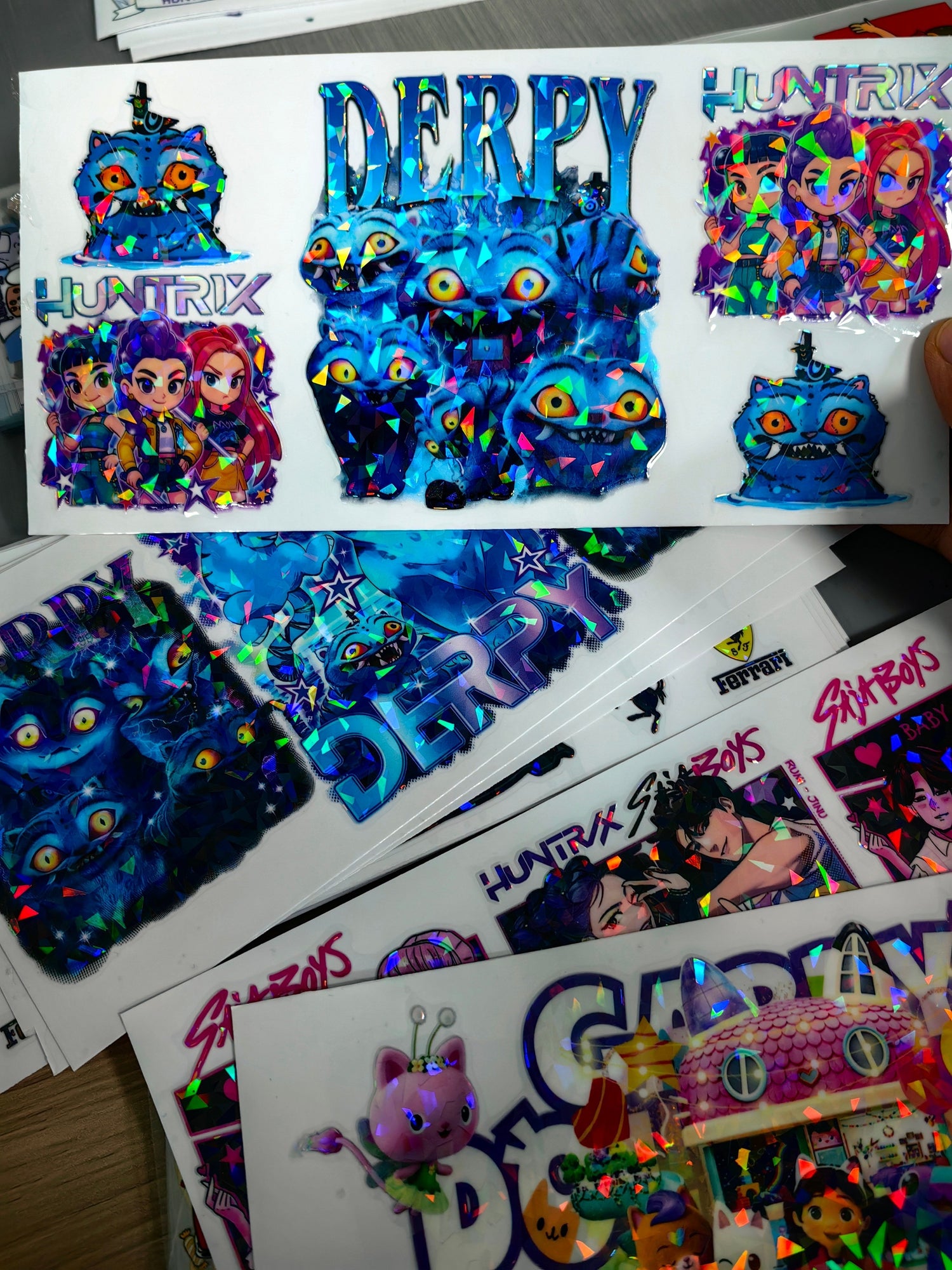
UV DTF vs Vinyl Stickers vs DTF: Which Is Right for Your Business?
"Which printing method should I use?" comes down to one question before any other: what are you putting the design on? UV DTF, vinyl stickers, and DTF (garment) transfers aren't really competing for the same jobs — each one is built around a different surface and a different business model. Confusing them is the single most common mistake new sellers make: buying a DTF printer expecting it to handle tumbler stickers, or trying to vinyl-wrap a curved water bottle and wondering why the edges lift.
This guide lines them up side by side on the things that actually matter for a buying decision: cost, durability, equipment, and which product categories each one is genuinely good at, so you can match the method to what you're actually planning to sell rather than the other way around.
Quick Comparison: UV DTF vs Vinyl vs DTF
| Dimension | UV DTF Sticker | Vinyl Sticker | DTF (Garment) Transfer |
|---|---|---|---|
| Best-suited surface | Hard/curved: glass, metal, plastic, ceramic | Flat, hard/smooth surfaces | Fabric only (cotton, poly, blends) |
| Heat press required? | No | No | Yes |
| Typical durability | ~2–5 years | ~3–7 years (outdoor-grade vinyl) | Many washes with proper care (fabric-dependent) |
| Cost per unit (small run) | Moderate | Low | Low–moderate |
| Equipment investment | Moderate–high (UV printer, AB film, laminator, cutter) | Low (vinyl cutter/plotter) | Moderate (DTF printer, powder shaker, heat press) |
| Minimum order | None | Often high for custom die-cuts | None (per-garment printing) |
| Best product category | Drinkware, gifts, branded hard goods | Promo labels, packaging, signage | Apparel, tote bags, textiles |

The short version: if you're printing on fabric, that's DTF's job alone — neither of the other two methods works on textiles. If you're printing on a hard, curved surface like a tumbler or phone case, UV DTF is purpose-built for it in a way vinyl isn't. And if you're printing on a flat, hard surface at high volume — think bulk packaging labels or large outdoor signage — vinyl usually wins on cost per unit. The sections below go through each in more detail.
Where UV DTF Sticker Fits
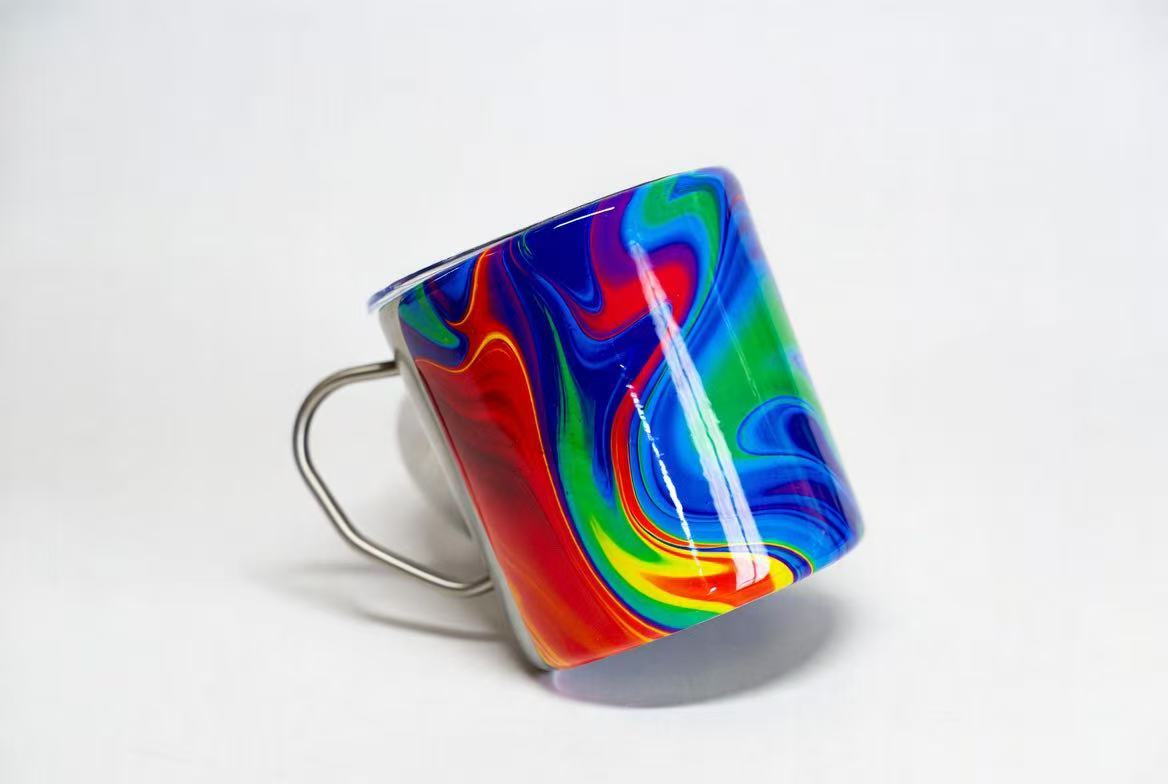
UV DTF's whole value proposition is hard, non-porous, often curved surfaces — tumblers, water bottles, laptops, phone cases, glass, metal signage, and branded packaging. It applies without a heat press (peel, press, done), and a commonly cited durability range is 2–5 years under normal indoor or hand-washed conditions, with shorter lifespans for items exposed to constant sun or heavy dishwasher use.
Where UV DTF really separates itself is flexibility at small scale: no minimum order, gang-sheet production for mixed designs, and a glossy, dimensional finish that reads as more premium than a flat printed label. That combination makes it the strongest fit for sellers building a drinkware or gift-focused shop, or brands wanting hard-good merchandise (mugs, laptop stickers, packaging labels) without committing to bulk vinyl runs. It's also the method that best supports personalization — since there's no die-cutting tooling to set up per design, a shop can offer "add any name" or "choose your design" listings without the setup cost that would make that offer unprofitable with vinyl or screen printing.
Where Vinyl Stickers Fit
Vinyl stickers — cut from adhesive vinyl on a vinyl cutter/plotter, then weeded and applied — remain the cheapest way to produce a flat, durable sticker at volume. Outdoor-grade cast vinyl is genuinely tough: with a laminate layer, it can hold up 3–7 years outdoors, which is why it's still the standard choice for car decals, storefront window graphics, and long-term signage that needs to survive years of sun and weather.
The tradeoffs: vinyl is essentially a flat-surface product. It doesn't have the raised, glossy texture or built-in adhesive-and-topcoat sandwich of UV DTF, and while it can be waterproof with the right laminate, standard printed/cut vinyl without lamination is more vulnerable to scratching and fading than a UV DTF sticker's sealed topcoat. Custom die-cut vinyl shapes also tend to come with real minimum order quantities once you move past simple square/rectangle labels, since cutting dies and setup time need to be spread across a larger run to stay affordable. Vinyl is the right call for short-term promotional labels, packaging stickers, and any job where you're ordering the same design in bulk — a run of 500 identical logo stickers for product packaging, for instance, will almost always cost less per unit through vinyl than through UV DTF, simply because vinyl production scales down in cost as volume goes up more efficiently than film-and-adhesive-based UV DTF does.
Where DTF (Garment) Transfer Fits
Regular DTF — the process most people mean when they just say "DTF" without the "UV" — is built exclusively for fabric. Ink is printed onto a film, hot-melt adhesive powder is applied and cured, and the finished transfer is heat-pressed onto a garment at roughly 300–320°F. It's the go-to method for custom t-shirts, hoodies, tote bags, and other soft goods because it handles small, full-color, one-off orders far better than screen printing.
The catch, in this comparison, is that regular DTF simply doesn't apply to hard surfaces — you can't heat-press a design onto a glass tumbler or a metal water bottle. If your product line is apparel, DTF (or heat transfer vinyl for simpler designs) is still the right tool. If it's drinkware or hard goods, DTF isn't in the running at all — that's the gap UV DTF was built to fill.
It's worth being clear about this because the naming causes real confusion: "UV DTF" and "DTF" share three of four letters and a similar-sounding printing concept, but a supplier or piece of equipment built for one won't do the other's job. If a print shop already owns a DTF setup for apparel and wants to add drinkware to their lineup, that's a second, separate equipment purchase — not an upgrade to the existing printer.
Production Process, Side by Side
The workflows share a common shape — print, prepare, apply — but differ in exactly where the extra steps live:
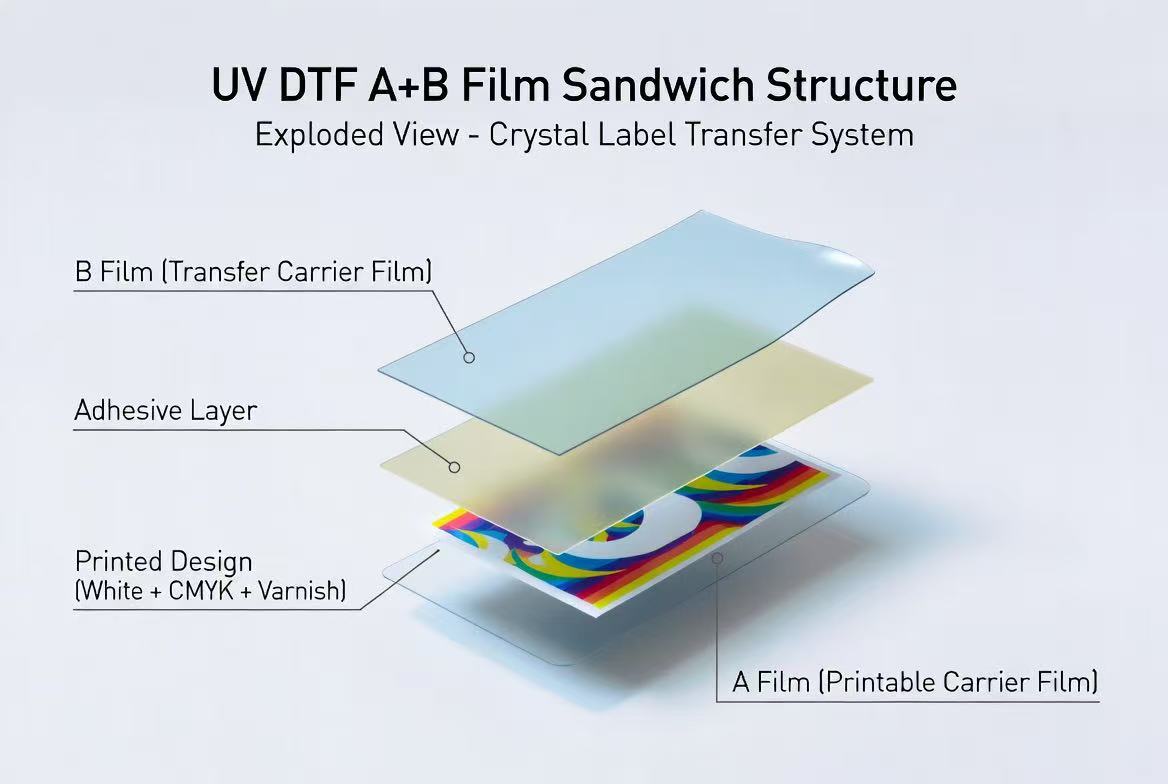
UV DTF: Print design on A film with UV-curable ink (cured instantly under UV light) → laminate with B film → cut (die-cut or gang sheet) → customer/seller peels backing, presses onto surface by hand, removes carrier film. No heat step anywhere in the process.
Vinyl: Print design (if using printable vinyl) or skip straight to cutting for solid-color vinyl → cut on a vinyl plotter → weed away excess vinyl → apply transfer tape → position and burnish onto the surface → remove transfer tape. No heat press for standard adhesive vinyl, though laminating adds a step.
DTF (garment): Print design in reverse onto film → apply hot-melt adhesive powder → cure powder in a heat oven or press → position on garment → heat press at high temperature for 10–15 seconds → peel film while hot or cold depending on the film type.
The practical takeaway: UV DTF and standard adhesive vinyl both skip the heat-press step entirely, which is where garment DTF adds real time, equipment, and skill requirements to every single unit produced.
Cost & Equipment Investment
This is usually the deciding factor once surface compatibility is settled, so it's worth being specific about what each method actually costs to get started.
A basic vinyl cutter/plotter is the cheapest entry point, generally running $200–$2,000 depending on cutting width and precision — no heat press is needed for standard adhesive vinyl stickers (only for heat transfer vinyl on garments), so a hobbyist-level setup can be genuinely inexpensive.
A DTF printer setup is a bigger commitment: printers typically run $5,000–$15,000, plus a heat press ($300–$1,000) and consumables like adhesive powder and film. This is a real production investment aimed at apparel businesses running consistent volume.
A UV DTF printer sits in between, generally $2,300–$7,000 for small-business-oriented models, plus a laminator to bond the A and B film layers and a cutter for die-cutting individual designs. Per-unit material costs (film + ink) commonly land in the $1.50–$5.00 range depending on size and design complexity — no heat press line item at all, which offsets some of the printer cost over time.
Here's the part that matters for a business decision, though: UV DTF's higher upfront equipment cost tends to come with a higher price ceiling per item too. A custom UV DTF sticker on a tumbler is a premium, gift-worthy product that customers will pay noticeably more for than a plain vinyl label — which is why sellers moving into UV DTF are usually positioning themselves toward higher-margin, higher-value custom gifts and branded merchandise rather than competing purely on cheap, high-volume stickers.
Put another way: a $2,000 vinyl cutter can produce a $1 sticker profitably at volume, but it can't produce a $15 personalized tumbler decal at all. A $2,300–$7,000 UV DTF printer costs more to acquire, but it opens up a product category with meaningfully higher price points and profit per unit — which is often how sellers justify the bigger initial investment within a few months of steady orders rather than treating it as a slow-payback purchase.
How to Decide: A Quick Checklist
If your products are primarily apparel — t-shirts, hoodies, tote bags — regular DTF (or HTV for simpler single-color designs) is the right starting point. Fabric is the one surface UV DTF and vinyl genuinely can't compete on.
If you're producing short-term promotional labels, packaging stickers, or bulk signage where cost-per-unit at high volume matters more than a premium finish, vinyl stickers are usually the more economical choice — especially for large outdoor graphics where vinyl's 3–7 year weather resistance is a real advantage.
If you're building a business around drinkware, personalized gifts, branded merchandise, or any hard-surface product where customers will pay for a premium look, UV DTF is the clearest fit. The no-heat-press application, curved-surface compatibility, and glossy finish are specifically what that market wants — and it's the only one of the three that can put a full-color design on a stainless tumbler at all.
Many shops end up running two of these side by side rather than picking just one — DTF for the apparel line and UV DTF for the drinkware/gift line is a common combination once a business has product lines in both categories. A useful gut-check if you're still unsure: picture your bestselling or most-requested product right now. If you can picture it being worn, that points to DTF or HTV. If you can picture it sitting on a desk, in a car, or being unboxed as a gift, that points to UV DTF. If it's a sticker meant to be handed out by the hundreds — a promo giveaway, a packaging label — that points to vinyl.
If You Decide to Get Into UV DTF, What's Next?
Once the surface and business case point toward UV DTF, the next question is practical: what equipment do you actually need to start printing — a UV DTF printer, laminator, cutter, and the right AB film — and what should you budget for a first setup? That's exactly what we'll walk through next, with specific equipment recommendations for different production volumes.
FAQ
Is UV DTF more expensive than DTF or vinyl stickers? Per unit, UV DTF stickers typically cost more than basic vinyl labels but are comparable to or sometimes cheaper than garment DTF transfers, depending on size and order volume. Upfront equipment cost for UV DTF (roughly $2,300–$7,000 for small-business printers) is usually lower than a full DTF garment setup ($5,000–$15,000 plus a heat press) but higher than a basic vinyl cutter ($200–$2,000).
Can I use a regular DTF printer for UV DTF stickers? No. UV DTF requires a printer built for UV-curable inks and UV curing lamps, which is different hardware from a standard DTF (pigment ink + powder adhesive) printer. You can't retrofit a regular DTF printer to do UV DTF — they use different ink chemistries and different film types.
Which lasts longer: UV DTF, vinyl, or DTF transfers? Outdoor-grade cast vinyl generally lasts the longest in harsh outdoor conditions (roughly 3–7 years with lamination), followed by UV DTF (roughly 2–5 years, more if kept indoors or protected from constant sun), while DTF garment transfers are rated by wash cycles rather than years and hold up well through dozens of washes with proper care.
Do UV DTF stickers work on fabric? Not reliably. UV DTF's adhesive is formulated to bond to hard, non-porous surfaces, not to flex and breathe with woven fabric, so it can crack or peel on clothing over time. For fabric and garments, regular DTF or heat transfer vinyl (HTV) is the appropriate method.

Leave a comment
This site is protected by hCaptcha and the hCaptcha Privacy Policy and Terms of Service apply.