
Reasons UV DTF Stickers Are Taking Over Custom Printing
If you've been anywhere near TikTok Shop or Etsy in the last year, you've probably noticed how fast UV DTF stickers have gone from niche craft product to a full-blown category. Sellers who started with a single desktop printer are now running entire storefronts around tumbler decals, and print shops are adding UV DTF as a low-investment side product. If you're wondering what all the interest is about, it comes down to five practical advantages that make UV DTF genuinely different from older sticker and transfer methods.
Every one of these benefits ties back to the same source: UV-cured ink on a two-layer AB film, applied with pressure instead of heat. (If you haven't already, our guide on what a UV DTF sticker actually is covers the basics before diving into why it works so well.) Here's what that combination actually gets you.

1. No Heat Press Required
The single biggest barrier to entry for most custom transfer methods is equipment. Screen printing needs exposure units and emulsion. Sublimation needs a heat press and specific blanks. Garment DTF needs a heat press too, plus a powder shaker and curing oven.
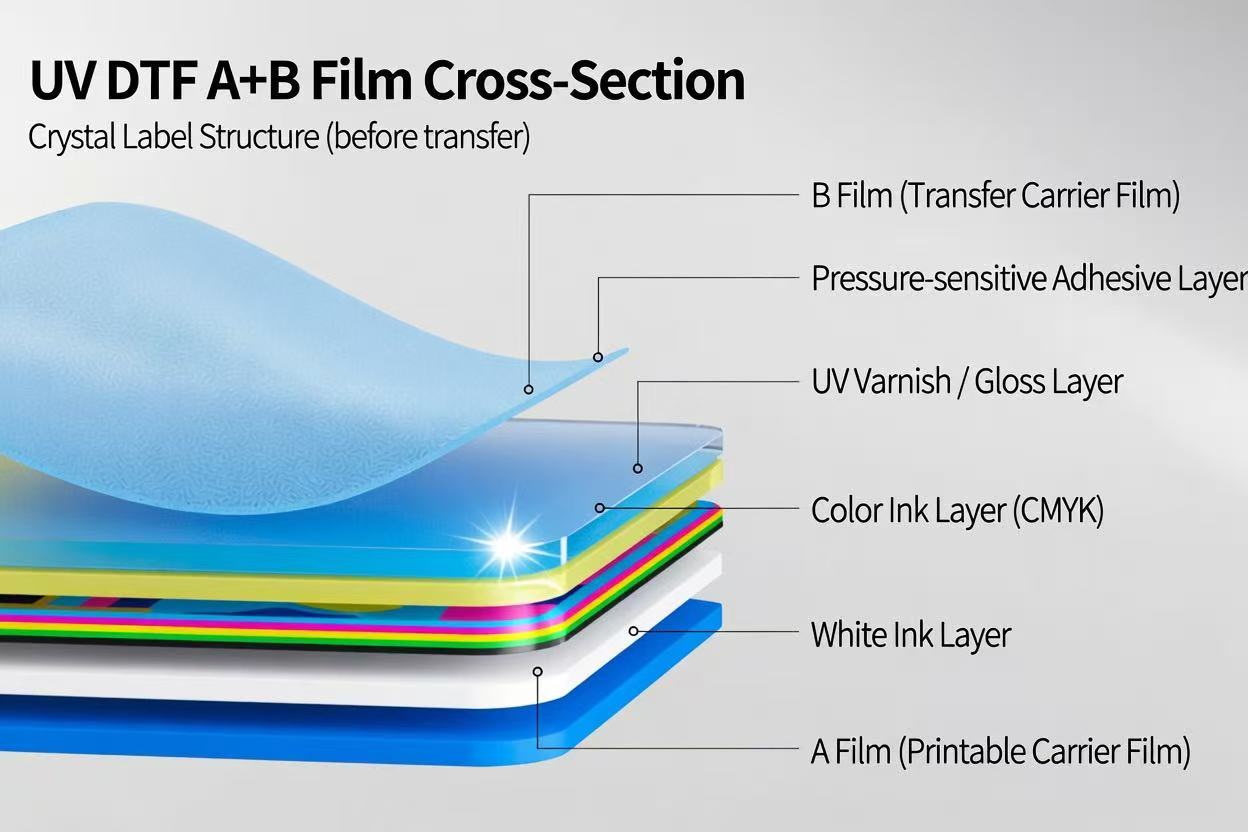
UV DTF skips all of that on the application side. Because the ink is already fully cured by UV light during printing, applying the sticker is just: peel the paper backing, position the sticker, press it down firmly by hand (or with a plastic squeegee for larger pieces), then peel away the top carrier film. That's it — no temperature settings, no timing, no risk of scorching a surface or under-curing a transfer.
This is a big deal for anyone starting a small shop from a spare bedroom or a corner of an apartment. You don't need a $300+ heat press, a dedicated 220V outlet, or a workspace that can handle high heat and steam venting. A desk, a squeegee, and a UV DTF printer (or a supplier who prints ready-to-apply sheets for you) is genuinely enough to start selling.
It also removes an entire category of production mistakes. Heat-based methods live and die by getting temperature, pressure, and timing exactly right — press too hot or too long and you scorch the material or the transfer; press too cool or too briefly and the design peels within days. UV DTF's adhesive is already fully formed and cured before it reaches the customer, so the application step is far more forgiving. Anyone on staff can apply a sticker correctly on their first try, which matters a lot if you're training seasonal help or fulfilling orders yourself between other tasks.
2. Works on Curved & Hard Surfaces
Regular DTF transfers are built for fabric — they need heat and pressure to bond adhesive powder into woven fibers. That means the moment you move to a rigid, non-porous item like a glass tumbler, a laptop lid, or a phone case, standard DTF simply doesn't work.
UV DTF was built to fill exactly that gap. Its adhesive layer is designed to bond to glass, metal, plastic, ceramic, acrylic, and painted or coated wood — surfaces that heat-press methods and fabric-based transfers can't touch. And because the film itself has some flexibility before it's fully set, it conforms to curved surfaces like tumblers, bottles, and helmets, not just flat ones.
This is really the feature that opened up an entirely new product category. Before UV DTF, getting a full-color, photo-quality design onto a stainless tumbler usually meant sublimation (which requires special coated blanks, not just any tumbler) or laser engraving (which can't do full color at all, only etched line art). UV DTF stickers work on the tumbler, laptop, or phone case a customer already owns — no special "sublimation-ready" blank required.
Worth noting: this strength is also a boundary. UV DTF isn't a fabric solution — it's not meant for t-shirts, hats, or tote bags, since the rigid adhesive layer doesn't flex or breathe with woven material the way garment DTF or heat transfer vinyl does. If a design needs to go on both a tumbler and a hoodie, you'd typically use UV DTF for the hard-surface piece and regular DTF or HTV for the fabric piece.
3. Waterproof & Scratch Resistant
Because the design is sealed under a clear UV-cured topcoat rather than sitting exposed on a surface, finished UV DTF stickers hold up well against water, everyday scratches, and normal handling. That's part of why they've become the default choice for drinkware — a sticker on a water bottle needs to survive condensation, hand washing, and being tossed in a bag.
Durability claims vary by supplier and by how the sticker is used, but a commonly cited range in the industry is 2–5 years of useful life under normal conditions — hand-washed drinkware and indoor items (laptops, indoor signage, packaging) tend to land at the longer end of that range, while stickers exposed to direct sun, dishwashers, or heavy daily handling wear faster. Outdoor and vehicle applications are more sensitive to prolonged UV exposure and temperature swings, so a sticker on a car window or an outdoor sign may need reapplication sooner than one on a tumbler that lives on a desk. If you want maximum longevity on an outdoor or heavily-used item, a clear protective topcoat after application can extend that window further.
4. Vivid Color With a Glossy, Dimensional Finish
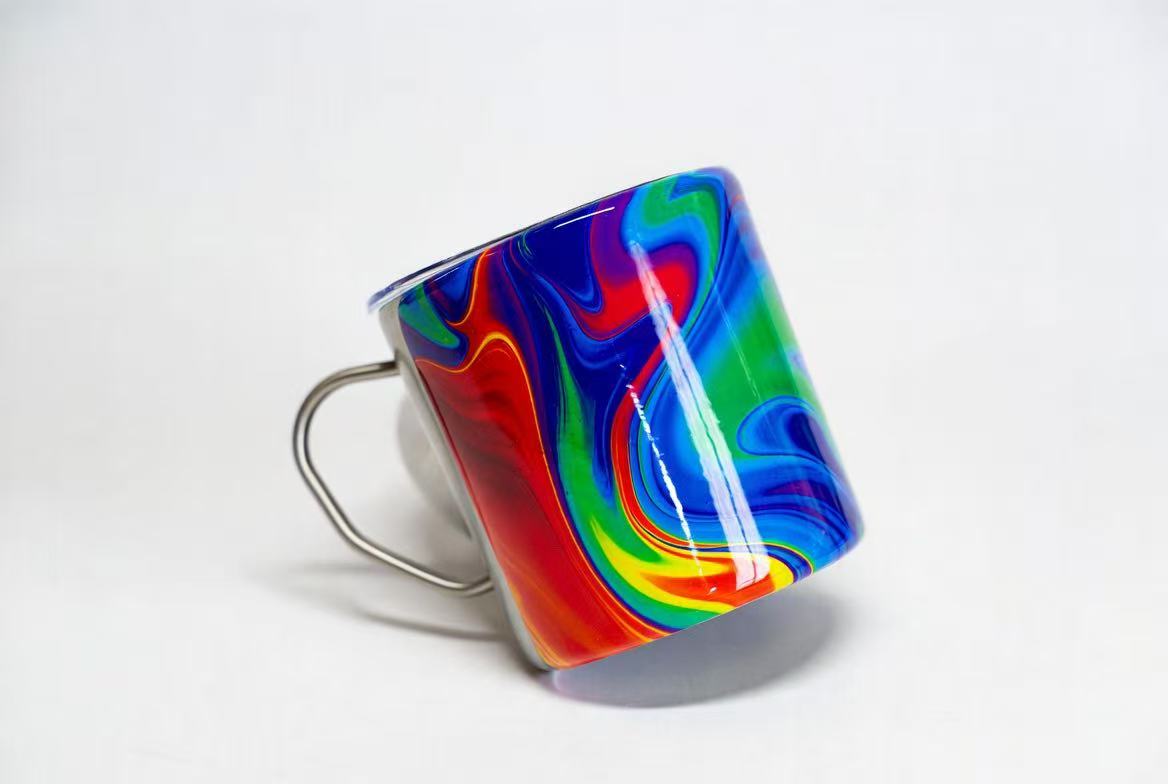
Because UV DTF printing lays down a white ink base, full CMYK color, and a clear gloss coating in a single automated pass — all cured layer by layer under UV light — the finished sticker has a color depth and shine that flat, standard printed stickers don't match. Colors read bright and saturated even on clear or dark substrates, since the white layer underneath prevents the surface color from showing through or dulling the design.
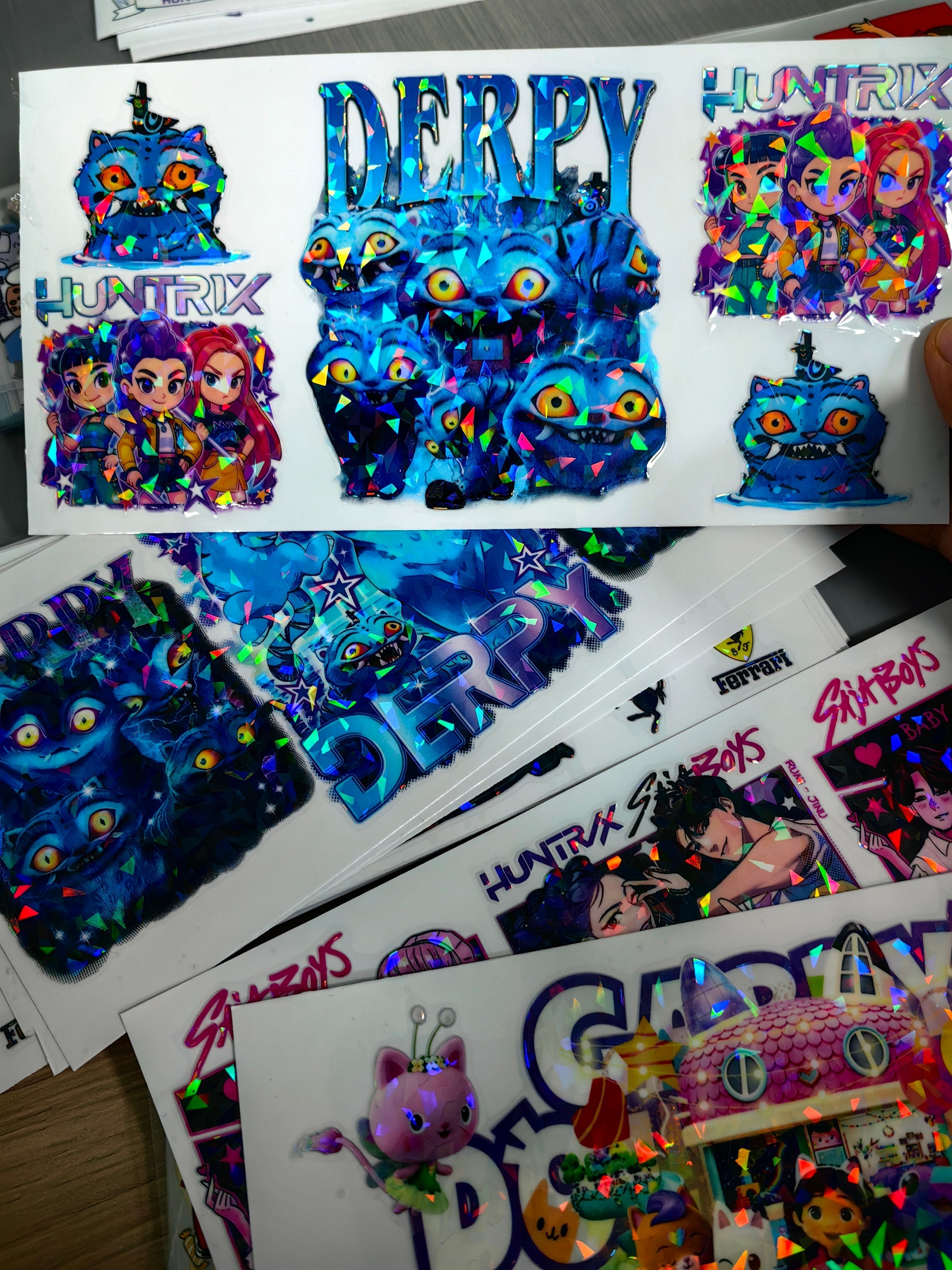
The gloss topcoat also gives UV DTF its signature slightly-raised, almost 3D texture — you can feel the edge of the design when you run a finger over it, which reads as a more premium, higher-end product than a flat printed label. For sellers, that visual and tactile difference is often what separates a sticker that looks "homemade" from one that looks like it came from a professional print shop.
It also holds up better over time than home-printed stickers. A standard inkjet-printed label — even a laminated one — tends to fade noticeably within weeks of sun exposure and can smear or bleed if it gets wet before lamination fully seals it. Because UV DTF ink is cured instantly under ultraviolet light rather than air-dried, there's no window where the ink is vulnerable to smudging, and the color doesn't shift or fade nearly as quickly under normal use.
5. No Minimums, Fast Turnaround
Traditional vinyl stickers and screen-printed decals typically require minimum order quantities in the hundreds to make the setup cost worthwhile — die lines, screens, and tooling all cost money before the first sticker ever prints. That's a real obstacle for a seller who wants to test five new designs before committing to a bulk run.
UV DTF sidesteps that with gang sheets — multiple designs printed together on one sheet and cut apart — plus the ability to print and cut individual pieces on demand. There's no tooling to amortize, so a single custom sticker is just as feasible to produce as a run of a thousand. That makes UV DTF a natural fit for made-to-order Etsy listings, one-off personalized gifts, and small businesses that need to react quickly to what's actually selling rather than committing to a large batch upfront.
It also changes how sellers can price and test products. Instead of guessing which five designs will sell before ordering 500 of each, a shop can print a gang sheet with fifteen or twenty designs, list them all, and simply reorder more of whichever ones actually move. Turnaround on a reprint is typically measured in a day or two rather than the week-plus lead time common with screen-printed or die-cut vinyl runs — which matters when a design goes unexpectedly viral and a shop needs to restock fast.

UV DTF Sticker vs. Vinyl Sticker vs. Regular Printed Sticker
Here's a quick side-by-side to put these five advantages in context against the two products most sellers are choosing between. Neither vinyl nor regular printed stickers is "worse" across the board — vinyl still wins for large outdoor runs where a business is ordering hundreds of the same design, and regular printed stickers are hard to beat for cheap, short-term indoor labeling. UV DTF's advantage is in the middle: small, varied, hard-surface orders where flexibility matters more than raw per-unit cost at scale. We'll break this comparison down in much more depth — including cost per unit and best-use recommendations for each — in the next article.
| UV DTF Sticker | Vinyl Sticker | Regular Printed Sticker | |
|---|---|---|---|
| Works on curved/hard surfaces | Yes | Yes | Limited (mostly flat) |
| Waterproof | Yes | Yes | Usually no (unless laminated) |
| Requires heat press | No | No | No |
| Minimum order quantity | None (single pieces OK) | Often 100s+ | None |
| Typical durability | ~2–5 years | ~3–7 years outdoors | Months (fades, peels) |
| Finish | Glossy, raised/3D texture | Flat, matte or gloss | Flat, often thin/papery |
| Setup cost/equipment | Low (UV printer only) | Higher (cutting, tooling) | Low |
| Best for | Small-batch, curved items, drinkware | Long-term outdoor/vehicle graphics at scale | Indoor, short-term labeling |
FAQ
Are UV DTF stickers actually waterproof? Yes. The UV-cured gloss topcoat seals the design, making finished UV DTF stickers water-resistant enough for hand-washed drinkware, water bottles, and everyday moisture exposure. They're not indestructible, though — prolonged submersion, dishwashers, and abrasive scrubbing will shorten their lifespan faster than gentle hand washing.
Can UV DTF stickers go on tumblers and car windows? Yes, both are common applications. Tumblers and other drinkware are the most popular use case since the film conforms well to curved glass and stainless surfaces. Car windows work too, though outdoor/vehicle use means more UV and temperature exposure, so expect a shorter lifespan than an indoor item unless it's protected from direct sun.
Do UV DTF stickers require special equipment to apply? No. Applying a UV DTF sticker just takes clean hands (or a plastic squeegee for larger designs) — peel the backing, press the sticker onto a clean surface, smooth out any air bubbles, then remove the top carrier film. No heat press, laminator, or other equipment is needed on the application side.
How long do UV DTF stickers last outdoors? Outdoor durability varies with sun exposure, climate, and surface, but many suppliers cite roughly 1–3 years for outdoor or vehicle applications, compared to longer indoor lifespans that can stretch toward the higher end of the 2–5 year range. Direct, constant sunlight and temperature swings are the biggest factors that shorten that window — a shaded or covered surface will outlast one in full daily sun, and a clear protective topcoat applied after installation can add meaningful extra life to a vehicle or sign application.

Leave a comment
This site is protected by hCaptcha and the hCaptcha Privacy Policy and Terms of Service apply.