
If you print transfers for a living, you've probably already heard both terms thrown around: DTF and UV DTF. They sound like variations on the same idea, and in some ways they are — both let you print a design once and transfer it elsewhere without screens, without pretreatment, without a huge minimum order. But they solve different problems, use completely different film and ink systems, and work on almost opposite categories of substrate. Picking the wrong one for a job wastes film, wastes ink, and in UV DTF's case, can waste an entire print if you try to run it on the wrong surface.
This guide breaks down exactly how each process works, where they diverge, and how to decide which one — or whether both — belongs in your shop.
What Is Traditional DTF Printing?
Traditional DTF (Direct-to-Film) printing is built for soft goods — t-shirts, hoodies, tote bags, and virtually any fabric, regardless of color or fiber blend. The process runs in four steps: print the design in reverse onto a PET film using pigment DTF ink, apply adhesive powder to the wet ink while it's still tacky, cure the powder in an oven or curing unit, then heat-press the finished transfer onto the garment.
The heat press is what actually bonds the transfer to the fabric — melting the powder adhesive into the fibers under heat and pressure. Because the bond happens on fabric, traditional DTF transfers can flex and stretch with the garment, and finished prints typically hold up through 50–100 wash cycles.
What Is UV DTF Printing?
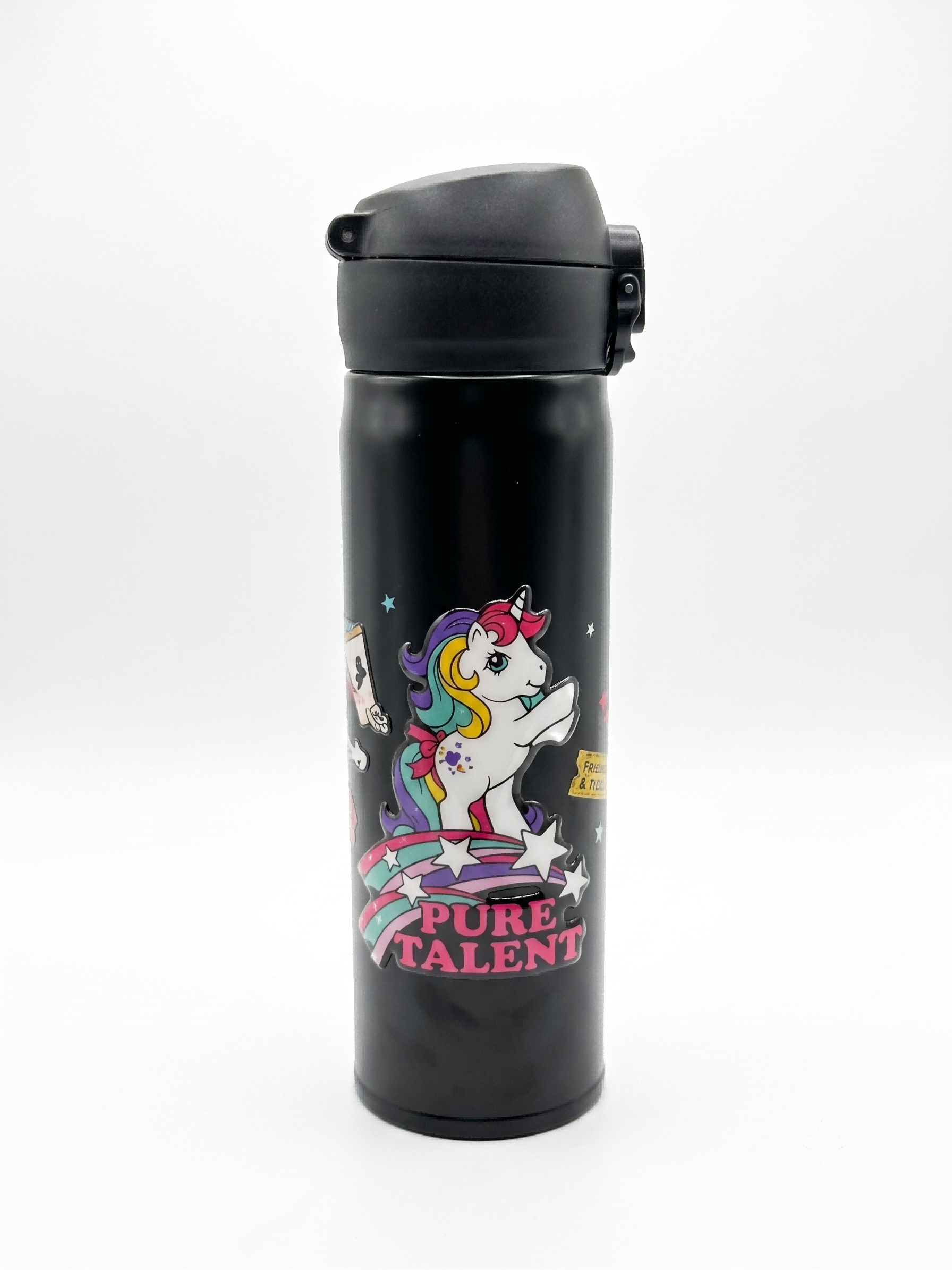
UV DTF is a different process built specifically for hard, rigid, and curved surfaces — tumblers, phone cases, glass, ceramics, wood signage, acrylic, metal, and similar substrates where a heat press either won't work or would damage the material. Instead of pigment ink and adhesive powder, UV DTF uses UV-curable ink printed onto an "A" film, which instantly hardens the moment it passes under a UV/LED lamp — no oven, no powder, no waiting.
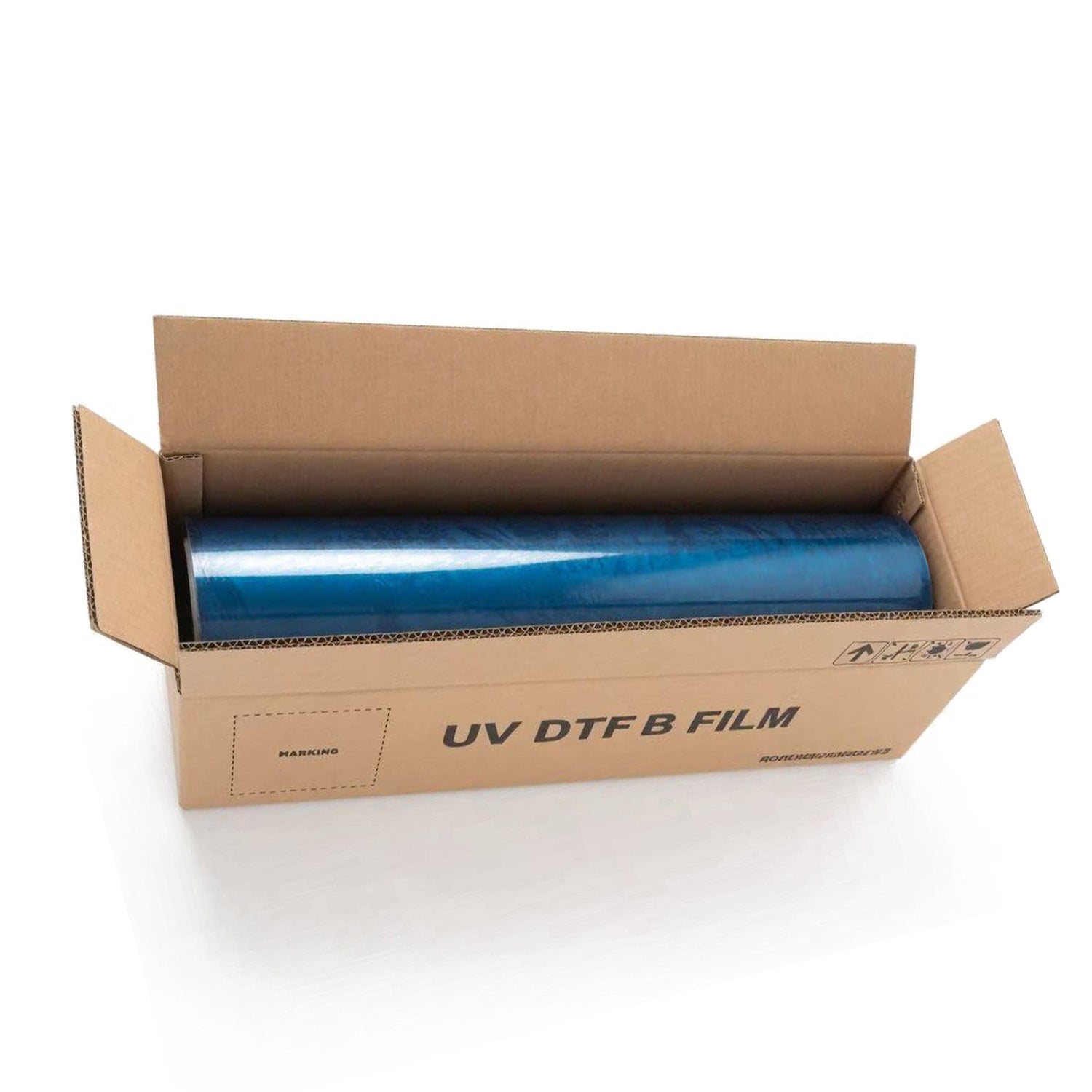
A second "B" film (an adhesive carrier layer) is then cold-laminated onto the printed A film, creating a finished sticker-like decal with a peelable liner. The final transfer applies to a hard surface with hand pressure or a roller — no heat at all — which is exactly what makes it safe for glass, plastics, and other heat-sensitive materials.
UV DTF vs. Traditional DTF: Side-by-Side Comparison
| Traditional DTF | UV DTF | |
|---|---|---|
| Best substrates | Fabric, textiles, soft goods | Hard/rigid surfaces: glass, metal, plastic, ceramic, wood |
| Curing method | Adhesive powder + oven cure | Instant UV/LED cure, no powder |
| Applying the transfer | Heat press (high heat + pressure) | Cold lamination + hand pressure, no heat |
| Works on curved surfaces? | Limited — flat or near-flat only | Yes — built for curved and irregular shapes |
| Typical durability | 50–100 wash cycles on fabric | 2–5 years indoor/outdoor on hard goods |
| Equipment investment | Lower — DTF printers commonly run $3,000–$5,000 | Higher — UV printers typically run $5,000–$13,000 |
| Ideal order size | Cost-effective at high volume, bulk apparel runs | Strong for small-batch, custom, and rush hard-good orders |
| Not recommended for | Rigid, heat-sensitive, or curved items | Fabric and garments (adhesion and peeling issues) |
When to Choose Traditional DTF
Traditional DTF is the right call if your shop is primarily printing apparel — t-shirts, hoodies, tote bags, uniforms — especially at production volume. It doesn't require pretreatment, prints full color on any garment color without a separate white underbase step, and the per-transfer cost drops fast at scale. If your customer base is mostly ordering shirts and soft goods in batches, traditional DTF remains the more cost-effective, higher-throughput choice.
When to Choose UV DTF
UV DTF is the right call the moment a customer asks for something that isn't fabric: a branded tumbler, a custom phone case, a wood sign, a glass ornament, a car decal, drinkware for an event, or packaging labels. It's also the better fit for small, highly customized orders — since there's no oven cure step and no heat press needed, turnaround on a one-off or short-run hard-good job is faster than most alternatives. Because the substrate list is so broad, many shops that start with UV DTF find it opens up entire product categories (drinkware, signage, promotional items) they couldn't previously offer.
A growing number of shops run both systems side by side — traditional DTF for the apparel side of the business, UV DTF for hard goods and promotional products — since the two rarely compete for the same job.
How to Print and Apply a UV DTF Transfer
Here's the standard workflow for producing a finished UV DTF transfer, start to finish.
Step 1: Print the Design on Film A
Send your design (mirrored, as with any transfer printing) to a UV DTF printer loaded with UV DTF ink and the A film. The ink cures almost instantly as it passes under the printer's built-in UV/LED lamp — there's no wet ink stage to manage.
Step 2: Cold-Laminate Film B Onto the Printed Design
Once the ink is cured, apply the B film (the adhesive carrier layer) over the printed design using a cold laminator or roller. No heat is involved in this step — the two films bond through pressure alone.
Step 3: Trim and Weed
Cut the transfer to its final shape and remove excess film from around the design, just as you would with any die-cut sticker or decal.
Step 4: Apply to the Substrate
Peel the release liner and apply the transfer directly to the hard surface — glass, tumbler, phone case, signage — using firm hand pressure or a roller to work out air bubbles. No heat press, no curing time; the transfer is ready to handle and ship as soon as it's applied.
Step 5: Cure Time for Full Adhesion (Optional but Recommended)
While the transfer is functional immediately, letting it sit for a few hours before heavy handling or washing allows the adhesive to fully set, improving long-term durability — especially on items that will see regular washing, like drinkware.
Complete Your UV DTF Setup
Everything above runs on three core materials, all part of our UV Printing Materials collection:
- UV DTF AB Film Roll — The A+B transfer film system itself, available in 12" and 24" widths at 328 ft per roll, sold as A film, B film, or the combined set.
- Premium UV DTF Ink 1000ml — CMYK, white, and varnish formulated specifically for Epson XP600, i3200, i1600, TX800, and DX5/DX7 printheads, curing instantly under UV/LED with no oven or powder needed.
- 3D TPU Heat Transfer Film — For shops that want a raised, embossed 3D look on apparel and patches (printed with the same UV DTF ink and printer, but heat-applied to fabric), available in 10+ finishes including holographic and glow-in-the-dark.
Frequently Asked Questions
Can I run UV DTF transfers on fabric?
Not recommended. UV DTF adhesive is engineered to bond to hard, non-porous surfaces — on fabric it's prone to poor adhesion and peeling over time. For apparel and soft goods, traditional DTF (or our 3D TPU film for raised, embossed accents) is the better-suited process.
Do I need a heat press for UV DTF?
No. UV DTF transfers apply with cold lamination and hand pressure or a roller — that's one of the main advantages over traditional DTF, since it lets you decorate heat-sensitive materials like glass, plastic, and some electronics-adjacent items without any risk of heat damage.
What printers and printheads work with UV DTF ink?
Our UV DTF ink is formulated for Epson XP600, i3200, i1600, TX800, and DX5/DX7 printheads — the most common printhead types used in UV DTF printers on the market today.
How durable are UV DTF transfers compared to traditional DTF?
UV DTF transfers on hard goods are rated for roughly 2–5 years of indoor/outdoor durability, including water and scratch resistance. Traditional DTF transfers on fabric typically hold up through 50–100 wash cycles — both are durable, but the comparison isn't apples-to-apples since they're built for different materials and different kinds of wear.
Is UV DTF more expensive to get into than traditional DTF?
Generally yes on the equipment side — UV DTF printers typically cost more than standard DTF printers. However, UV DTF opens up product categories (drinkware, signage, phone cases, promotional items) that traditional DTF can't touch, which is often what justifies the investment for shops looking to diversify beyond apparel.
Should my shop run both DTF and UV DTF?
Many shops do, since the two rarely compete for the same order. Traditional DTF covers apparel and bulk garment work; UV DTF covers hard-good customization and short-run promotional products. Running both lets a shop say "yes" to a wider range of customer requests without turning away hard-surface jobs.
Do you offer bulk or wholesale pricing on UV DTF film and ink?
Yes. Both the AB film rolls and the UV DTF ink are available in bulk configurations, and we work with production shops and wholesale accounts running consistent volume — reach out directly for bulk pricing.
What's your return policy if ink or film arrives defective?
Every order is backed by a money-back guarantee. Defective items receive free returns, and non-defective returns are accepted subject to a 15% restocking fee.
Order Direct From a US-Based Supplier — Fast Shipping, Real Support
Whichever process fits your shop, running out of film or ink mid-job isn't an option. SHL Supply ships every order within 48 hours from our own warehouse — no customs delays, no overseas lead times.
SHL Supply 12155 Mora Dr, Santa Fe Springs, CA 90670 Phone: 562-203-5165 | Email: info@shl-supply.com Hours: Monday–Friday, 9:00 AM – 5:00 PM (local pickup available)
Because we stock and ship domestically, US shops get UV DTF film and ink fast, backed by a straightforward money-back guarantee, free returns on defective product, and support from a team that understands production printing — not just apparel, but hard-good and promotional work too.
Ready to add UV DTF to your shop? Browse the full UV Printing Materials collection — AB film, UV DTF ink, and 3D TPU transfer film, all in stock and ready to ship.

Leave a comment
This site is protected by hCaptcha and the hCaptcha Privacy Policy and Terms of Service apply.