
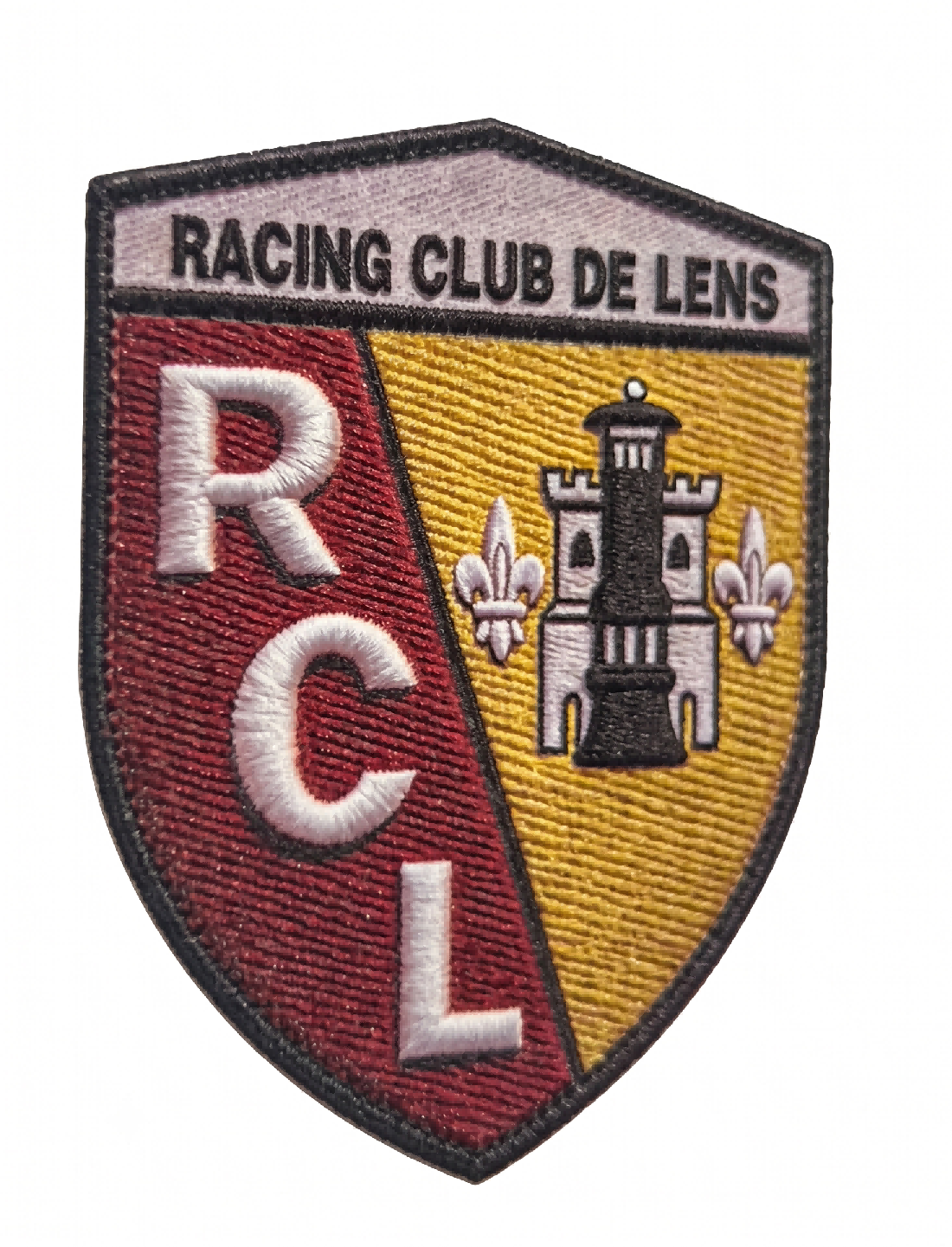
If you've made it this far into researching TPU embroidery, you're probably not asking "what is it" anymore—you're asking whether it should replace, or sit alongside, the stitched embroidery you already use. That's a fair question, and the honest answer is: it depends on your order sizes, your artwork, and how the finished product needs to perform. This article puts both methods side by side across the factors that actually drive that decision—cost, minimum order quantity, turnaround, detail, feel, and durability—so you can make the call for your own product line.
This is ultimately a patch production comparison, not a values judgment—neither method is objectively "better" in the abstract. Traditional embroidery has decades of proven use for a reason, and TPU embroidery has grown quickly for equally concrete reasons. The goal here is to give you enough specifics on cost, speed, and durability that the decision is based on your actual order sizes and artwork, not on a general impression of which one sounds more modern.
Quick Comparison: TPU Embroidery vs Traditional Embroidery
| Dimension | Traditional Embroidery | TPU Embroidery |
|---|---|---|
| Cost structure | Digitizing fee ($30–$80+ per logo) plus per-piece stitching cost | No digitizing fee; cost is mainly film, ink, and press time |
| Minimum order | Commonly 12–24 pieces to justify setup costs | Practical from a single piece upward |
| Sample/turnaround time | Days (digitizing + machine scheduling) | Same-day in most shops (print and press) |
| Detail & color | Limited by thread color count and stitch density; no true gradients | Full-color, photo-realistic, supports gradients and fine text |
| Feel/texture | Classic stitched texture, breathable | Raised 3D texture from cured ink, smoother surface |
| Durability | Very durable, but thread can fray, pull, or loosen over years of wear | Commonly rated for 50+ wash cycles; resists cracking/peeling when applied correctly |
| Best for | Classic/heritage branding, simple logos, large recurring orders | Small batches, complex/gradient artwork, fast turnaround, curved surfaces |
Keep this table as your quick reference—the sections below unpack where each of these numbers and claims comes from, and why they matter for your specific use case.
How Each Method Is Actually Made
Understanding the manufacturing process explains almost every difference in cost, speed, and appearance between the two methods.
Traditional Embroidery: Digitize → Choose Thread → Stitch → Trim
Traditional embroidery starts with digitizing: converting the artwork into a stitch file that specifies needle path, stitch type, and density for the embroidery machine. Next, the garment is hooped with a stabilizer backing to keep the fabric taut, and thread colors are selected and loaded—matching the design as closely as the available thread palette allows. The machine then stitches the design needle pass by needle pass, which is why more detailed designs take longer to produce. Finally, the piece is trimmed of excess stabilizer and stray threads, and washed if a water-soluble backing was used.
Every one of those steps adds time and, in the case of digitizing, a real dollar cost before the first finished piece exists. It's also worth noting that digitizing isn't a one-time investment across every use case—resizing a design significantly, switching it from a flat garment to a curved cap, or changing thread density for a different fabric often requires re-digitizing or an adjustment fee, since stitch behavior changes with the surface it's sewn onto.
TPU Embroidery: Print → White Ink Layering → UV Cure → Heat Press
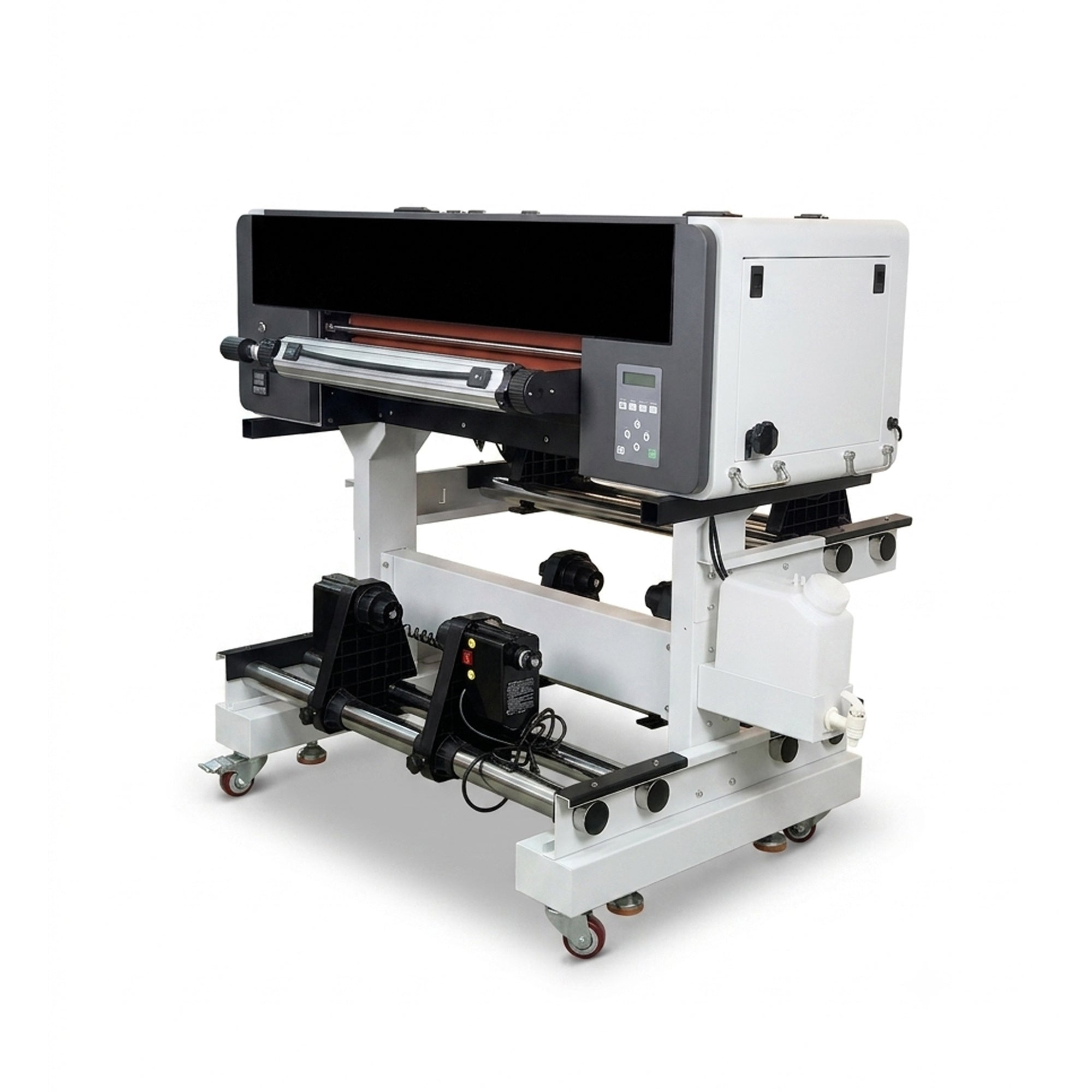
TPU embroidery skips the machine-stitching steps entirely. The design is printed directly from the artwork file onto TPU transfer film using a UV DTF printer, typically starting with multiple passes of white ink to build the raised base, followed by color layers. Each pass is cured by UV light almost instantly. Once the design is fully printed and cured, it's cut to shape (if needed) and heat-pressed onto the garment—commonly around 150–160°C for about 10 seconds, depending on the equipment and film.
There's no stitch file, no thread inventory to match, and no hooping. The workflow is closer to a standard print-and-press job than a manufacturing process, which is the root cause of almost every cost and speed advantage below. It also means a design change—swapping a color, adjusting text, resizing for a different product—is just a new print file rather than a re-digitized stitch pattern, so iterating on a design during sampling is considerably faster.
Cost and Minimum Order Quantity
This is where the two methods diverge the most, and it comes directly from the process difference above.
Traditional embroidery typically carries a digitizing fee commonly cited in the $30–$80 range for a full logo (some providers break this into smaller per-element fees for text versus artwork). That fee gets spread across the order, which is why embroidery pricing drops sharply as quantity increases. A simplified example, using a $60 digitizing fee plus roughly $5 in per-piece stitching cost, illustrates the curve:
| Order Size | Approx. Cost Per Piece |
|---|---|
| 1 piece | ~$65 |
| 12 pieces | ~$10 |
| 50 pieces | ~$6.20 |
| 250 pieces | ~$5.24 |
That math is exactly why traditional embroidery shops commonly set minimums around 12–24 pieces—below that, the digitizing fee dominates the per-piece cost and the customer ends up paying a premium that feels disproportionate to a single patch or shirt.
TPU embroidery doesn't have an equivalent setup fee. Since the design prints straight from the artwork file, cost is driven mainly by film, ink, and press time rather than a one-time digitizing charge. That makes it a genuinely cheaper embroidery alternative for small and one-off orders—a single sample or a 5-piece custom batch doesn't carry the same fixed-cost penalty it would with stitched embroidery. At high volumes, well-optimized embroidery production can still be cost-competitive per piece, so the crossover point depends on your specific order sizes and supplier pricing—but for anything under roughly a dozen pieces, TPU embroidery is usually the more economical choice.
This is also why the two methods tend to serve different parts of a business rather than compete head-on. A supplier running large recurring uniform contracts will often still lean on traditional embroidery, where the digitizing cost is amortized across hundreds of pieces. A shop fielding one-off requests, small-batch drops, or on-demand e-commerce orders—where every order might be a different design and a different quantity—gets far more value out of a method with no fixed setup cost per design.
Detail, Color, and Appearance
Traditional embroidery is fundamentally a thread-based medium: color is created by stitching a specific thread, and blending or shading is done by physically alternating threads or stitch density, which has real limits. Very fine text, thin lines, and smooth color gradients are difficult or impossible to reproduce accurately, and complex designs often get simplified during digitizing to make them stitchable at all.
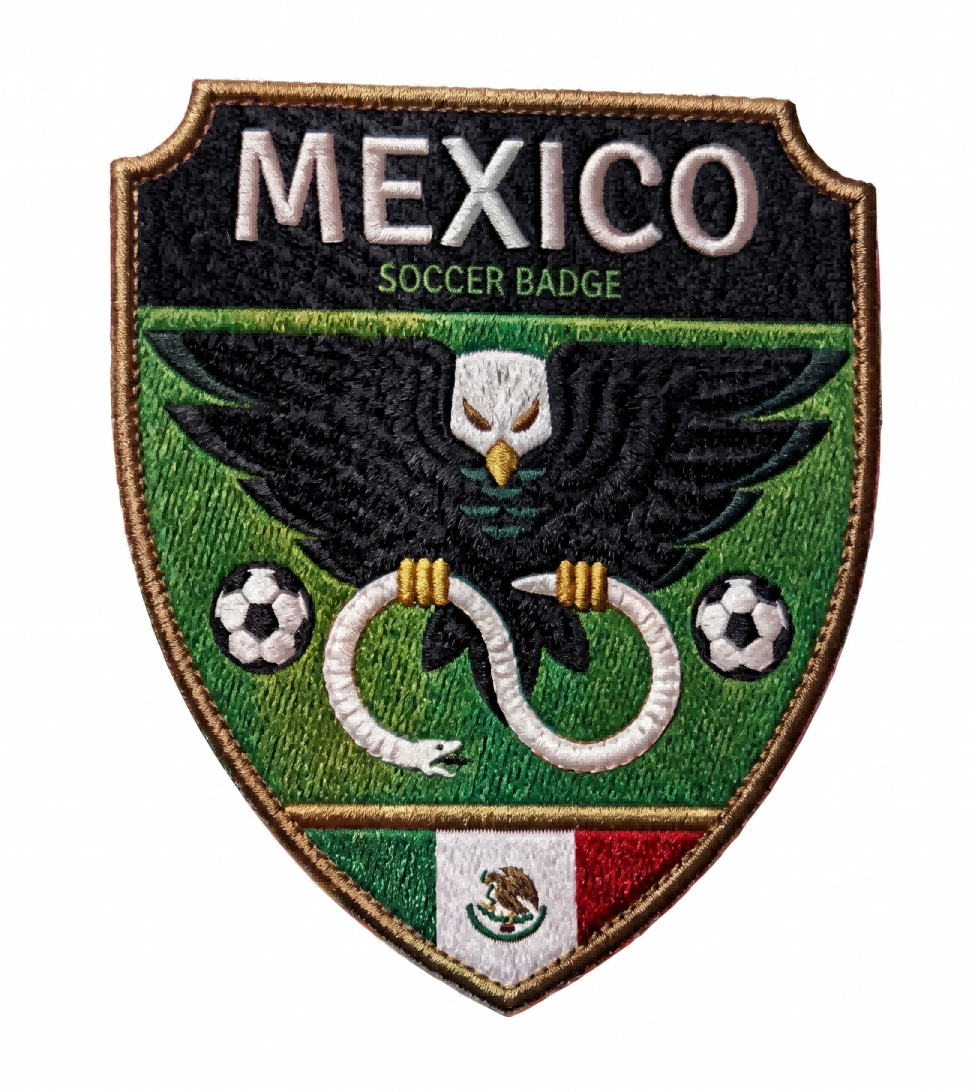
TPU embroidery is a digital printing process, so it doesn't share those constraints. Because it's essentially digital embroidery vs. stitched embroidery at the core, TPU can reproduce full-color artwork, smooth gradients, fine small text, and photo-realistic shading in a single patch—the same level of detail you'd expect from a high-quality DTF or UV print, just built with the raised, textured base that makes it read as "embroidered."
If your brand's logo is a simple one- or two-color mark, this difference may not matter much. If it includes gradients, multiple fine details, or photographic elements, it matters a great deal—stitched embroidery will typically require simplifying the design, while TPU embroidery generally won't.
There's a brand-consistency angle here too. If your logo already exists as a fixed digital asset—with an exact Pantone gradient, a specific font weight, or fine sub-text under a main mark—every time that design gets translated into thread, someone has to make judgment calls about which details survive digitization. TPU embroidery removes most of those judgment calls, since the printed output is derived directly from the same file used everywhere else in your brand's marketing.
Durability and Feel
Both methods are built to last, but they fail differently, and they feel different to the touch.
Traditional embroidery is a mechanical structure: thread held in place by tension and stitching. It's genuinely durable and has decades of proven use in uniforms and workwear, but its failure mode is well known—loose threads can snag, pull, or fray at the edges over years of wear and washing, and once one stitch breaks, nearby stitches can loosen too. It also has a distinct, breathable, classic texture that many people specifically associate with heritage and premium branding.
TPU embroidery, as covered in detail in our features breakdown ([INTERNAL LINK to Article 2: Features & Benefits of TPU Embroidery]), is commonly rated by manufacturers for 50 or more wash cycles without significant color loss or edge lifting when printed and pressed correctly, and it resists water, UV fading, and surface abrasion better than thread does in outdoor or heavy-wear conditions. Its failure mode is different too—damage tends to stay localized to a scuff or press-adhesion issue rather than cascading the way a pulled thread can. The trade-off is texture: TPU has a smoother, printed-ink surface rather than the classic woven-thread feel, which is a genuine aesthetic difference, not just a durability one.
Neither is strictly "more durable" in every scenario—it depends on the stress the product will actually see. A jacket that gets folded and abraded in a bag benefits from TPU's flex and scratch resistance; a heritage varsity jacket patch benefits from embroidery's classic look and long, proven track record.
Care instructions differ too, and it's worth setting customer expectations correctly for whichever method you choose. Traditional embroidery generally tolerates standard machine washing well but can suffer from high heat or aggressive tumble drying, which stresses the stitching. TPU embroidery holds up to regular washing but, like any heat-applied transfer, is sensitive to ironing directly over the patch or excessive dryer heat, which can soften the film. Passing the right care guidance to your customers matters as much as the material itself for how "durable" either method ends up being in practice.
Which One Should You Actually Choose?
Rather than declaring an overall winner, it's more useful to match the method to the situation:
- Choose traditional embroidery when: your brand identity leans classic, heritage, or "premium tailoring"; your logo is simple enough for thread to reproduce cleanly; you're placing large, recurring orders where the digitizing fee is a rounding error; or your customers specifically expect the woven-thread look and feel.
- Choose TPU embroidery when: you're running small batches, samples, or made-to-order pieces; your artwork has gradients, fine detail, or full-color elements; you need fast turnaround without a digitizing delay; or the product needs to flex, get wet, or survive outdoor conditions.
- Consider mixing both: many brands aren't choosing one exclusively. A common approach is stitching the main logo in traditional embroidery for that classic texture, then using a TPU embroidery patch for a gradient accent, a limited-edition colorway, or a small-batch collaboration piece—getting the heritage feel where it matters most and the flexibility of digital printing where it's genuinely useful.
There's no wrong answer here as long as the choice matches your product and your customer's expectations—this is a production decision, not a brand-values statement.
What's Next: Getting Set Up to Produce TPU Embroidery
If TPU embroidery sounds like the right fit for at least part of your product line, the next practical question is what it actually takes to produce it—what printer, film, ink, and pressing setup you need, and how the workflow runs step by step in a real shop. That's exactly what we cover in the next guide, along with the equipment options available if you're ready to start producing TPU embroidery in-house.
Get Your TPU Embroidery Equipment & Supplies →
FAQ
Is TPU embroidery cheaper than traditional embroidery?
For small orders, usually yes. Traditional embroidery carries a digitizing fee commonly in the $30–$80 range per logo, which makes low quantities expensive per piece. TPU embroidery has no equivalent setup fee, so it's typically the cheaper embroidery alternative for samples and small batches. At high volumes, the digitizing cost gets spread thin enough that traditional embroidery can be cost-competitive, so the better deal depends on your order size.
Can TPU embroidery replace embroidery on jerseys and uniforms?
In many cases, yes. TPU embroidery's flexibility, wash durability, and resistance to cracking make it well suited to athletic jerseys, numbers, and uniform logos that need to stretch and survive repeated washing. Some teams and brands use it as a full replacement, while others mix it with traditional embroidery—stitching the main crest and using TPU for gradient sponsor logos or numbers.
Which lasts longer, TPU embroidery or stitched embroidery?
Both can be very durable, but they age differently. Traditional embroidery is a proven, decades-tested method, though thread can eventually fray or pull loose. TPU embroidery is commonly rated for 50+ wash cycles without significant breakdown when applied correctly, and its cured surface doesn't unravel the way thread can, though its long-term track record is shorter simply because the technique is newer.
Can you mix TPU embroidery and traditional embroidery on the same garment?
Yes. It's a common approach—stitching the main logo in traditional embroidery for a classic texture, then adding a TPU embroidery patch for gradient details, limited-edition colorways, or elements that would be difficult to reproduce in thread. The two methods can be applied to different parts of the same garment without conflict.

Leave a comment
This site is protected by hCaptcha and the hCaptcha Privacy Policy and Terms of Service apply.