
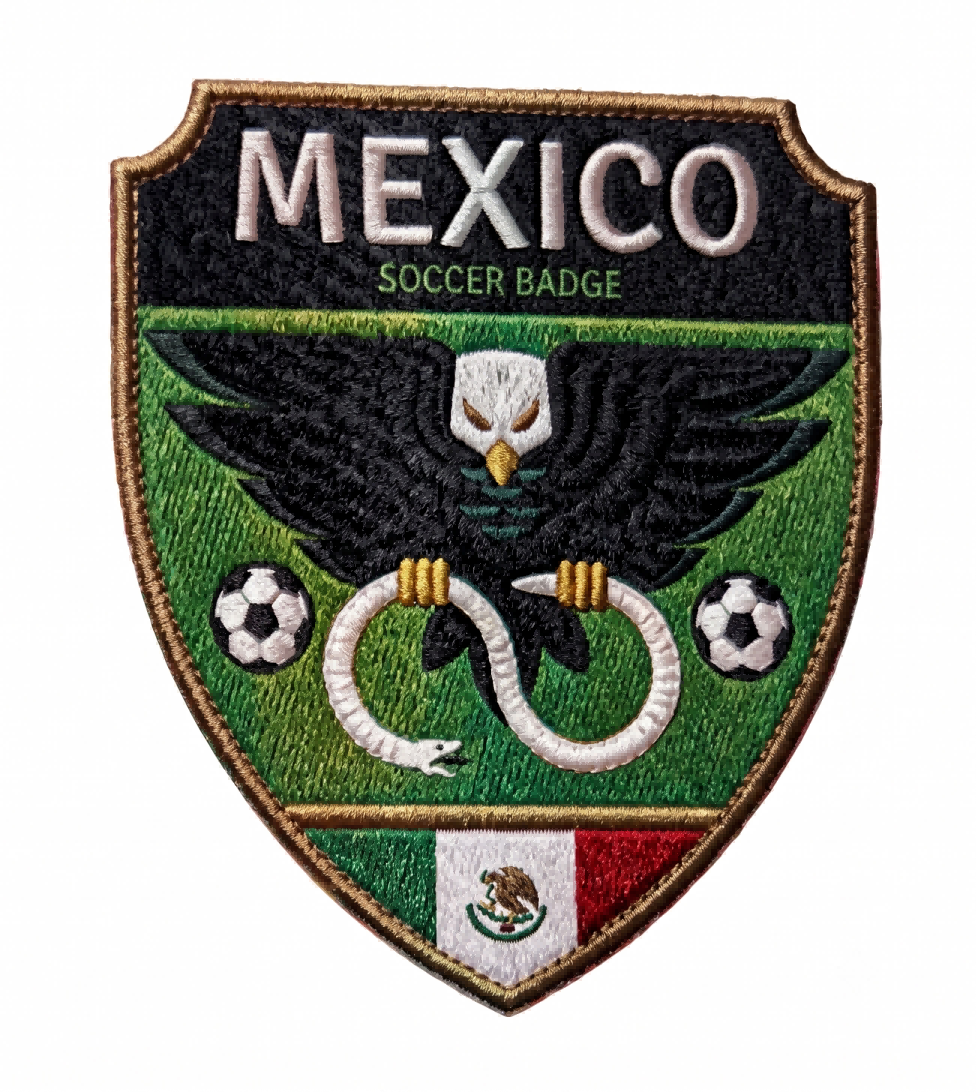
6 Features That Make TPU Embroidery Worth Considering
If you already know what TPU embroidery is, the next logical question is whether it's actually worth switching to—or adding alongside—traditional embroidery. The honest answer is: it depends on what you're decorating and how it will be worn. But there are six specific, verifiable features that explain why so many brands, print shops, and team suppliers are testing TPU embroidery patches right now. This breakdown walks through each one, so you can judge for yourself which ones matter for your product line.
Some of these features are about how the patch performs in the real world—flexibility, water resistance, wash durability. Others are about production economics—how fast you can get from artwork to finished patch, and at what minimum order size. Together, they explain why TPU embroidery patches have moved from a novelty item to a serious line item on a lot of product sheets in the last few years.
1. Tactile 3D Effect: A Raised Texture You Can Actually Feel
The first thing most people notice about a TPU embroidery patch isn't how it looks—it's how it feels. Because the design is built from multiple stacked layers of UV-cured white ink before color is added, the finished patch has real physical height, not a printed illusion of depth. Run a finger across it and you feel distinct edges and a raised surface, the same tactile cue that makes traditional embroidery read as "premium" at retail.
That matters commercially: dimensional texture is one of the fastest ways a logo signals quality on a hang tag, hat, or chest patch, especially in photos where flat prints can look cheap by comparison. TPU embroidery gets that tactile signal without a single stitch, which is why it shows up so often on branding that's meant to be touched as much as seen—collar labels, cap fronts, and premium hoodie patches.
It also photographs differently than flat print. Because the surface has real height, it catches light and casts a subtle shadow along its edges, which is part of why product photos of TPU embroidery patches tend to read as "embroidered" at a glance even to people who know what to look for. For e-commerce listings especially, that visual cue can matter as much as the physical feel, since most customers are judging the patch through a photo before they ever touch the product.
2. More Flexible Than PVC or Rubber Patches
TPU embroidery isn't the only "no-sew" patch option on the market—PVC and rubber patches have been around for years. The difference is flexibility. PVC and rubber patches are molded and comparatively rigid; they can crack, peel at the edges, or feel stiff on soft goods. TPU, by contrast, is an elastomer, meaning it's built to bend and stretch and return to shape rather than snap.
That flexibility is what lets TPU embroidery patches sit comfortably on curved or moving surfaces that would stress a rigid patch: cap crowns and brims, sleeve cuffs, water bottle sleeves, bag straps, and jersey side panels. Where a PVC patch might lift or crack along a seam or curve over time, a properly applied TPU patch is designed to flex with the product instead of fighting against it.
This is also why TPU has become the go-to flexible patch material for anything worn close to the body during movement—athletic wear, activewear accessories, and fitted caps in particular. A rigid patch on a stretch fabric creates a visible stress point every time the fabric moves; a flexible one doesn't fight the garment's natural shape.
3. Waterproof, UV-Stable, and Scratch-Resistant
TPU's role in outdoor gear, phone cases, and protective films isn't a coincidence—it's a material chosen specifically because it resists water, weather, and abrasion. Applied to embroidery patches, that translates into three practical advantages:
- Waterproof surface — moisture doesn't soak into a TPU patch the way it can into stitched thread, which matters for rain gear, marine apparel, and anything that gets left outside.
- UV stability — TPU is formulated to resist the color fading and material breakdown that prolonged sun exposure causes, which is relevant for anything that lives outdoors: patio uniforms, delivery and field-service workwear, event tents, and outdoor gear branding.
- Scratch and abrasion resistance — the cured surface holds up to the everyday friction of bag straps rubbing, jacket cuffs brushing against surfaces, and repeated handling.
For workwear, outdoor brands, and anything that needs to survive more than a gentle indoor life, this combination is one of the strongest practical arguments for TPU embroidery over more delicate decoration methods. A conventional embroidered patch can wick and hold moisture in the thread itself, which is part of why a genuinely waterproof embroidery patch alternative has become attractive for rainwear, safety vests, and marine-branded gear where the decoration needs to survive the same conditions as the garment.
4. Industrial Wash Durability
Durability under repeated washing is where a lot of decoration methods quietly fail—thread can fray, loosen, or pull at the edges after enough wash cycles, and cheaper prints crack or peel. TPU embroidery is built to resist that. Manufacturers commonly cite patches holding up to 50 or more wash cycles without significant color loss, texture breakdown, or edge lifting, when the patch is printed and pressed correctly.
That number is worth keeping in perspective—actual results depend on ink and film quality, press settings, and how the garment itself is cared for, so it's a benchmark rather than a guarantee. Still, it's a meaningful data point for team apparel, workwear, and any product that's going into a washing machine regularly rather than a display case.
It's also a useful comparison to keep in your back pocket: traditional embroidery's vulnerability to thread pulls and fraying edges over time is exactly the kind of wear-and-tear question a durable TPU patch is designed to answer differently. Thread is a mechanical structure held together by tension and stitching; once one thread snags or breaks, the surrounding stitches can loosen too. A cured TPU surface doesn't unravel the same way—damage tends to stay localized rather than cascading across the whole patch. We'll dig into that head-to-head comparison, including care instructions for both methods, in the next article.
5. Full-Color, Photo-Realistic Detail
Traditional embroidery is constrained by thread: a limited color palette per design, stitch density that struggles with fine text or thin lines, and no real way to reproduce a smooth gradient—colors blend by physically alternating thread, which only gets you so far. TPU embroidery, because it's built with digital UV printing rather than needlework, doesn't have those constraints.
That opens up design options that are difficult or impossible with a needle and thread: soft color gradients, photo-realistic shading, fine small-print text, metallic and semi-transparent effects, and micro-texture detail within a single small patch. For brands with complex logos, gradient color schemes, or detailed mascots and crests, this is often the single biggest reason to choose TPU embroidery over stitching—it's not just faster, it can reproduce artwork that embroidery physically can't.
This is particularly relevant for brands that already have a locked-in style guide with specific Pantone gradients or photographic elements in their logo. Trying to translate that into thread usually means simplifying the design—flattening a gradient into two or three solid thread colors, or dropping fine detail that would get lost in stitch density. TPU embroidery removes that translation step; the printed patch can match the original artwork file far more closely.
6. No Digitizing, No Minimums, Faster Turnaround
Before a traditional embroidery machine can stitch anything, the artwork has to be "digitized"—converted into a stitch-by-stitch file the machine can read, specifying stitch type, direction, and density. That's a real cost and time step: digitizing fees commonly run anywhere from a few dollars for simple text to $10+ for a detailed logo, and the file often has to be redone (at extra cost) if the design changes, or if it's resized significantly or moved from apparel to a cap, since stitch density behaves differently on different products.
TPU embroidery skips that step entirely. The design is printed directly from the artwork file, the same way any UV DTF graphic would be. That means:
- No digitizing fee or turnaround delay before the first patch can be made
- No minimum order driven by setup costs—one-off samples and small custom runs are practical, not just large batches
- Design changes are just a new print file, not a re-digitized stitch pattern
For print shops handling frequent small orders, one-off samples, or fast client turnarounds, this is often the most immediately practical advantage of the six. It also changes how a shop can quote work: instead of pricing around a setup fee that only makes sense at higher volumes, TPU embroidery lets a shop offer reasonable per-unit pricing on a five-piece order the same way it would on a five-hundred-piece order.
Quick Reference: TPU Embroidery's Six Features at a Glance
| Feature | What It Means | Best For |
|---|---|---|
| Tactile 3D effect | Raised, touchable texture from stacked UV-cured ink | Premium branding, hang tags, cap fronts |
| Flexible, not rigid | Bends with curved and moving surfaces, unlike PVC/rubber | Caps, cuffs, straps, jersey panels |
| Waterproof, UV-stable, scratch-resistant | Resists moisture, sun fading, and surface abrasion | Outdoor gear, workwear, marine/field apparel |
| Industrial wash durability | Commonly cited at 50+ wash cycles without major breakdown | Team apparel, uniforms, everyday wear |
| Full-color, photo-realistic detail | Digital printing reproduces gradients and fine detail thread can't | Complex logos, gradients, mascots, crests |
| No digitizing, no minimums | Prints straight from artwork—no stitch file, no setup fee | Small batches, samples, fast-turn custom orders |
Is TPU Embroidery Worth It for You?
None of this means TPU embroidery replaces traditional embroidery in every case—there are still situations where stitched thread is the right call, which is exactly what we'll compare head-to-head in the next article. But if your product needs to flex, survive the outdoors, reproduce detailed full-color artwork, or ship in small custom batches without a digitizing delay, these six features are why TPU embroidery has become a serious option worth testing rather than a novelty.
A practical way to decide is to look at your own product mix against the table above: if two or three of these rows already describe a pain point you have with your current decoration method—slow digitizing turnaround, patches cracking on curved surfaces, thread fraying after repeated washing—that's usually a strong enough signal to run a small TPU embroidery test batch before committing a full product line to it.
Curious how it actually stacks up against real needle-and-thread embroidery on cost, durability, and turnaround? That's exactly what we cover next: TPU Embroidery vs. Traditional Embroidery — Which One Should You Choose?
FAQ
Does TPU embroidery feel like real embroidery? Yes, to a large extent. The raised, dimensional texture comes from layers of UV-cured ink built up on TPU film, which creates a similar tactile "bump" to stitched thread. It won't feel identical fiber-for-fiber, but the raised, touchable quality that makes embroidery feel premium is present in TPU embroidery too.
Can TPU embroidery handle full-color designs and gradients? Yes. Because TPU embroidery is produced with digital UV printing rather than thread, it can reproduce full-color artwork, smooth gradients, fine text, and photo-realistic detail that traditional embroidery's stitch-and-thread process can't achieve.
Is TPU embroidery good for small or one-off orders? Yes, this is one of its biggest practical advantages. Since there's no digitizing file or embroidery setup fee required, TPU embroidery can be printed straight from artwork, making single samples and small custom runs far more cost-effective than they typically are with traditional embroidery.
How thick is a typical TPU embroidery patch? Thickness depends on how many white ink layers are printed to build height—commonly in the range of a few passes for a subtle raised effect up to 10 or more layers for a bolder, more pronounced 3D look. The TPU film itself also adds a base thickness before any ink is applied.

Leave a comment
This site is protected by hCaptcha and the hCaptcha Privacy Policy and Terms of Service apply.