
Applications
Designed for DTF (direct-to-film) textile transfers. Use Fine powder for small text, fine lines, and detailed artwork, and Medium powder for most everyday T-shirt graphics.


Standard (5-7 business days) or Rush (2-3 business days).
7 days money back guarentee, buyer pays return shipping

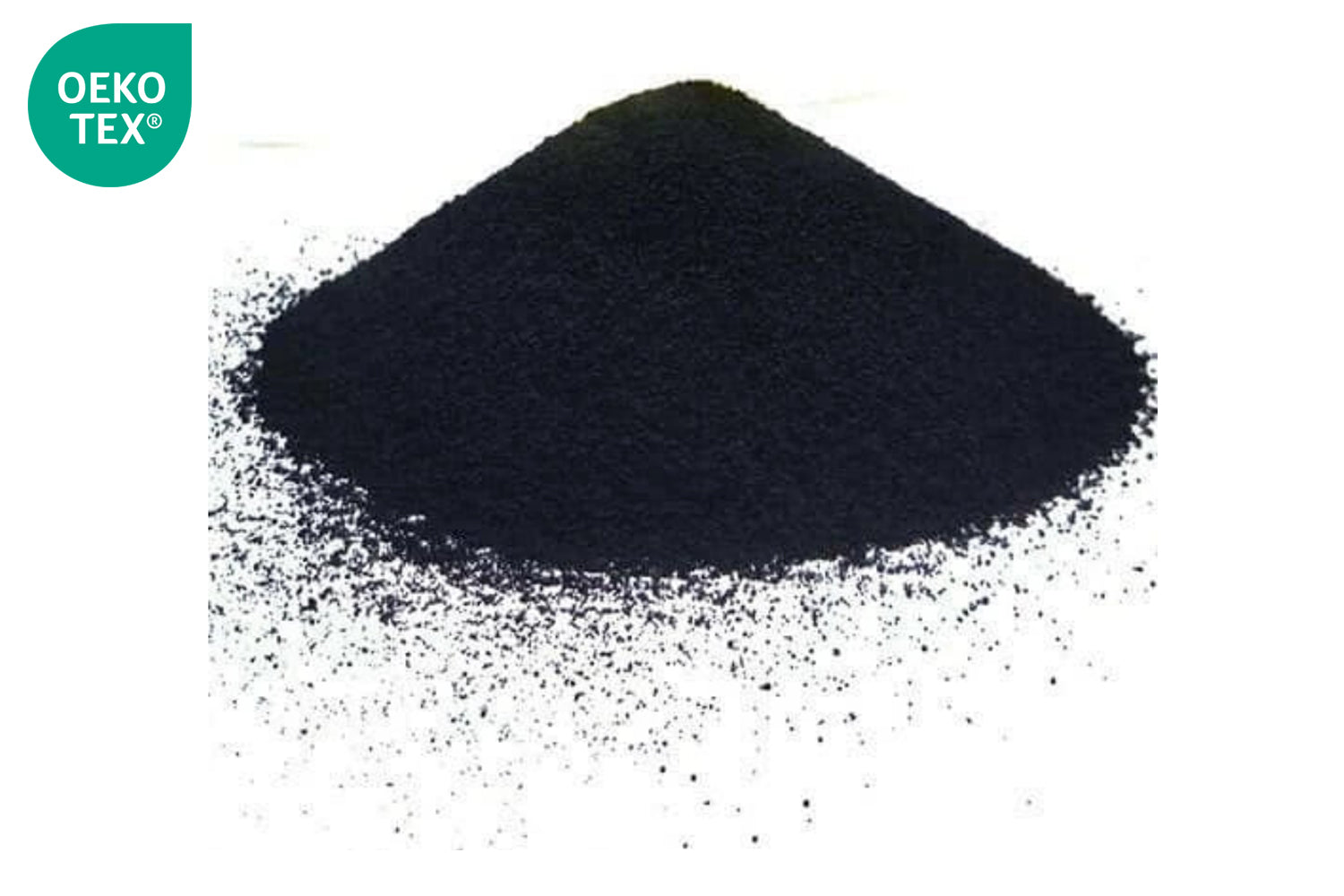
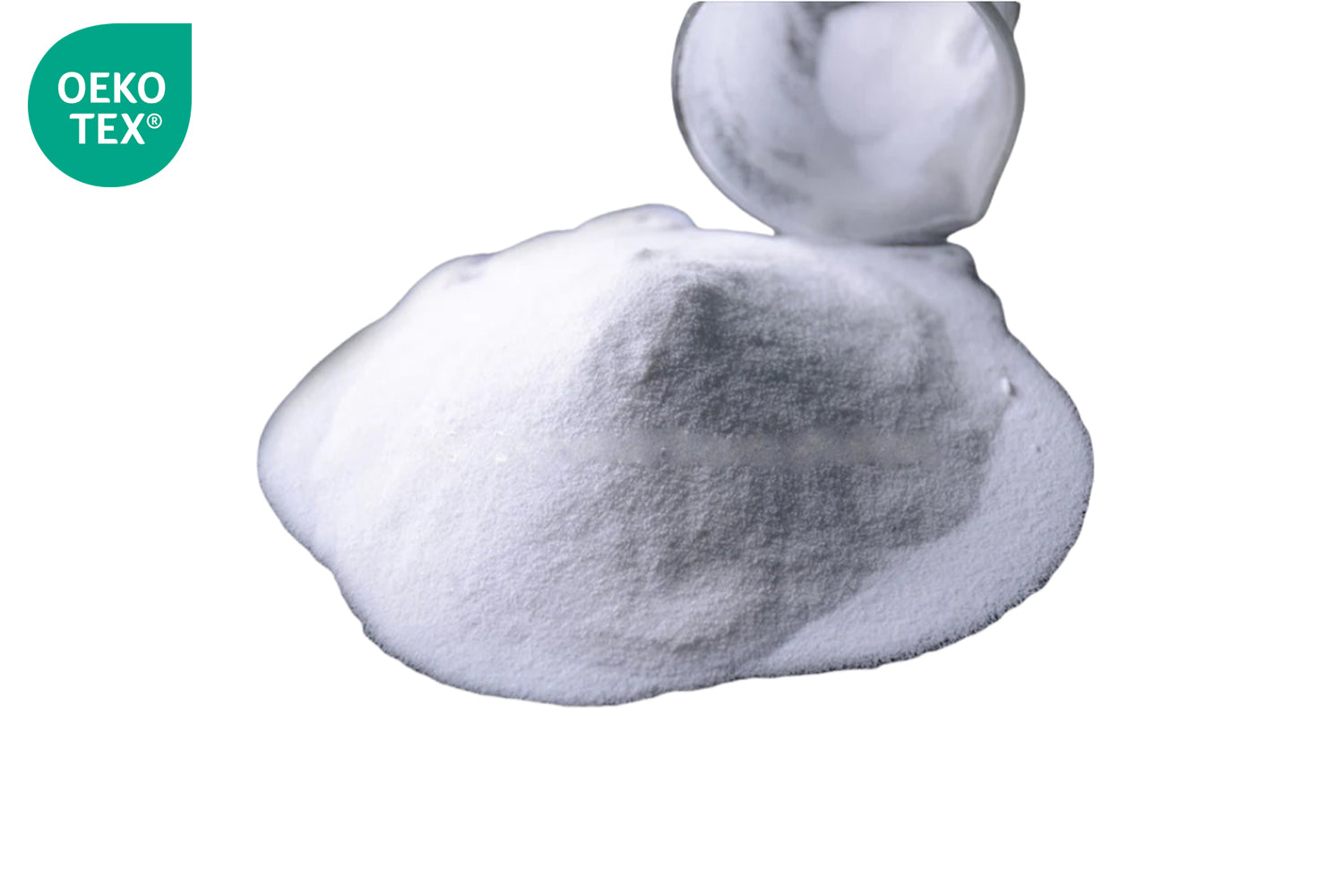
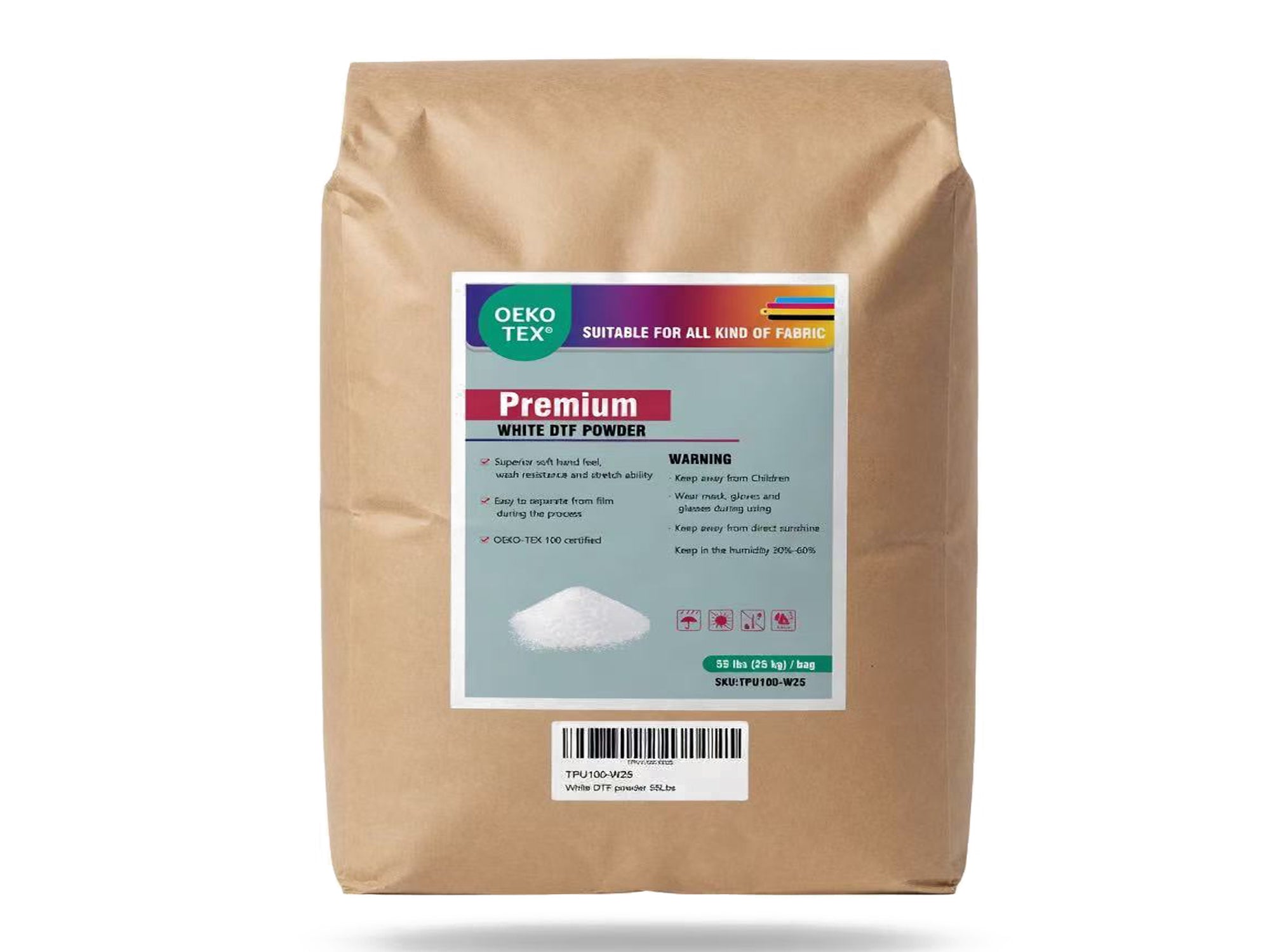
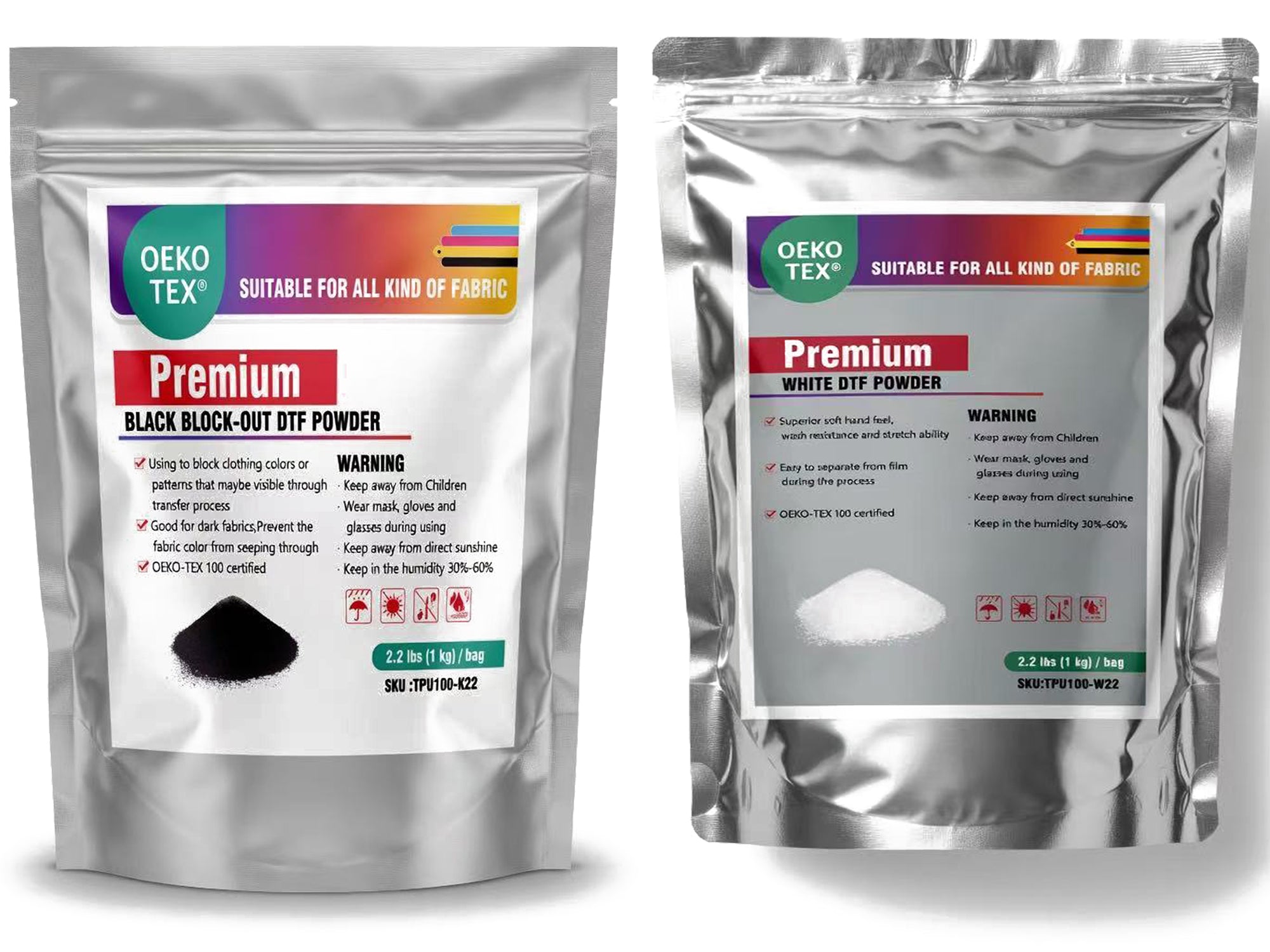
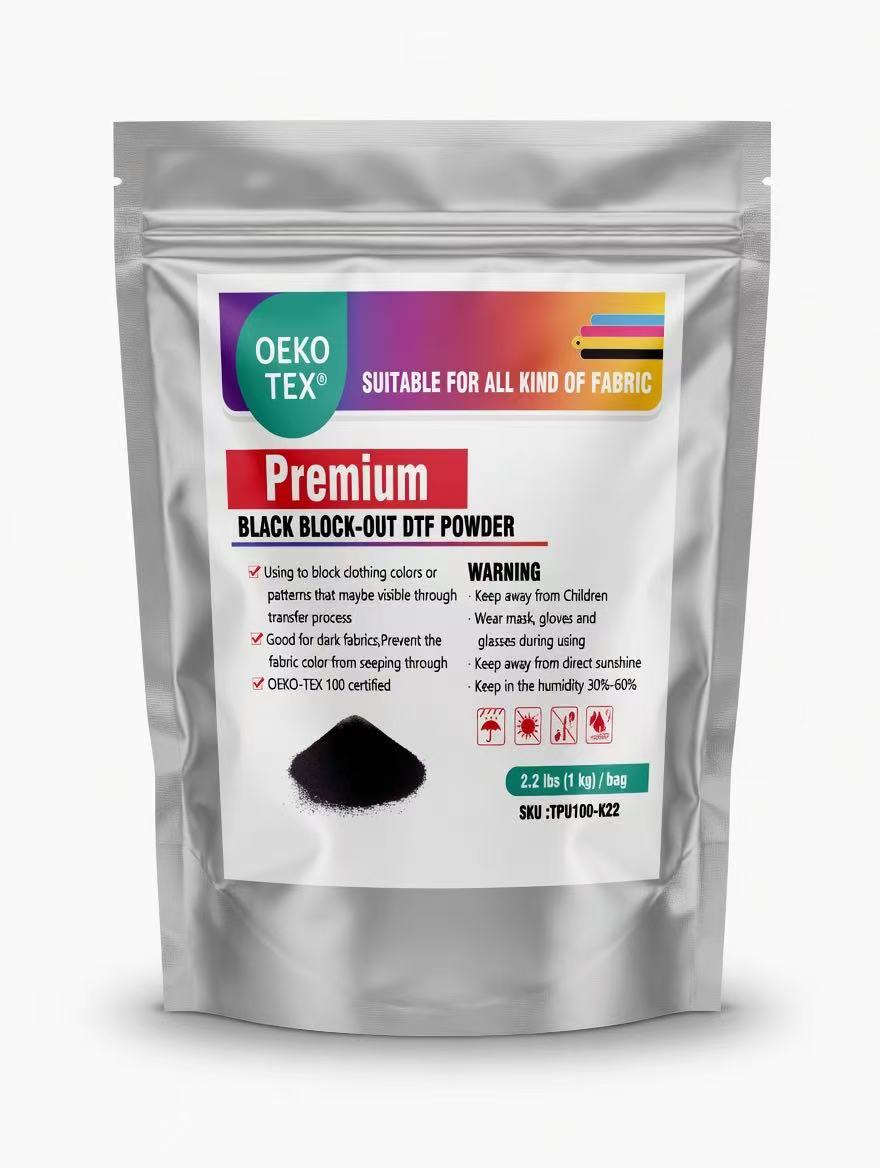
SHL Premium TPU Hot Melt Adhesive Powder bonds DTF transfers to fabric with a soft, flexible, washable finish. It comes in two particle sizes, Fine (0–80 μm) and Medium (80–170 μm), and two colors, White and Black. Apart from particle size, all specifications are the same.
Our TPU hot melt powder comes in two particle sizes and two colors, so you can match the powder to your artwork and your garment. Use the comparisons below to pick the right option.
| Fine | Medium | |
|---|---|---|
| Particle Size | 0–80 μm | 80–170 μm |
| Best For | Small text, fine lines, and detailed artwork | Most T-shirt graphics — the everyday industry standard |
| Choose It When | Your designs have thin strokes, small lettering, or intricate detail | You print standard graphics and want one all-purpose powder |
| Colors Available | White, Black | White, Black |
| Bag Sizes | 1 kg (2.2 lbs), 5 kg (11 lbs), 25 kg (55 lbs) | 1 kg (2.2 lbs), 5 kg (11 lbs), 25 kg (55 lbs) |
| White | Black | |
|---|---|---|
| Best For | General-purpose DTF transfers on most garments | Dark-colored polyester and fabrics prone to dye migration |
| How It Helps | Standard adhesive layer for wash durability and a soft hand feel | Acts as a blocking layer that helps keep the garment's dye from bleeding through the white ink, so colors stay bright and crisp |
| Choose It When | You are not dealing with dye bleed or migration issues | You print on dark polyester, sublimated, or "migrating" fabrics |
| Particle Sizes Available | Fine (0–80 μm), Medium (80–170 μm) | Fine (0–80 μm), Medium (80–170 μm) |
| Item Name | Thermoplastic Polyurethane (TPU) Hot Melt Powder |
| Composition | 97% TPU + 3% Additive |
| Hazards Identification | None |
| Particle Size | Fine: 0–80 μm Medium: 80–170 μm |
| Initial Melt Temperature | 105°C (221°F) |
| Melting Flow Temperature | 120°C (248°F) |
| Ignition Temperature | >350°C |
| Density | 1.12 g/cm³ |
| Thermal Decomposition | >350°C |
| Benefits | Wash Durability, Soft Hand Feel, Moisture Resistance |
| Certificate | OEKO-TEX |
Pair this TPU powder with our [Double Matte DTF Film] and [Pro-Series DTF Inks] for the ultimate print reliability.

Powder application and curing are two of the most important steps in DTF printing. Most transfer defects trace back to how the powder is stored, applied, or cured. Use this guide to spot the problem and fix it quickly.
| Issue | Likely Cause | How to Fix |
|---|---|---|
| Clumping / patchy adhesion ("bald spots") | Powder absorbed moisture in a humid environment and no longer spreads evenly over the wet ink | Store powder sealed and keep your workspace at 40–60% RH |
| Poor adhesion / peeling | Curing temperature too low or time too short, so the powder never fully melts into the ink | Increase curing temperature or time, and run a test print to confirm a full melt |
| Rough, sandy feel | Too much powder or an uneven layer | Apply a thin, even layer and shake off all excess powder |
| Ghosting / residue around edges | Under- or over-cured powder spreads past the ink edges during pressing, leaving an oily or dusty outline | Calibrate curing until the melted powder looks glossy and smooth |
| Cracking when stretched | Over-curing (too hot or too long) makes the adhesive brittle and less elastic | Reduce curing temperature or time |
| Yellowing | Low-quality powder or curing above the recommended temperature; most visible on light-colored garments | Stay within the recommended curing temperature and use a quality powder |
| Hazy background / powder on unprinted film | Static in a dry environment makes powder stick where there is no ink | Keep humidity in the 40–60% RH range and shake off excess powder before curing |

SHL Premium TPU Hot Melt Adhesive Powder bonds DTF transfers to fabric with a soft, flexible, washable finish. It comes in two particle sizes, Fine (0–80 μm) and Medium (80–170 μm), and two colors, White and Black. Apart from particle size, all specifications are the same.
Our TPU hot melt powder comes in two particle sizes and two colors, so you can match the powder to your artwork and your garment. Use the comparisons below to pick the right option.
| Fine | Medium | |
|---|---|---|
| Particle Size | 0–80 μm | 80–170 μm |
| Best For | Small text, fine lines, and detailed artwork | Most T-shirt graphics — the everyday industry standard |
| Choose It When | Your designs have thin strokes, small lettering, or intricate detail | You print standard graphics and want one all-purpose powder |
| Colors Available | White, Black | White, Black |
| Bag Sizes | 1 kg (2.2 lbs), 5 kg (11 lbs), 25 kg (55 lbs) | 1 kg (2.2 lbs), 5 kg (11 lbs), 25 kg (55 lbs) |
| White | Black | |
|---|---|---|
| Best For | General-purpose DTF transfers on most garments | Dark-colored polyester and fabrics prone to dye migration |
| How It Helps | Standard adhesive layer for wash durability and a soft hand feel | Acts as a blocking layer that helps keep the garment's dye from bleeding through the white ink, so colors stay bright and crisp |
| Choose It When | You are not dealing with dye bleed or migration issues | You print on dark polyester, sublimated, or "migrating" fabrics |
| Particle Sizes Available | Fine (0–80 μm), Medium (80–170 μm) | Fine (0–80 μm), Medium (80–170 μm) |
| Item Name | Thermoplastic Polyurethane (TPU) Hot Melt Powder |
| Composition | 97% TPU + 3% Additive |
| Hazards Identification | None |
| Particle Size | Fine: 0–80 μm Medium: 80–170 μm |
| Initial Melt Temperature | 105°C (221°F) |
| Melting Flow Temperature | 120°C (248°F) |
| Ignition Temperature | >350°C |
| Density | 1.12 g/cm³ |
| Thermal Decomposition | >350°C |
| Benefits | Wash Durability, Soft Hand Feel, Moisture Resistance |
| Certificate | OEKO-TEX |
Pair this TPU powder with our [Double Matte DTF Film] and [Pro-Series DTF Inks] for the ultimate print reliability.
Powder application and curing are two of the most important steps in DTF printing. Most transfer defects trace back to how the powder is stored, applied, or cured. Use this guide to spot the problem and fix it quickly.
| Issue | Likely Cause | How to Fix |
|---|---|---|
| Clumping / patchy adhesion ("bald spots") | Powder absorbed moisture in a humid environment and no longer spreads evenly over the wet ink | Store powder sealed and keep your workspace at 40–60% RH |
| Poor adhesion / peeling | Curing temperature too low or time too short, so the powder never fully melts into the ink | Increase curing temperature or time, and run a test print to confirm a full melt |
| Rough, sandy feel | Too much powder or an uneven layer | Apply a thin, even layer and shake off all excess powder |
| Ghosting / residue around edges | Under- or over-cured powder spreads past the ink edges during pressing, leaving an oily or dusty outline | Calibrate curing until the melted powder looks glossy and smooth |
| Cracking when stretched | Over-curing (too hot or too long) makes the adhesive brittle and less elastic | Reduce curing temperature or time |
| Yellowing | Low-quality powder or curing above the recommended temperature; most visible on light-colored garments | Stay within the recommended curing temperature and use a quality powder |
| Hazy background / powder on unprinted film | Static in a dry environment makes powder stick where there is no ink | Keep humidity in the 40–60% RH range and shake off excess powder before curing |
Whether you're a beginner starting your first printing business or an established manufacturer upgrading your workflow, these answers will help you make informed decisions and operate your machine with confidence.