
A Complete Guide to How UV DTF Ink Works, ROI, Storage & Safety (2026)
Last updated: July 2026
If you print custom stickers, tumblers, phone cases, or signage, you've probably heard the term "UV DTF ink" thrown around a lot lately. It's one of the fastest-growing niches in digital printing — but it's also one of the most misunderstood. What is it actually made of? Is it safe to work with? How long does a bottle last on the shelf? And is it actually a good investment for your business?
As a California-based UV DTF ink supplier, we get these questions from print shops every day. This guide walks through everything you need to know before you buy — no marketing fluff, just the facts.
This guide answers all of that in one place — using publicly available industry data plus our own lab-tested product information — so you can make an informed decision before you buy.
Table of Contents
- What Is UV DTF Ink?
- How UV DTF Printing Works
- UV DTF Ink vs. Traditional DTF Ink
- Is UV DTF Ink Safe? RoHS Test Results
- UV DTF Ink ROI: Is It Worth the Investment?
- How to Store UV DTF Ink Properly
- Usage & Handling Precautions
- Why Print Shops Choose SHL Supply
- Frequently Asked Questions
What Is UV DTF Ink?
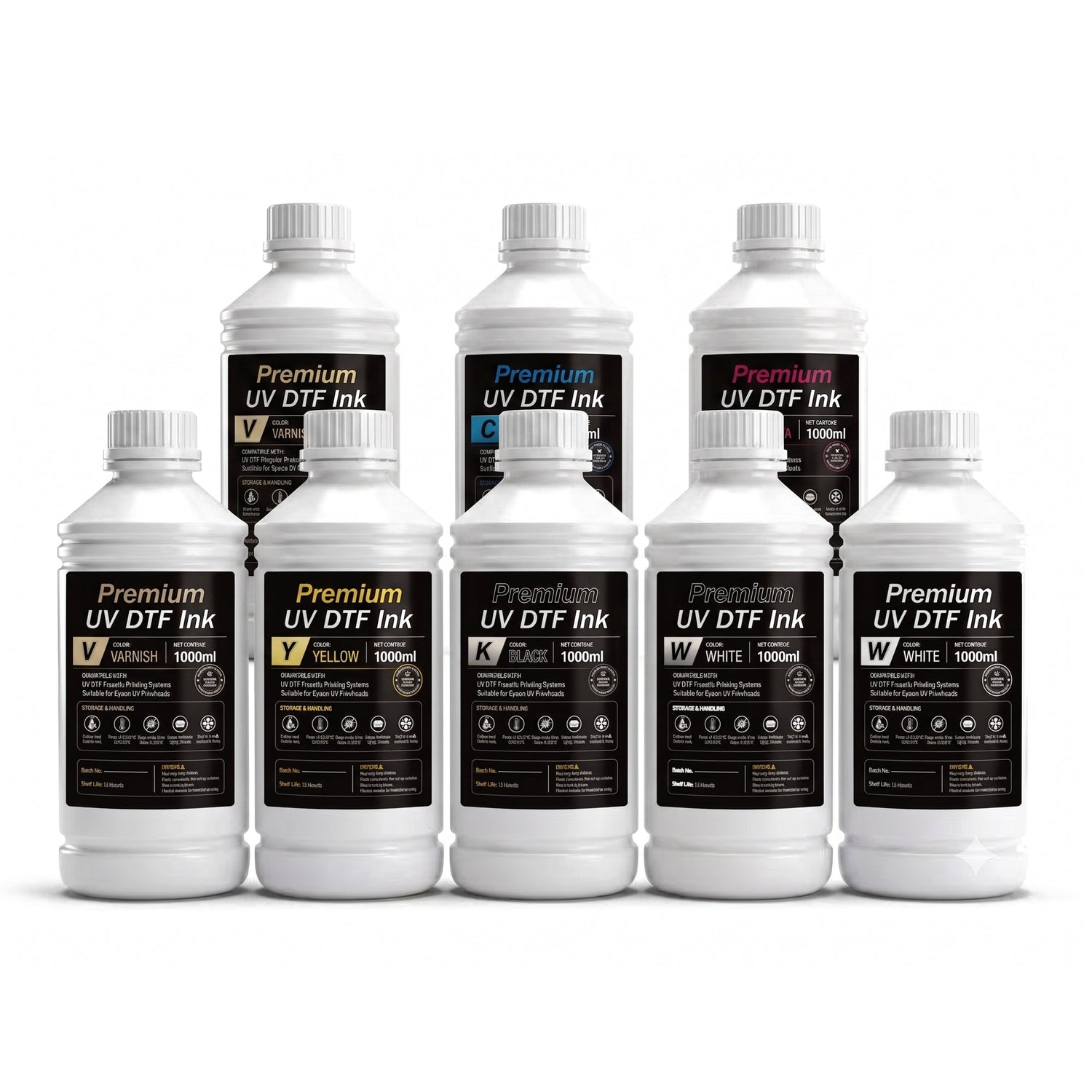
UV DTF ink is a UV/LED-curable resin ink formulated to run through Epson micro-piezo printheads (such as the XP600, i3200, TX800, and DX5/DX7). Unlike water-based pigment DTF ink — which is made for soft textiles like T-shirts and hoodies — UV DTF ink is engineered for hard, non-porous surfaces: glass, metal, acrylic, wood, plastic, and leather.
The moment UV or LED light hits the ink, it cures almost instantly through a photopolymerization reaction — no oven, no heat press, and no drying time required. That's the core reason UV DTF has become so popular with sticker shops, sign makers, and drinkware customizers: it turns a print into a finished, durable graphic in seconds.
How UV DTF Printing Works
A typical UV DTF workflow follows four steps:
- Print the design using CMYK + White + Varnish ink channels onto UV DTF film.
- Cure instantly under a UV/LED lamp as it prints.
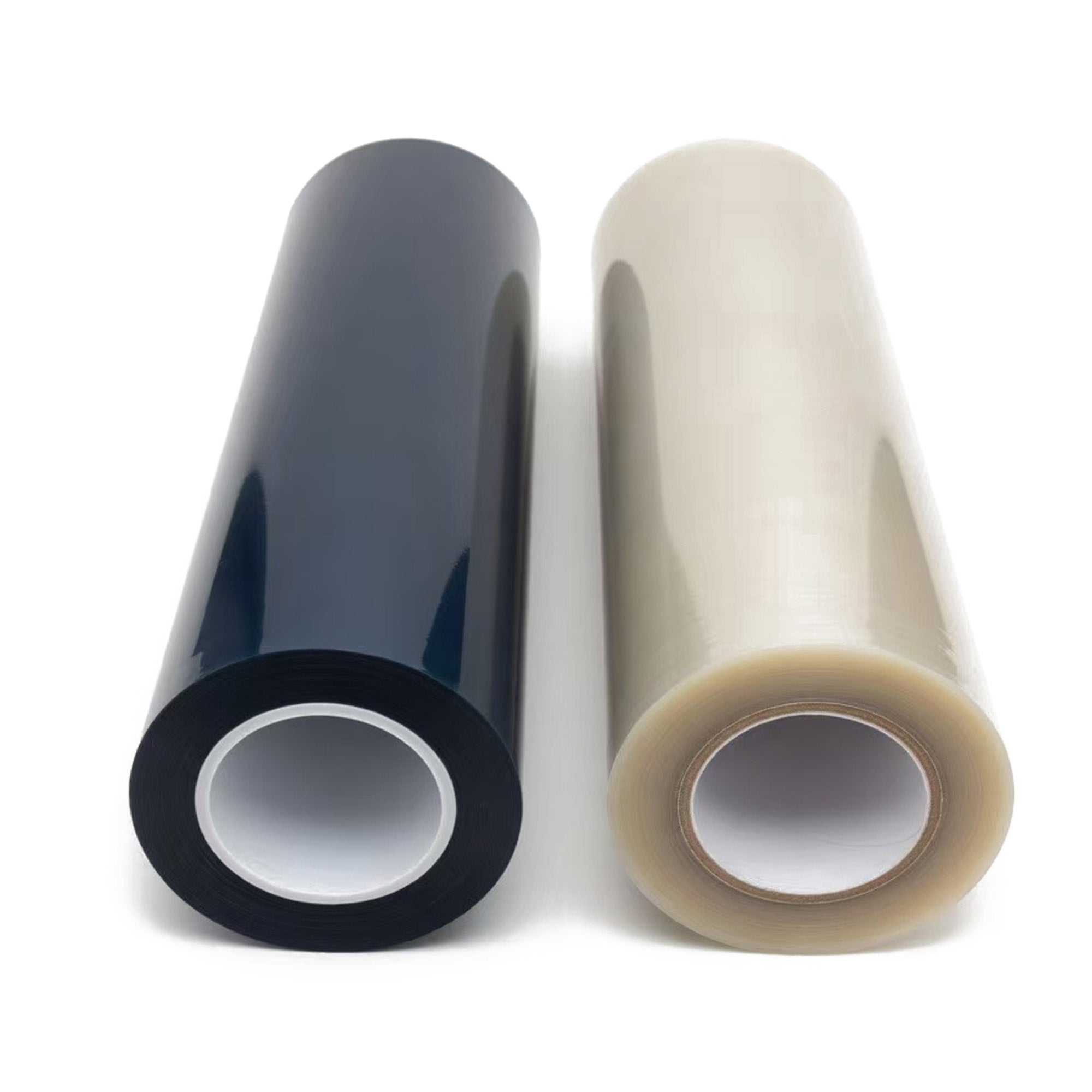
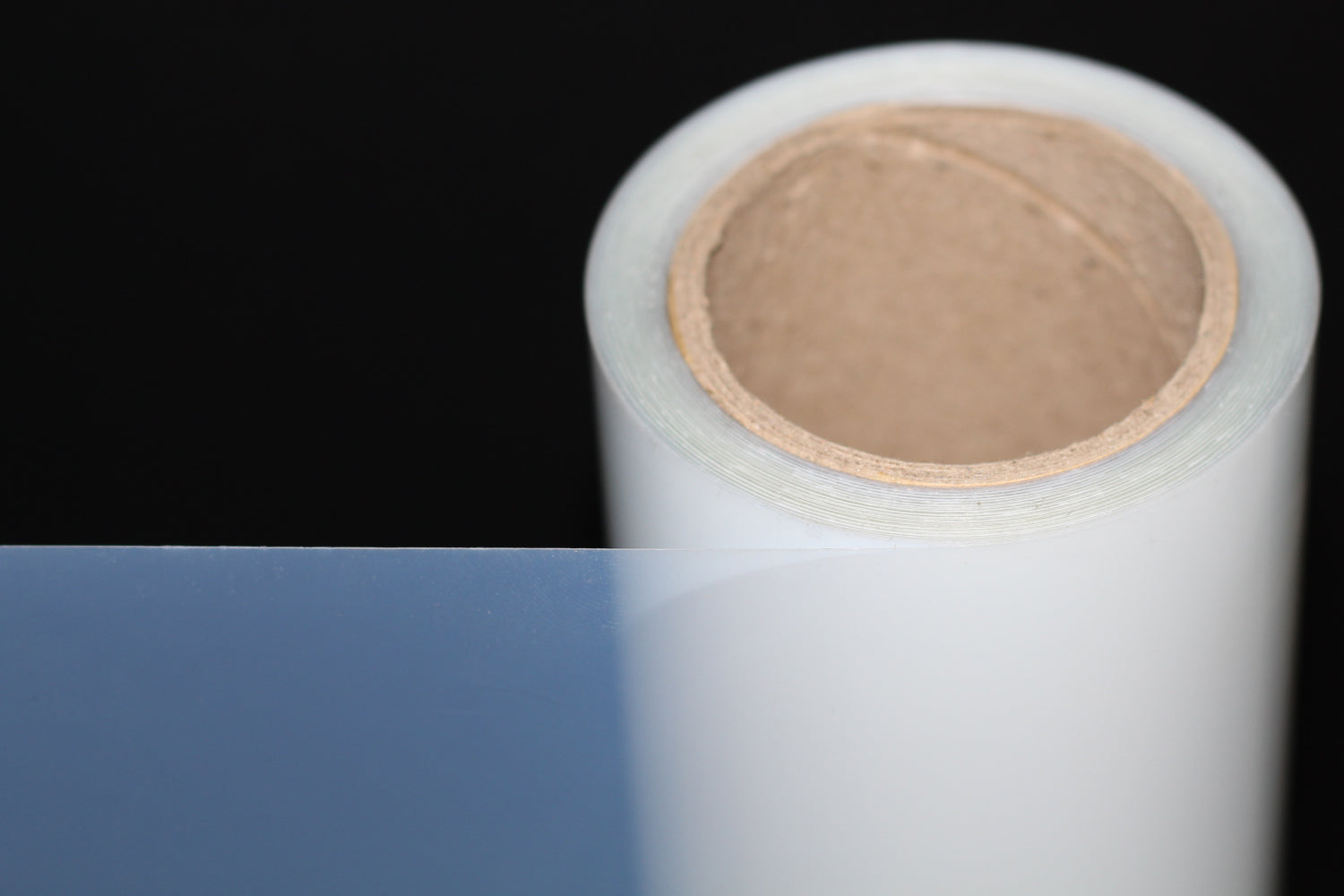
- Laminate the printed film with a second (A/B) transfer layer to create the finished "crystal sticker" effect.
- Peel and apply the transfer onto the hard surface — no heat press needed for most applications.
The Varnish (gloss) layer is what gives UV DTF prints their signature raised, high-gloss, 3D "crystal sticker" look — a major reason customers are willing to pay a premium for UV DTF products over flat vinyl stickers.
UV DTF Ink vs. Traditional DTF Ink
These two ink types are often confused because they share the "DTF" name, but they serve very different purposes. Here's how they compare:
| Comparison Point | UV DTF Ink | Traditional DTF Ink |
|---|---|---|
| Curing method | Instant UV/LED photo-curing (seconds) | Heat + pressure curing, requires drying/curing time |
| Best substrates | Glass, metal, acrylic, wood, plastic, leather | Textiles — T-shirts, hoodies, hats, bags |
| Finish | Glossy, raised 3D "crystal sticker" texture | Flat, soft-hand feel on fabric |
| Water/UV resistance | Waterproof and UV-fade resistant once cured | Varies; wash durability depends on curing quality |
| Pretreatment | Not required on hard surfaces | Fabric prep/pretreat often required |
| Typical uses | Stickers, tumblers, phone cases, signage, packaging labels | Custom apparel and textile graphics |
Is UV DTF Ink Safe? Independently Lab-Tested & RoHS Certified
One of the most common (and fair) questions customers ask is whether UV DTF ink is safe to use in a home studio or small shop. Not all UV DTF ink on the market is created equal — cheaper, uncertified inks can carry heavy metals or flame retardants that are restricted for a reason.
Our ink is independently tested against the RoHS (Restriction of Hazardous Substances) standard by SGS, the world's leading third-party testing and certification body. Here's a summary of our actual results (Test Report No. CANEC2001183901, issued by SGS-CSTC Standards Technical Services Co., Ltd., Guangzhou Branch, dated January 4, 2026):
| Restricted Substance | RoHS Limit | Our Test Result | Status |
|---|---|---|---|
| Cadmium (Cd) | < 0.01% (100 ppm) | Not Detected | Pass |
| Lead (Pb) | < 0.1% (1000 ppm) | Not Detected | Pass |
| Mercury (Hg) | < 0.1% (1000 ppm) | Not Detected | Pass |
| Hexavalent Chromium (Cr(VI)) | < 0.1% (1000 ppm) | Not Detected | Pass |
| Polybrominated Biphenyls (PBBs) | < 0.1% (1000 ppm) | Not Detected | Pass |
| Polybrominated Diphenyl Ethers (PBDEs) | < 0.1% (1000 ppm) | Not Detected | Pass |
Every restricted heavy metal and flame retardant tested came back "Not Detected," meaning our ink passes RoHS compliance with room to spare. This means safer handling for you and your team, and a cleaner environmental footprint for finished products sold to your own customers. A copy of the full SGS report is available on request.
This matters because UV DTF ink still has a low-VOC (volatile organic compound) profile compared to solvent-based inks, but "low-VOC" and "RoHS-certified" are two different things — one is about air quality while you print, the other is about the actual chemical makeup of the ink itself. Look for both when comparing suppliers.
UV DTF Ink ROI: Is It Worth the Investment?
UV DTF printing has a genuinely attractive cost structure because a single, relatively affordable Epson XP600-based setup can produce a wide range of high-margin products. Here's a simplified example based on commonly cited industry figures — plug in your own material and pricing numbers to get an accurate picture for your shop:
| Cost Factor | Illustrative Example |
|---|---|
| Average selling price per sticker/decal | ~$5-$8 |
| Variable cost per print (ink + film + laminate) | ~$2-$3 |
| Contribution margin per unit | ~$3-$5.50 (roughly 40-65% gross margin) |
| Monthly fixed costs (rent, equipment financing, etc.) | Varies by shop — commonly $2,000-$3,000/month for a small operation |
| Break-even formula | Break-even units = Fixed Costs ÷ (Price per unit − Variable cost per unit) |
| Approximate break-even volume | Roughly 500-600 units/month for many small shops |
Note: these figures are illustrative, compiled from publicly reported industry ranges, and will vary based on your local pricing, order volume, and equipment. Use them as a starting model, not a guarantee.
The biggest lever in this equation is ink cost and reliability. Cheap, off-spec ink that clogs printheads or produces inconsistent color doesn't just waste ink — it wastes film, labor, and shop time, all of which quietly erode your margin. This is exactly why sourcing consistent, RoHS-certified ink engineered specifically for your printhead model (not a generic "universal" formula) has a direct impact on your bottom line.
How to Store UV DTF Ink Properly
UV DTF ink is photosensitive by design — it's meant to cure the instant it's exposed to UV/LED light — which means storage conditions matter more than with many other ink types.
| Do | Avoid |
|---|---|
| Store bottles sealed, upright, in their original opaque packaging | Leaving bottles open or exposed to direct sunlight |
| Keep at a stable room temperature, roughly 65-85°F (18-29°C) | Storing near heaters, windows, or in a hot garage/vehicle |
| Shake well before loading into the printer to keep pigment evenly dispersed | Letting bottles sit unused for long periods without agitation |
| Use ink within a reasonable window after opening for best color consistency | Mixing old and new ink batches in the same tank without checking compatibility |
| Keep the workspace well-ventilated | Exposing ink to any UV/LED light source before it's loaded and ready to print |
Usage & Handling Precautions
- Ventilation: Work in a well-ventilated space, even though UV DTF ink is a low-VOC formula.
- Skin/eye contact: Wear gloves and avoid direct, prolonged skin contact; wash off promptly if contact occurs.
- Printhead maintenance: Run a cleaning cycle regularly, especially if the printer will sit idle for more than a few days, to prevent nozzle clogging.
- Curing check: Always confirm full cure under your UV/LED lamp before laminating — under-cured ink can affect adhesion and durability.
- Finished product care: Recommend hand-washing (not dishwasher-safe) for items like tumblers, and consider a clear laminate for long-term outdoor applications.
Why Print Shops Choose SHL Supply
| Ships from a US warehouse | We stock and ship domestically from Santa Fe Springs, CA — no waiting weeks on slow overseas freight or customs delays. |
| Fast turnaround | Orders ship within 48 hours; standard delivery in 5-7 business days, with expedited 2-3 day shipping available. |
| After-sales guarantee | Backed by a 7-day money-back guarantee, so you can order with confidence. |
| RoHS-certified & independently tested | Third-party SGS lab results confirm our ink is free of restricted heavy metals and flame retardants — safer for your shop and your customers. |
| Built for popular Epson printheads | Formulated for XP600, i3200 (U1), TX800, and DX5/DX7, reducing clogging risk versus generic "universal" ink. |
Frequently Asked Questions
What surfaces can I print on with UV DTF ink?
UV DTF ink is designed for hard, non-porous surfaces — glass, metal, acrylic, wood, plastic, and leather. It is not intended for soft textiles like T-shirts; use standard DTF ink for garment printing instead.
Is UV DTF ink safe to use at home or in a small studio?
Yes, when it's a quality, RoHS-tested formula. Look for a supplier that publishes independent lab results (like an SGS RoHS report) confirming the ink is free of restricted heavy metals and flame retardants, and always work in a ventilated space as a general best practice.
How long does UV DTF ink last once applied?
Cured UV DTF prints are waterproof, scratch-resistant, and UV-fade resistant. Indoor applications commonly last several years, while outdoor applications typically have a shorter lifespan due to constant sun and weather exposure — adding a clear protective laminate can help extend outdoor durability.
Do I need a special printer for UV DTF ink?
You need a printer with a compatible Epson micro-piezo printhead (such as the XP600, i3200, TX800, or DX5/DX7) along with a UV/LED curing lamp module. Many shops start with an affordable XP600-based setup and upgrade to faster printheads as volume grows.
How should I store UV DTF ink between uses?
Keep bottles sealed, upright, and away from direct sunlight or UV light sources, at a stable room temperature. Shake well before use to keep pigments evenly dispersed and avoid nozzle clogging.
Is UV DTF printing actually profitable?
It can be, largely because margins per unit tend to be high relative to material cost. Profitability ultimately depends on your pricing, order volume, and — critically — ink reliability, since clogging or inconsistent color quality from low-quality ink quietly increases waste and labor cost.
How fast will I receive my order?
Orders ship within 48 hours from our US-based warehouse, with standard delivery in 5-7 business days and expedited options available for 2-3 day delivery.
Ready to try it for yourself? Browse our RoHS-certified UV DTF ink, shipped fast from our US warehouse and backed by our 7-day money-back guarantee.

Leave a comment
This site is protected by hCaptcha and the hCaptcha Privacy Policy and Terms of Service apply.