
One Machine, Many Products: TPU Patches, Jersey Logos, Emblems & Custom Logos
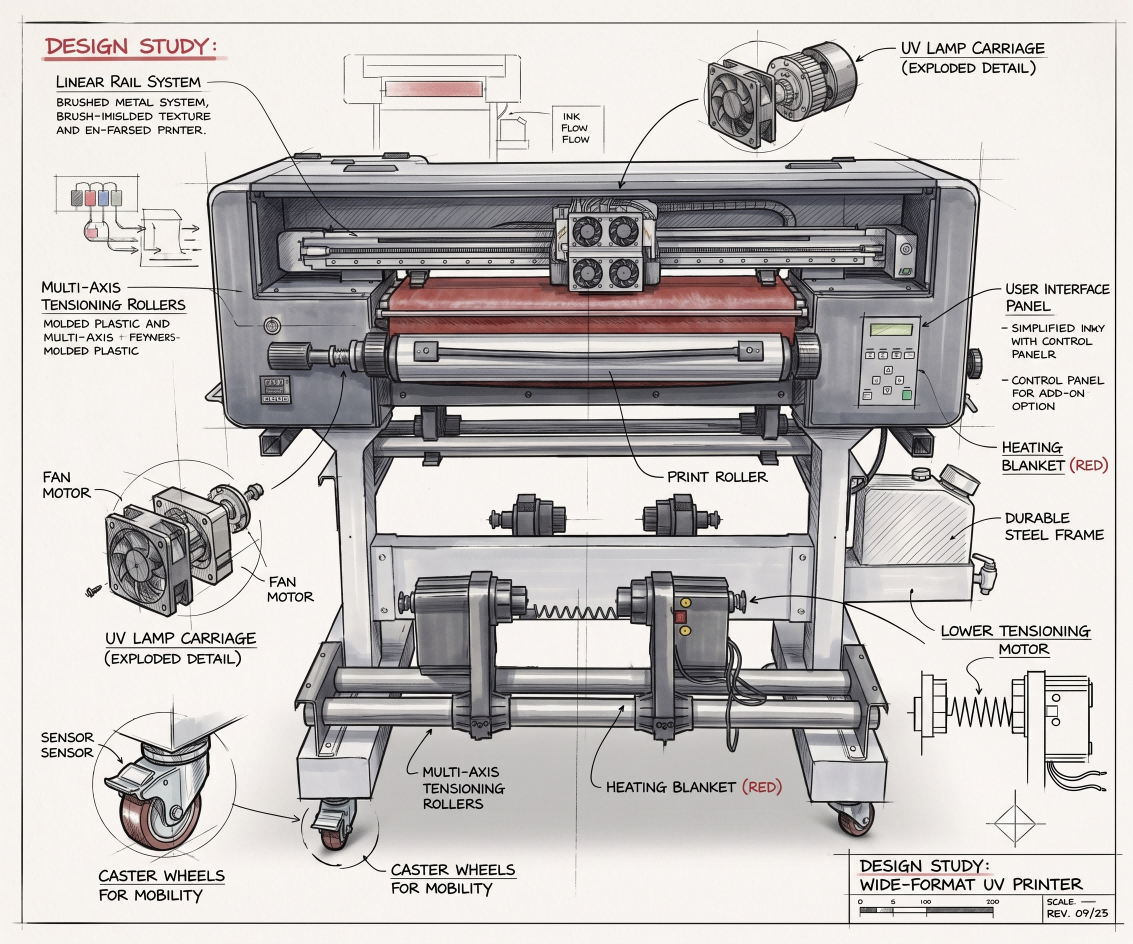
If you've followed this series through setting up a TPU embroidery workflow, here's the part worth pausing on: TPU embroidery on a hoodie or a hat is really just the first product built on this technology, not the only one. The same printer, the same soft UV ink, and the same TPU film—with small adjustments to film finish and backing method—produce a whole matrix of products that print shops and apparel brands are already selling. This article walks through four of them, so you can see the full revenue potential of the equipment you've already got, or are considering.
This matters most if you're weighing whether the equipment investment from the previous guide pencils out. A printer, ink, and film setup that only produces one product type has to earn its keep from that one product line alone. The same setup that produces jersey logos, patches, emblems, and general logo transfers spreads that investment across several revenue streams instead, which changes the math considerably—especially for a shop that already has relationships across a few different customer types (schools, teams, corporate clients, apparel brands) who each buy a different one of these products.
Product 1: TPU Patches
This is the most direct extension of what you've already learned. A TPU patch is essentially a standalone version of the same UV-printed, raised design—cut to shape and finished with a backing method instead of being pressed straight onto a garment in place.
Where they sell: school uniforms and letterman jackets, military and tactical gear, pet collars and harnesses, streetwear collaboration drops, and corporate ID badges and name tags are all established markets for patches, and TPU competes directly with the PVC and rubber patches that have dominated those categories for years.
Why TPU wins on comparison: PVC and rubber patches are molded and comparatively rigid. TPU patches are typically built from around 0.7mm TPU substrate, finishing at roughly 1.2–1.5mm once the design is built up—thin and light enough to sit comfortably on a cap or a jacket without the stiff, bulky feel that makes PVC patches uncomfortable on some products. That thinness doesn't cost durability; it's still a wash- and abrasion-resistant material, just a more comfortable one to wear.
Backing options: patches aren't limited to one attachment method, which is part of why they're an easy upsell. The same design can ship as:
- Iron-on — a heat-activated backing for a permanent, no-sew application, ideal for retail apparel
- Velcro (hook-and-loop) — removable and swappable, standard for tactical gear, team gear, and uniforms that need interchangeable name tags or rank insignia
- Adhesive (peel-and-stick) — a temporary or semi-permanent option for events, promotions, or products where sewing or pressing isn't practical
Letting a customer choose their backing is a simple way to serve very different buyers—a school uniform program and a tactical gear brand—from the same production process. It's also worth stocking more than one backing option from the start rather than adding them reactively: a tactical or uniform client asking for velcro after you've only ever offered iron-on is a common way to lose an order to a competitor who already had the option on their price sheet.
Product 2: Jersey Logos, Team Numbers, and Crests
Athletic and team apparel is one of the strongest use cases for this technology, and it's worth calling out separately from general patches because the performance requirements are stricter.
Where they sell: athletic jersey numbers, sponsor and brand logos on team uniforms, and club or school crests are the core of this category—anywhere a design needs to survive genuinely heavy use rather than occasional wear.
Why it fits: team gear gets washed constantly, often at a higher frequency than everyday apparel, and it's usually made from stretch performance fabric that a rigid decoration would crack against. TPU's flexibility and wash durability—covered in depth earlier in this series—line up directly with what jerseys need: something that moves with stretch fabric through a full season of training and washing without cracking or peeling. It also solves a real pain point for club and school teams, who often need small-batch, highly customized orders (a specific sponsor's gradient logo, a one-off tournament crest) that traditional embroidery's minimums and digitizing costs make expensive to produce in low quantities.
This category also tends to generate repeat business in a way general apparel decoration doesn't. Teams reorder every season, rosters change every year, and sponsor logos get swapped out—all of which mean a single team relationship can produce recurring small-batch orders rather than a single transaction. Local youth leagues, school athletic departments, and adult recreational leagues are all reasonable starting points if you don't already have a relationship in this space, since they tend to have simpler approval processes than a professional or collegiate program.
Product 3: Emblems
Emblems are where the visual range of TPU film really shows up as a selling point, not just a manufacturing detail.
Where they sell: corporate uniform chest emblems, event and conference badges, and motorcycle, outdoor, and heritage-brand emblems all lean on a look that traditionally required actual metal or heavily molded rubber to achieve.
The selling point: printing onto silver, gold, or holographic TPU film produces a convincingly metallic, dimensional look directly from the printer—no metal stamping, no separate plating process. For a brand that wants an emblem that reads as premium and metallic, TPU delivers that appearance at a fraction of the weight and cost of an actual metal badge, while still holding up to the wash and wear a garment-mounted emblem needs to survive.
This is also a category where price positioning matters: a traditional die-struck metal emblem typically requires its own tooling and a much longer production lead time, which pushes minimum orders and per-unit costs well above what a small or mid-sized organization wants to pay for a uniform emblem. Offering a TPU-based alternative that visually reads as metallic, at a fraction of the cost and lead time, opens the category to customers who would otherwise skip a premium emblem altogether.
Product 4: General Custom Logo Transfers
Beyond the three categories above, the same setup produces small-format custom logo transfers for almost any product with a brand mark: cap labels, bag and backpack tabs, shoe tongue labels, and neck labels for private-label apparel lines. These tend to be smaller and simpler than a full patch or emblem, which makes them fast to produce in volume and a natural fit for private-label and white-label apparel programs that need a consistent brand mark across many SKUs.
This category is worth taking seriously even though individual units are small and low-margin, because the volume tends to be much higher than patches or emblems. A private-label clothing brand doesn't need one emblem—it needs a neck label or cap tab on every single unit it ships, which turns a small per-unit price into meaningful recurring volume once you land one apparel brand as a client.
The Product Expansion Map
The table below shows how the same core setup—a UV DTF printer, soft UV ink, and TPU transfer film—maps to each product line, along with the film finish and backing choices that typically differentiate them.
| Product | Typical Application | Film Finish | Common Backing |
|---|---|---|---|
| TPU Patches | Uniforms, tactical gear, pet products, streetwear | White, matte, glitter | Iron-on, velcro, adhesive |
| Jersey Logos & Numbers | Team apparel, sponsor logos, crests | White, gradient/full-color | Heat press (direct to garment) |
| Emblems | Corporate uniforms, event badges, heritage brands | Silver, gold, holographic | Iron-on, sew-on backing |
| Custom Logo Transfers | Cap labels, bag tabs, shoe labels, private label | White, matte, glossy | Heat press (direct to garment) |
Nothing here requires new core equipment—it's the same printer, the same UV Soft Ink CMYKW, and the same 3D TPU Heat Transfer Film referenced throughout this series, just applied with different film finishes and finishing steps per product.
How to Add This as a New Product Line Without Overcommitting
If you're running an existing print or apparel business, the lowest-risk way to test any of these categories is the same approach that works for TPU embroidery itself:
- Build a small sample book first. Print a handful of patches, a jersey logo mockup, and an emblem sample using film you already have on hand, and use them as physical, touchable sales material rather than just photos—this format sells itself far better than a catalog image can.
- Upsell existing customers before chasing new ones. If you already produce apparel or uniforms for a client, showing them a TPU patch or emblem sample as an add-on is a much shorter sales cycle than acquiring a brand-new customer for a brand-new product.
- Let one category prove itself before expanding to all four. Jersey logos and team numbers are often the fastest to validate if you already have any relationship with local teams or schools; corporate emblems tend to have longer sales cycles but higher per-order value.
Because none of these categories require new core equipment, testing a new line costs you sample time and film, not a new capital investment—which makes it a low-risk way to find out which product resonates with your actual customer base before committing marketing budget to it.
It's also worth pricing each category deliberately rather than applying one flat patch price across all four. Jersey logos and general logo transfers tend to compete on volume and speed; emblems and specialty-finish patches can usually carry a higher per-unit price because they're solving a specific look a customer can't easily source elsewhere. Treating these as genuinely separate product lines—with their own pricing, sample materials, and sales pitch—tends to perform better than folding everything into one generic "custom patches" offering.
What's Next: Beyond Fabric
Everything in this series so far has been about decorating fabric and apparel. But the same underlying technology—UV printing with a specialty film—has an entirely separate application: custom stickers and decals for hard surfaces like cups, phone cases, laptops, and metal. If your customers ever ask for a sticker, decal, or hard-surface branded item alongside their apparel order, that's a related but distinct product line worth knowing about, and it's exactly what we cover next in our UV DTF sticker series.
Ready to expand your product line? [See the Full TPU Product Line →] · [Talk to Our Team About Adding This Product Line →]
FAQ
Can I make jersey numbers and logos with a TPU embroidery printer? Yes. The same UV DTF printer, soft UV ink, and TPU film used for TPU embroidery patches work for jersey numbers, sponsor logos, and team crests. The main consideration is choosing film and press settings that hold up to the frequent washing and stretch fabric typical of athletic apparel.
What's the difference between a TPU patch and a PVC patch? TPU patches are thinner and softer—commonly around 0.7mm of TPU substrate, finishing around 1.2–1.5mm—compared to the more rigid, molded construction of PVC or rubber patches. TPU also prints with full-color, photo-realistic, and metallic-look detail directly, while PVC patches are limited to the colors and effects achievable through molding.
How do I attach a TPU patch to fabric (iron-on vs velcro vs adhesive)? It depends on the use case. Iron-on backing gives a permanent, no-sew attachment good for retail apparel. Velcro (hook-and-loop) backing allows the patch to be removed and swapped, which is standard for tactical gear and uniforms with interchangeable insignia. Adhesive (peel-and-stick) backing is best for temporary or semi-permanent use, like events or promotions.
Can the same printer make stickers as well as patches? Often yes, with the right film. The core UV DTF printing process is the same; stickers for hard surfaces typically use a different film (like a UV DTF AB film for glass, plastic, or metal) rather than TPU transfer film, but many shops run both product lines on the same or similar printer hardware.

Leave a comment
This site is protected by hCaptcha and the hCaptcha Privacy Policy and Terms of Service apply.