
Automatic Aluminum Screen Frame Roughening Machine — Grinding before stretching

Get 15% Discount for Pre-order when out of stock.

Instant Operation Training & After-sales service

Installation guide will be provided as soon as the machine arrives .
Standard (5-7 business days) or Rush (2-3 business days).
7 days money back guarentee, buyer pays return shipping
DESCRIPTION
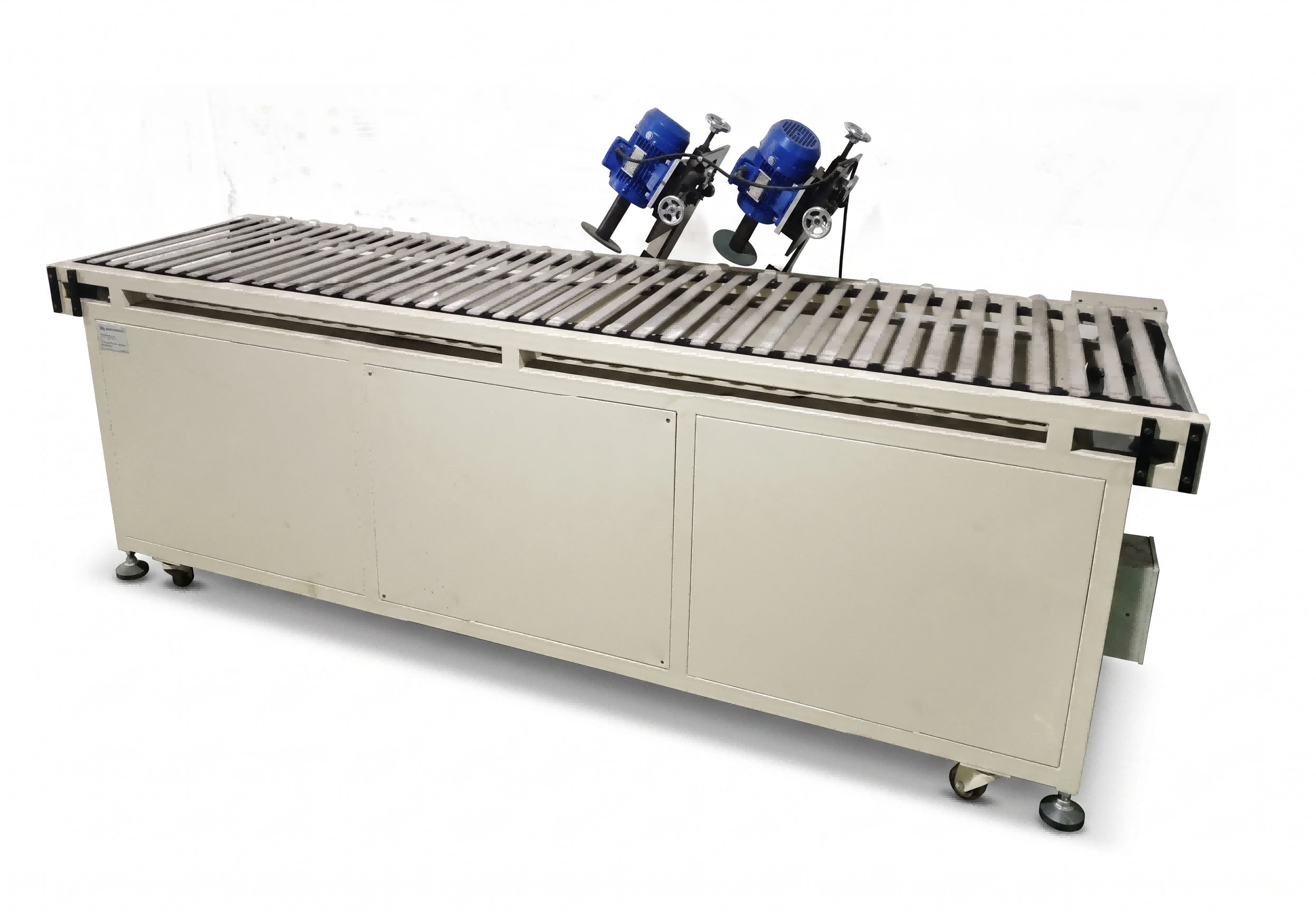
Dual-wheel automated surface abrading system for aluminum screen printing frames — built for PCB, SMT, mobile glass, and textile screen printing production lines.

Overview
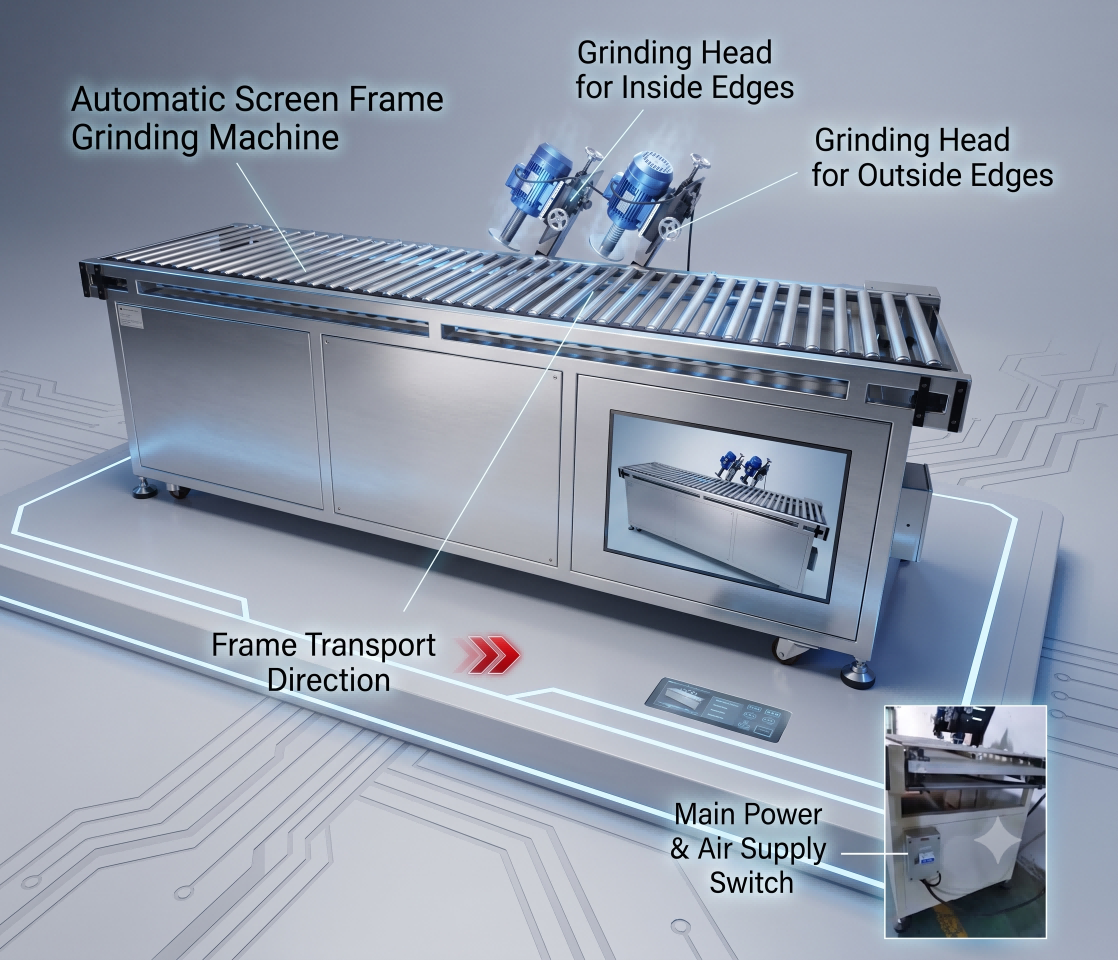
The DHJ-600 is engineered for the surface roughening (abrading/scuffing) of aluminum screen printing frames used across the PCB, mobile phone cover glass, SMT, and textile screen printing industries. Raw extruded aluminum frames have smooth surfaces that mesh adhesive cannot bond to reliably — this machine automates the roughening step with dual motorized grinding wheels and a continuous slat conveyor, replacing manual hand-sanding entirely.
By eliminating manual wire-brushing and hand-grinding, the DHJ-600 cuts labor costs, reduces operator fatigue and injury risk, and delivers fast, uniform surface preparation for optimal mesh bonding — pass after pass, frame after frame.
Key Advantages
Efficiency & Labor Savings
Replaces manual hand-sanding with a conveyor system processing approximately 100–180 frames per hour.
Dual-Surface Processing
Two motorized grinding wheels scuff both the inner and outer contact surfaces of the aluminum frame simultaneously, in a single pass.
Safety & Consistency
Reduces operator fatigue and injury risk associated with manual wire-brushing or grinding, while delivering uniform surface roughness on every frame.

Technical Specifications
| Model | DHJ-600 |
| Overall Dimensions (L × W × H) | 2700 × 700 × 800 mm (106.3" × 27.6" × 31.5") — total height with grinding motor: 1300 mm (51.2") |
| Gearmotor Power Rating | 1100 W |
| Grinding Motor Power Rating | 350 W |
| Power Supply | 380V / 50Hz standard — custom 208V / 230V / 460V, 60Hz available for US installations |
| Throughput | Approx. 100–180 frames / hour |
| Net Weight | 150 kg (approx. 330 lbs) |
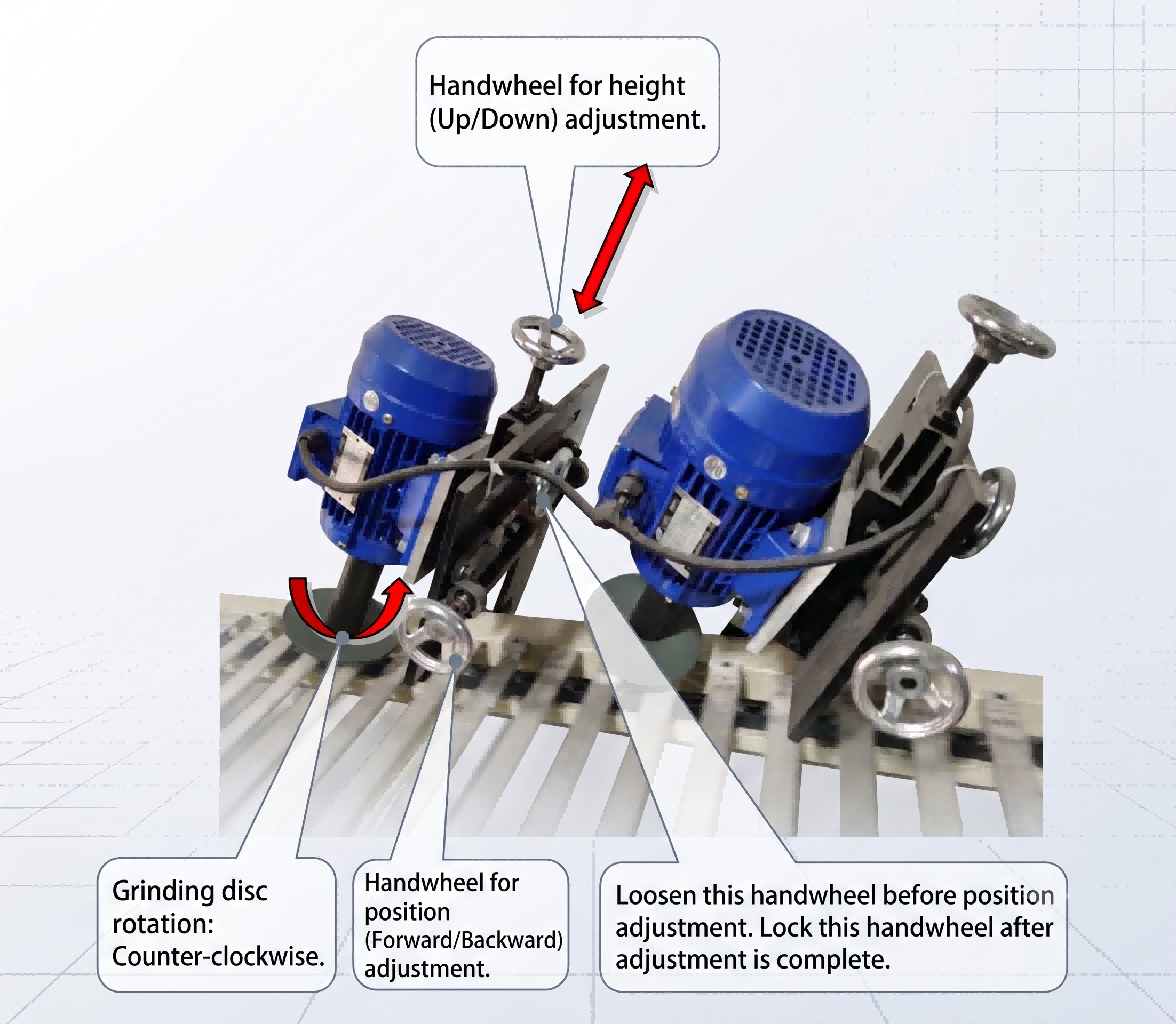
| Wheel Rotation Direction | Counterclockwise (CCW) |
| Certification | UL |
Controls & Adjustments

How It Works
- Power ConnectionConnect the unit to the proper electrical supply (380V/50Hz or your local US-configured standard).
- Wheel AlignmentUse a sample frame of your target size to adjust the grinding wheel positions before running production.
- StartupTurn on the main power switch to start the conveyor and grinding motors.
- LoadingWith both hands, place the aluminum frame onto the slat chain conveyor, flush against the positioning stop blocks.
- ProcessingLightly press down on the frame with both hands as it moves through the grinding zone to complete roughening.
- Frame ChangeoverTurn off the power and wait for all rotating parts to fully stop before adjusting handwheels for a different frame size.
Need a Custom Configuration?
Every facility is different. If you need a specific US voltage, a modified frame-size range, or have other custom machinery requirements, contact our technical service team — we're happy to help you spec the right setup.
PRODUCT VIDEO
REVIEWS
Dual-wheel automated surface abrading system for aluminum screen printing frames — built for PCB, SMT, mobile glass, and textile screen printing production lines.
Overview
The DHJ-600 is engineered for the surface roughening (abrading/scuffing) of aluminum screen printing frames used across the PCB, mobile phone cover glass, SMT, and textile screen printing industries. Raw extruded aluminum frames have smooth surfaces that mesh adhesive cannot bond to reliably — this machine automates the roughening step with dual motorized grinding wheels and a continuous slat conveyor, replacing manual hand-sanding entirely.
By eliminating manual wire-brushing and hand-grinding, the DHJ-600 cuts labor costs, reduces operator fatigue and injury risk, and delivers fast, uniform surface preparation for optimal mesh bonding — pass after pass, frame after frame.
Key Advantages
Efficiency & Labor Savings
Replaces manual hand-sanding with a conveyor system processing approximately 100–180 frames per hour.
Dual-Surface Processing
Two motorized grinding wheels scuff both the inner and outer contact surfaces of the aluminum frame simultaneously, in a single pass.
Safety & Consistency
Reduces operator fatigue and injury risk associated with manual wire-brushing or grinding, while delivering uniform surface roughness on every frame.
Technical Specifications
| Model | DHJ-600 |
| Overall Dimensions (L × W × H) | 2700 × 700 × 800 mm (106.3" × 27.6" × 31.5") — total height with grinding motor: 1300 mm (51.2") |
| Gearmotor Power Rating | 1100 W |
| Grinding Motor Power Rating | 350 W |
| Power Supply | 380V / 50Hz standard — custom 208V / 230V / 460V, 60Hz available for US installations |
| Throughput | Approx. 100–180 frames / hour |
| Net Weight | 150 kg (approx. 330 lbs) |
| Wheel Rotation Direction | Counterclockwise (CCW) |
| Certification | UL |
Controls & Adjustments
How It Works
- Power ConnectionConnect the unit to the proper electrical supply (380V/50Hz or your local US-configured standard).
- Wheel AlignmentUse a sample frame of your target size to adjust the grinding wheel positions before running production.
- StartupTurn on the main power switch to start the conveyor and grinding motors.
- LoadingWith both hands, place the aluminum frame onto the slat chain conveyor, flush against the positioning stop blocks.
- ProcessingLightly press down on the frame with both hands as it moves through the grinding zone to complete roughening.
- Frame ChangeoverTurn off the power and wait for all rotating parts to fully stop before adjusting handwheels for a different frame size.
Need a Custom Configuration?
Every facility is different. If you need a specific US voltage, a modified frame-size range, or have other custom machinery requirements, contact our technical service team — we're happy to help you spec the right setup.
Frequently Asked Questions
Whether you're a beginner starting your first printing business or an established manufacturer upgrading your workflow, these answers will help you make informed decisions and operate your machine with confidence.
Technical Support & Warranty