
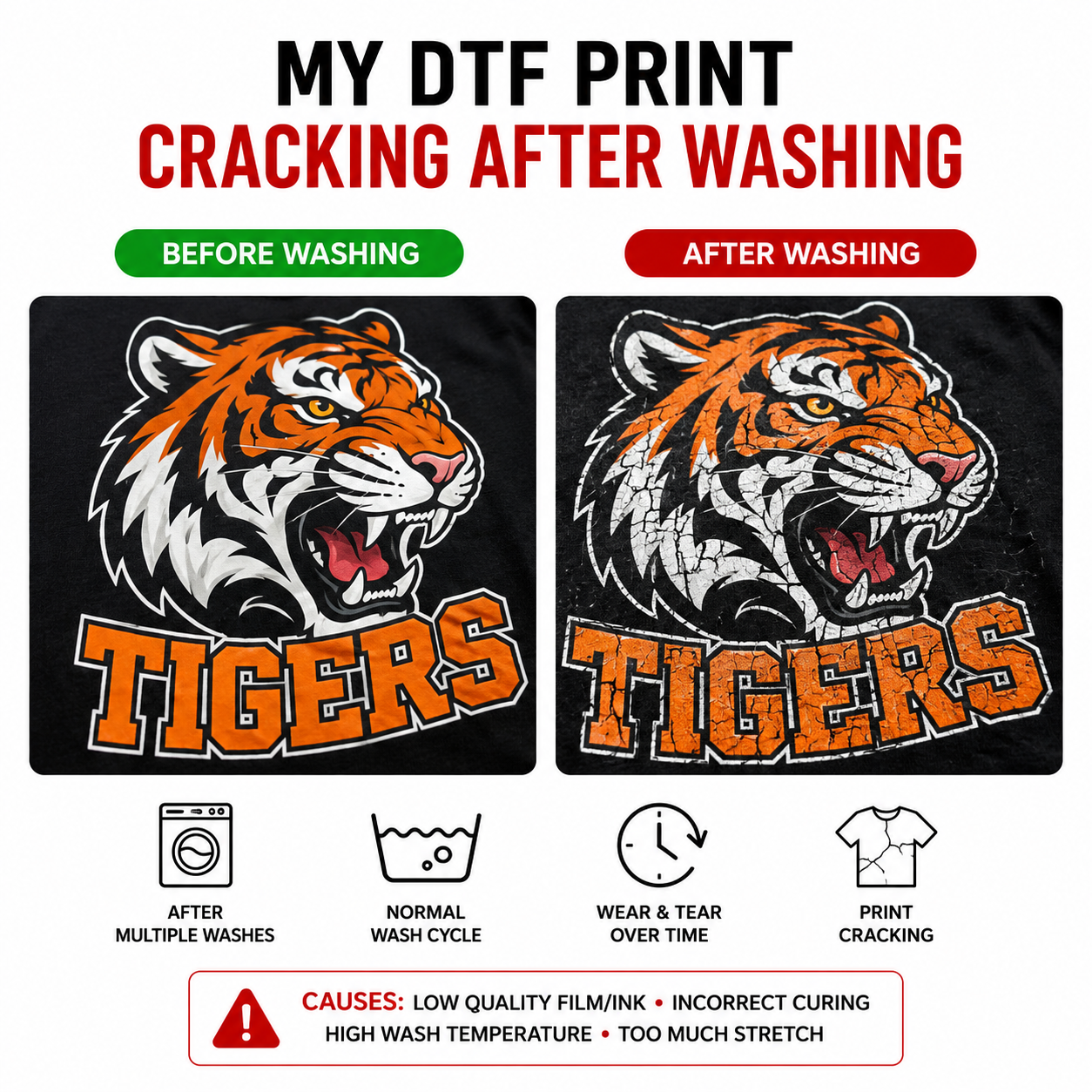
As a custom apparel business, nothing is more frustrating than delivering a batch of beautiful custom t-shirts, only to have a customer call back two weeks later complaining that their DTF (Direct-to-Film) transfers are cracking, peeling, or splitting in the wash.
A cracked DTF print ruins the garment's appearance, destroys your shop’s reputation, and eats into your profit margins through costly reprints.
If your DTF prints are failing the laundry test, don't panic. This complete troubleshooting guide breaks down the exact reasons why DTF transfers crack after washing and provides the industry-standard technical parameters you need to achieve bulletproof durability.
The 4 Main Culprits Behind Cracked DTF Prints
Achieving a highly stretchable, retail-quality print requires a perfect balance of chemical interaction, heat, and pressure. When a transfer splits after a few wash cycles, it is almost always caused by a failure in one of these four areas:
1. Incomplete TPU Powder Curing (The Over-Baking vs. Under-Baking Trap)
The hot-melt TPU (Thermoplastic Polyurethane) powder is the literal backbone of your transfer. If the powder isn't cured properly before heat pressing, the chemical bond fails.
-
Under-baking: If the powder doesn’t melt entirely, it won't fuse completely with the specialized DTF inks. Unmelted powder granules create weak microscopic gaps that split open when the garment stretches during a wash cycle.
-
Over-baking: On the flip side, baking the film for too long or at a temperature that is too high boils off the plasticizers in the powder, making the adhesive layer brittle and glass-like.
2. Insufficient Heat Press Temperature or Pressure
Even if your film looks perfect coming out of the dryer or oven, a weak application on the heat press will cause rapid cracking. If your heat press has uneven heating elements, or if you are using inadequate pressure, the liquefied glue won't sink deeply enough into the fabric fibers. Once the shirt hits the agitating spin cycle of a washing machine, the shallow print gets pulled apart.
3. Low-Quality or Mismatched Ink and Powder
In the world of commercial printing, not all consumables are created equal. Some budget-tier DTF inks lack the necessary polymer elasticity, meaning they dry hard rather than flexible. Furthermore, if you are buying your white ink from Vendor A and your adhesive powder from Vendor B, their chemical formulas might clash, leading to premature delamination.
4. Fabric Mismatch and Extreme Garment Stretch
Standard DTF setups are highly flexible, but they have physical limits. If you press a standard DTF transfer onto highly elastic activewear (like polyester/spandex performance blends) and then subject it to heavy laundry cycles, the fabric will stretch beyond the maximum elongation limit of the ink layer, causing visible cracks.
Technical Solutions: Standard Parameters for Wash-Resistant Prints
To stop the cracking immediately, calibrate your shop's production workflow to match these professional industry benchmarks:
| Production Step | Key Parameter | Optimal Target Setting | What to Look For |
| Powder Curing (Oven/Dryer) | Temperature & Time | 140°C – 150°C (284°F-302°F) for 20 – 30 seconds | The powder should have a uniform, glossy, orange-peel texture. No dry powder spots left. |
| First Heat Press Application | Temperature & Pressure | 150°C – 160°C (302°F-320°F) for 12 – 15 seconds | Medium-to-Heavy Pressure (60 PSI). Ensures ink flows into the fabric weave. |
| The Second Post-Press (Crucial Step) | Re-pressing the garment | 150°C (320°F) for 5 – 8 seconds | Cover with a Teflon sheet or parchment paper to lock the edges and soften the hand-feel. |
Pro Tip for Cold-Peel Films: If you are using a cold-peel PET film, wait until the transfer is completely cold to the touch (at least 10–15 seconds post-press) before peeling. Peeling while warm disrupts the cooling adhesive polymers, micro-fracturing the print before it ever reaches a washing machine.
3 Quick In-Shop Quality Control Tests
You don't have to wait for a customer to wash a shirt 10 times to know if your prints are durable. Run these quality checks on your test batches:
-
The 5-Second Stretch Test: Once the finished garment is cool, grab the left and right sides of the print and pull firmly for 5 seconds. A high-quality DTF print should stretch effortlessly with the fabric and snap right back into place without fine hairline splits appearing.
-
The Scratch Test: Rub your fingernail firmly across the white backing of a cured, unpressed film. If the adhesive powder easily flakes or scrapes off like dry dandruff, it is under-cured.
-
The Hand-Feel Test: If the final print feels incredibly thick, rigid, or heavy like cardboard, your white ink layer is likely too thick, or the powder was over-baked. Thick, rigid prints are highly susceptible to cracking.
Upgrade Your Shop's Durability with Premium Consumables
At the end of the day, your technical settings are only as good as the raw materials feeding your printer. If you want prints that can withstand 50+ commercial wash cycles without fading, cracking, or peeling, you need certified commercial-grade supplies.
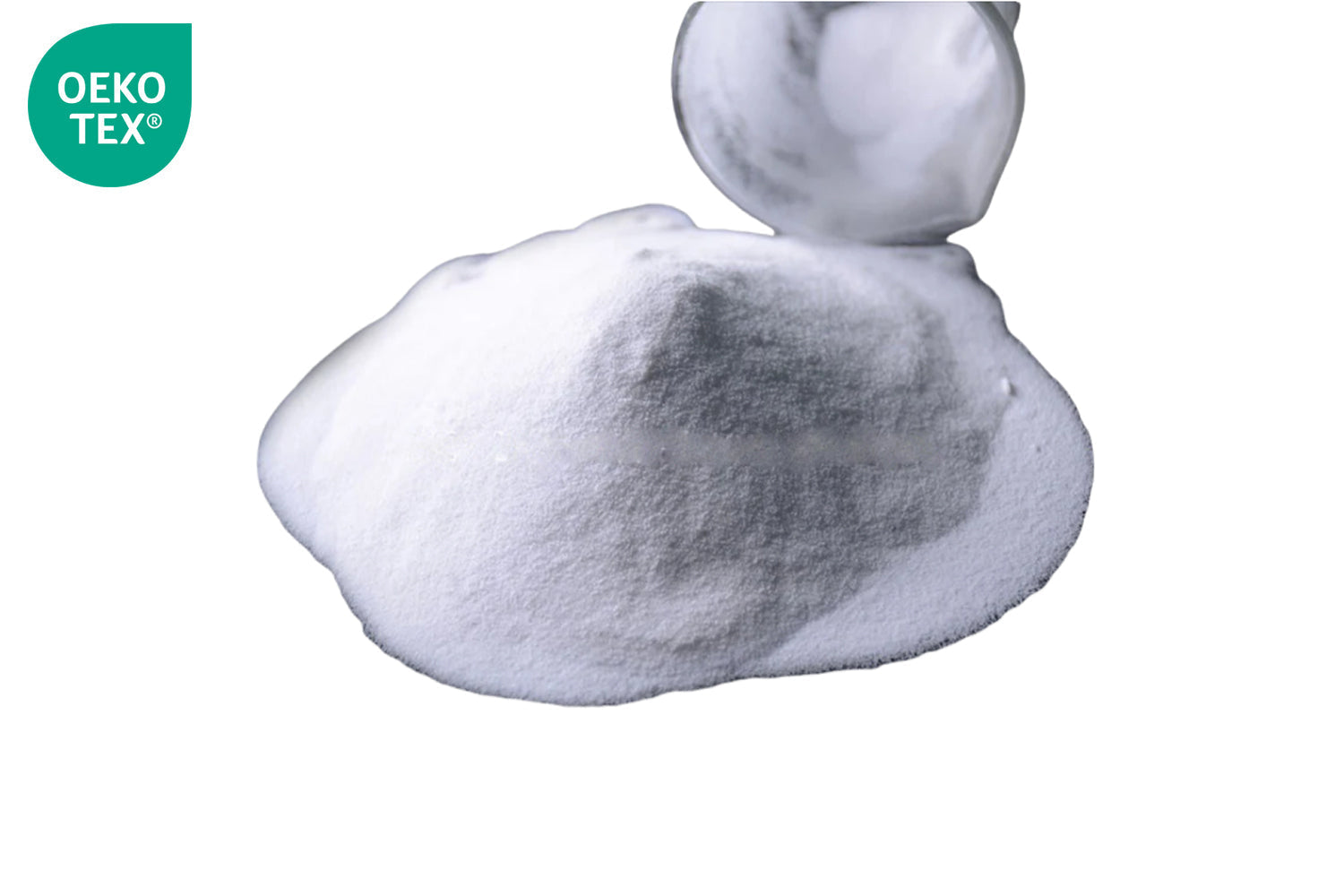
At SHL Supply, our specialized hot-melt TPU powders and high-density elastic DTF inks are chemically engineered to work in perfect harmony. Our consumables carry the prestigious OEKO-TEX® certification, guaranteeing they are completely safe for clothing while delivering the maximum tensile elasticity your commercial clients demand.
Are you located in Southern California? Don't wait around for expensive freight shipping. We offer immediate local pickup at our fully stocked warehouse located at 12155 Mora Dr, Santa Fe Springs, CA 90670. Stop by to grab premium films, powders, and inks today, or chat with our on-site technical team to get your commercial setup running flawlessly.
Explore our full catalog of high-durability commercial DTF supplies or drop a line to our technical support desk to solve your print shop's trickiest transfer issues.

Leave a comment
This site is protected by hCaptcha and the hCaptcha Privacy Policy and Terms of Service apply.