
Quick Answer: DTF adhesive powder sticks to unprinted areas of the film because static electricity on the PET film surface electrostatically attracts the fine, lightweight powder particles regardless of where ink was deposited. This problem is dramatically worse when shop humidity falls below 40% RH — which is common during winter heating season and in dry inland US states like Arizona, Nevada, Colorado, and Utah. The primary fix is raising shop humidity to 50–60% RH with a humidifier. Grounding wires, anti-static bars, and premium anti-static film are secondary but highly effective additions.
1. What DTF Powder Ghosting from Static Looks Like
You run a perfect print, apply your TPU powder, shake it off — and something is wrong. The powder didn't just stick to the ink. A fuzzy, dusty halo of powder surrounds every element of your design. Fine dust particles coat the entire film surface in a thin, powdery layer. After heat pressing, the garment has dozens of tiny white specks scattered across the surrounding fabric area. Customers see it. They ask why the shirt looks dirty. You have to repress or reprint.
This is powder ghosting or powder halos caused by static electricity — and it is one of the most common quality issues in DTF printing across the United States, peaking every winter and in low-humidity regions year-round.
How to Confirm Static Is Your Problem
| What You See | Likely Cause | Severity |
|---|---|---|
| Fine powder dust over entire film surface — not just near the design | High static charge on PET film — classic RH below 40% problem | 🔴 Severe static |
| Powdery halo 3–10mm around every design element | Static-induced ink misting + powder attraction | 🔴 High static |
| Powder clumps stuck in corners of the shaker chamber that won't shake off | Static in shaker combined with low humidity | 🟡 Moderate static |
| Film curls or crackles when handled — "clings" to surfaces | Heavy surface charge — film is highly charged | 🔴 Severe static |
| Problem appears in winter / when heat is running but not in summer | Humidity drop from heating system — seasonal static pattern | 🟡 Seasonal static |
| Problem disappears or reduces significantly on rainy, humid days | Confirmed static — humidity is the variable | ✅ Confirmed |
2. The Science: Why PET Film Builds Up Static
Understanding the physics helps you target the right fix. DTF film is made from PET (Polyethylene Terephthalate) — the same type of plastic used in plastic bottles and food packaging. PET is an excellent electrical insulator. That means it does not allow electrical charge to flow across or through it — so when charge builds up, it stays put.
How Static Builds Up on DTF Film: The Triboelectric Effect
Static charge is generated by friction between two surfaces — a phenomenon called the triboelectric effect. In the DTF printing process, friction happens constantly:
- The film unrolling from a tight roll — layers of PET rubbing against each other
- The film contacting the printer's feed rollers and pinch rollers
- The film passing over the printhead carriage at speed
- The film entering and moving through the powder shaker chamber
- The paddle mechanism in the shaker beating against the film
Each of these friction events transfers charge to the PET surface. In a properly humidified environment (50–60% RH), the water vapor in the air acts as a weak conductor, allowing this charge to dissipate harmlessly. When humidity drops below 40%, the air becomes a near-perfect insulator — and the charge has nowhere to go. It accumulates until the film surface holds a charge of several thousand volts.
Why DTF Powder Is Especially Vulnerable
TPU adhesive powder is extremely fine and lightweight — particle diameter of 80–170 µm, weighing virtually nothing per particle. A highly charged film surface creates an electrostatic field strong enough to attract and hold these particles from several centimeters away — pulling them out of the air and holding them against the film surface regardless of whether ink is present at that location.
| Factor | Role in Static Buildup | How Bad When RH < 40% |
|---|---|---|
| PET film material | Natural insulator — holds charge once generated | 🔴 Maximum charge retention |
| Film unrolling friction | Continuous charge generation from roll-to-roll contact | 🔴 High charge generation |
| Printer rollers | Metal-to-plastic contact creates triboelectric charge | 🟡 Moderate contribution |
| Shaker mechanism | Paddle friction against film adds charge; shaker walls accumulate powder | 🔴 High contribution |
| Dry air (low RH) | Prevents charge dissipation — charge accumulates indefinitely | 🔴 Root cause multiplier |
| TPU powder particle size | Ultra-fine particles are easily moved by electrostatic force | 🔴 Easily attracted |
3. Which US Regions and Seasons Are Most Affected
DTF static from low humidity is not evenly distributed across the United States. Print shops in the following regions deal with this problem most intensely:
🔴 Severe Static Risk — Year-Round
Arizona, Nevada, Utah, New Mexico, West Texas
Annual average RH often 20–35%. Static is a persistent, year-round problem — not just seasonal. Humidifiers must run continuously.
🟠 High Static Risk — Fall through Spring
Colorado, Wyoming, Idaho, Montana, Inland California (Inland Empire, Central Valley)
Low desert and high-altitude climates. Winter heating drops indoor RH to 25–40%. Fall through spring is prime static season.
🟡 Moderate Static Risk — Winter Only
Midwest (IL, OH, MN, WI, MI), Northeast (NY, PA, MA), Pacific Northwest (WA, OR)
Forced-air heating in winter drops indoor RH. Summer is fine. Add humidifier in October; remove in May.
🟢 Low Static Risk — Occasional
Southeast (FL, GA, SC), Gulf Coast (TX Gulf, LA, MS), Hawaii
Naturally humid climates. Static rarely an issue — more common problems are moisture-related powder clumping. May need dehumidifier instead.
4. The 4 Conditions That Make DTF Static Worse
| # | Condition | Why It Amplifies Static | US Peak Season |
|---|---|---|---|
| 1 | Shop humidity below 40% RH | Dry air cannot conduct away the triboelectric charge — it accumulates on the PET surface indefinitely | October–March (nationwide); year-round in Southwest |
| 2 | Ungrounded printer and shaker | Without a ground path, charge has no way to escape the equipment frame — it transfers directly to the film at every contact point | Year-round |
| 3 | Fast printing speed | Higher film speed creates more friction per unit time — generates more charge per meter of film | Year-round (worsened by dry conditions) |
| 4 | Budget PET film with no anti-static treatment | Thin, single-coat PET film accumulates more charge than premium dual-coat film; no surface treatment to help dissipate | Year-round |
5. How to Fix DTF Static: 7 Solutions Ranked by Cost & Effectiveness
Add a Humidifier — The Most Impactful Fix $40–$120
This is the single highest-impact intervention for static reduction. Raising shop humidity from 30% to 55% RH reduces the electrostatic charge buildup on PET film by 70–80%, and in many shops completely eliminates powder ghosting on its own.
What to buy: An ultrasonic cool-mist humidifier with 2–4 gallon/day output. Models like the Levoit LV600HH or Pure Enrichment MistAire Excel are popular with print shops for their large tank capacity and auto-shutoff.
Where to place it: Within 6–10 feet of the DTF printer and powder station, on the same side. Not directly against any equipment (keep 3+ feet clearance).
Water type: Use distilled water only. Tap water deposits mineral dust on the film and equipment as the mist dries.
Target RH: 50–60%. Monitor continuously with a digital hygrometer.
Ground Your DTF Printer and Powder Shaker $5–$20
Grounding provides a conductive path for the static charge to escape the equipment frame instead of building up and transferring to the film. This is one of the lowest-cost, highest-return fixes available.
What you need: Bare copper grounding wire (14 AWG minimum), ring terminal connectors, and a grounded electrical outlet or water pipe.
How to install:
- Identify a bare metal bolt or screw on the frame of your DTF printer (not painted)
- Attach one end of the copper wire to this bolt using a ring terminal and screw it tight
- Connect the other end to the ground pin (round hole at bottom) of a properly grounded electrical outlet — use a ground plug adapter with a screw terminal, or connect to a ground lug on a properly grounded electrical panel
- Repeat the same process for your powder shaker
- Verify with a multimeter: resistance between printer frame and true ground should be under 10 ohms
Install an Anti-Static Bar Above the Film Path $15–$80
An anti-static bar (also called a static elimination bar) contains either conductive carbon fibers or ionizing elements that actively neutralize the static charge on the film surface as it passes underneath.
- Passive anti-static bar (conductive carbon fiber brush): No power required. Mount 0.5–1 inch above the film as it exits the printer. The fibers make gentle contact and drain the charge. Cost: $15–$30. Effective for mild to moderate static.
- Active ionizing bar (powered): Emits a stream of positive and negative ions that neutralize any charge on the film surface without contact. More powerful for severe static environments. Cost: $50–$150. Recommended for Southwest shops where static is severe year-round.
Placement: Mount above the film path between the printer exit and the powder station entrance — this neutralizes charge before the film ever contacts the powder.
Apply Anti-Static Spray to the Film $8–$15
Anti-static spray temporarily deposits a thin conductive layer on the film surface that helps charge dissipate rather than accumulate. It is a short-term fix best used in combination with other solutions.
- Apply to the back (non-print) side of the film only — never to the print surface
- Lightly mist a lint-free cloth — do not spray directly onto the film or equipment
- Wipe the back of the film roll before loading it into the printer
- Reapply every 1–2 rolls in severe static conditions
- Suitable sprays: Staticide, Sprayon Anti-Static, or similar conductive coating sprays
Upgrade to Premium Anti-Static DTF Film Low cost per roll
Not all DTF film is equal when it comes to static behavior. The film's surface coating directly affects how much charge it accumulates and how quickly that charge dissipates.
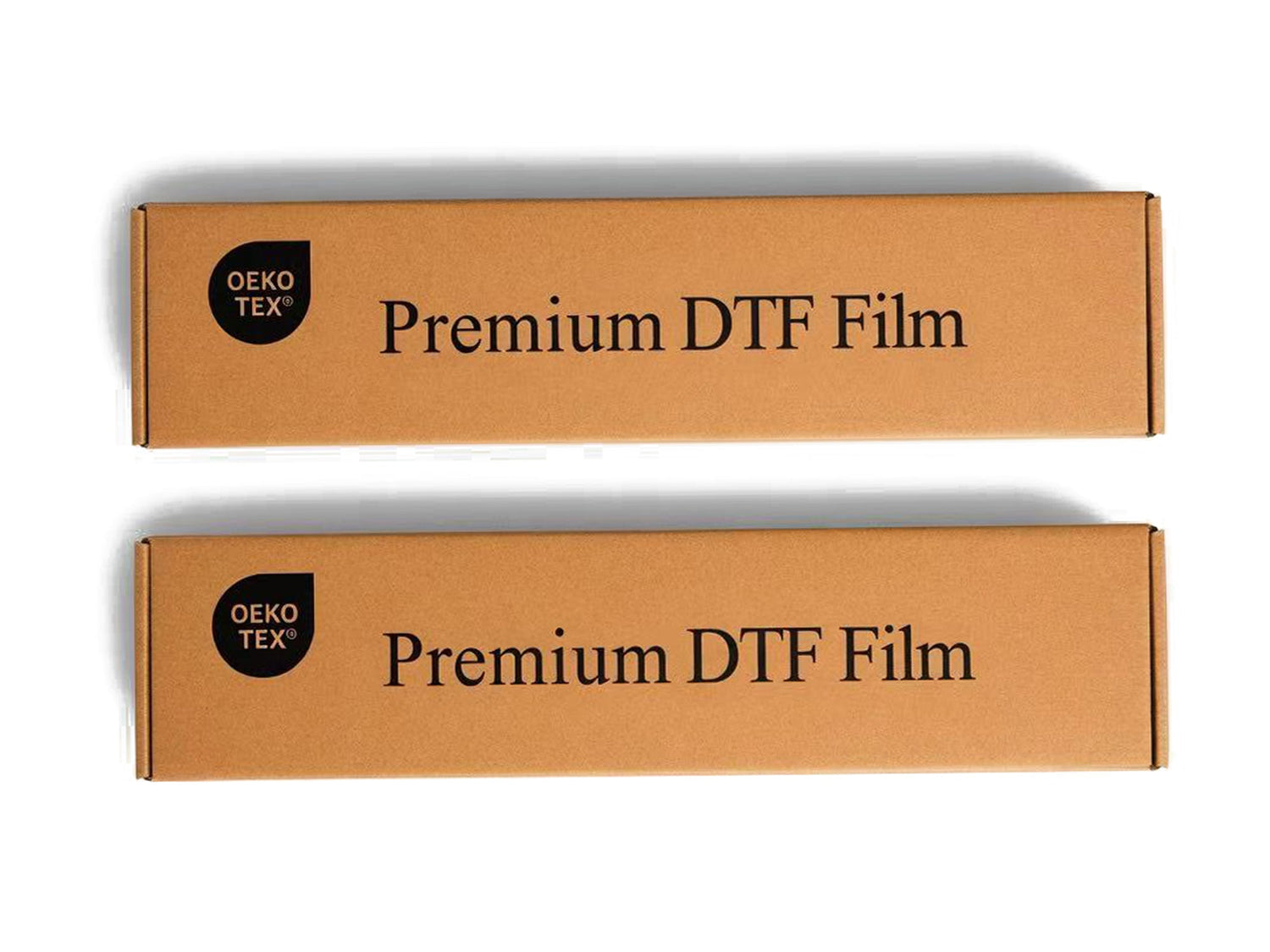
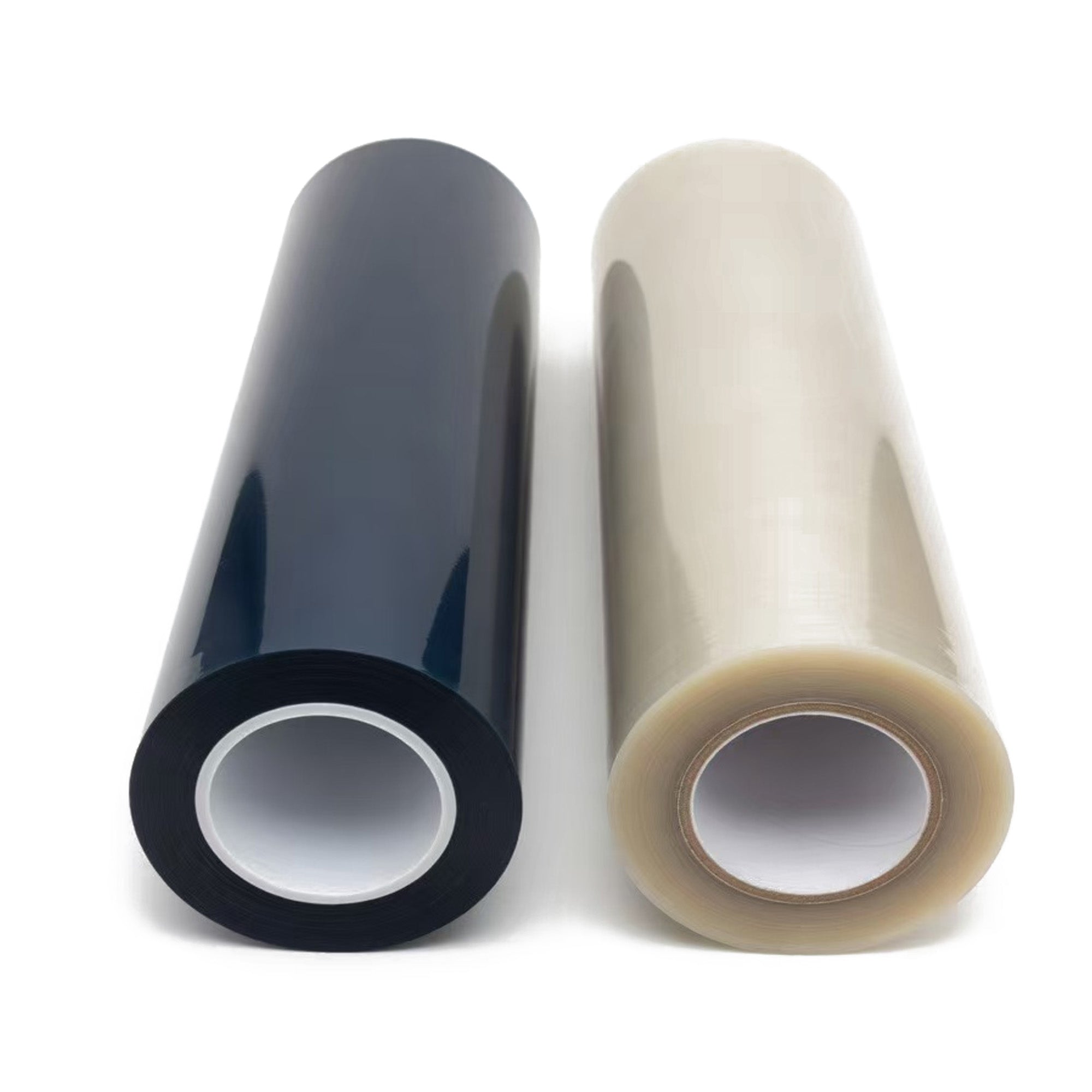
Budget DTF film typically has a thin, single-side coating with no anti-static treatment — it accumulates maximum charge. SHL's 85µm Double Matt Premium DTF Film features a dual-side matte coating that:
- Reduces surface friction as the film passes through printer rollers and the shaker — lower friction = less charge generated per meter
- More evenly dissipates any charge that does build up across the wider matte surface area
- Provides consistent ink absorption that prevents ink misting — a secondary static-related problem
Switching film alone often reduces powder ghosting by 30–50% even without other changes. Combined with humidity control and grounding, it eliminates the problem entirely in most shops.
Slow Down Printing Speed Free
Faster film movement through the printer and shaker generates more friction per unit time — and therefore more static charge per meter of film. Reducing print speed by one pass level (e.g., from 4-pass to 6-pass) reduces film velocity and charge generation.
This is a free adjustment in your RIP software and is worth trying immediately, especially if you notice static is worse during high-speed production runs than during slow test prints.
Clean the Powder Shaker Chamber Thoroughly Free
Powder buildup on the walls and paddle mechanism of the shaker chamber dramatically increases static inside the shaker. Each accumulated powder particle adds to the insulating layer on the shaker interior surfaces, reducing grounding effectiveness and increasing the electrostatic field that the film passes through.
- Clean the shaker chamber interior and paddle blades with a dry brush or compressed air after every production run
- Wipe down interior walls with a damp (not wet) lint-free cloth weekly
- If the shaker has a grounding lug, verify and clean the grounding connection
- Do not increase shaker intensity to overcome static — faster paddle movement generates more static, making the problem worse
6. Humidity Setup Guide for DTF Print Shops
| RH Level | Static Risk | Powder Behavior | Action Required |
|---|---|---|---|
| Below 30% RH | 🔴 Extreme | Clings everywhere — unusable production | Humidifier + grounding + anti-static bar — all three simultaneously |
| 30–40% RH | 🔴 Severe | Heavy ghosting around all design elements | Humidifier required immediately; add grounding |
| 40–50% RH | 🟡 Moderate | Noticeable ghosting halo on fine details and edges | Humidifier to raise to 50%+; grounding recommended |
| 50–60% RH | 🟢 Optimal | No static ghosting; powder sticks only to ink | Maintain this range — monitor with hygrometer |
| 60–70% RH | 🟢 Acceptable | Normal powder behavior; slight moisture sensitivity | No action needed; watch for any powder clumping |
| Above 70% RH | 🟡 Humidity issue | Powder absorbs moisture and clumps; sticks to unprinted areas via moisture (not static) | Dehumidifier required; seal powder storage |
Humidifier Sizing for US Print Shop Spaces
| Shop Size | Recommended Humidifier Output | Placement |
|---|---|---|
| Under 200 sq ft (home studio) | 0.5–1.5 gallons/day | Near printer, any wall |
| 200–400 sq ft (small shop) | 1.5–3 gallons/day | Same side as printer and shaker |
| 400–800 sq ft (medium shop) | 3–5 gallons/day or two units | One near printer, one near shaker/press area |
| 800+ sq ft (production floor) | Whole-building humidification system or multiple large units | Consult HVAC professional for ducted humidification |
7. How to Ground Your DTF Printer and Powder Shaker
Proper electrical grounding is a $10–$20 fix that can cut static-related powder ghosting by 40–60% on its own. Here is the complete procedure:
Materials Needed
- 14 AWG or heavier bare copper wire (available at any hardware store — buy 10 feet)
- Ring terminal connectors (to fit your wire gauge)
- Crimp tool or pliers
- Screwdriver
- Ground outlet adapter with ground lug terminal (or direct connection to electrical panel ground)
- Multimeter (optional — for verification)
Grounding Procedure
- Power off your DTF printer and powder shaker completely
- Locate a bare metal bolt or screw on the printer frame — not painted, not anodized. Check the rear panel or underside.
- Crimp a ring terminal onto one end of the copper wire and attach it to this bolt, tightening firmly
- Run the wire to your ground connection point:
- Option A (easiest): Use a 3-prong outlet with a screw-type ground lug adapter. Plug into a properly grounded outlet. Connect wire to the ground lug screw.
- Option B (best): Connect directly to a ground bar in your electrical panel. Contact an electrician if not comfortable with panel work.
- Option C (alternative): Connect to a cold-water supply pipe (copper only, not plastic).
- Repeat for the powder shaker — same process, separate wire
- Verify with multimeter: Set to resistance (ohms). Touch probes between printer frame and known ground. Reading should be under 10 ohms. Under 1 ohm is excellent.
8. Why Film Quality Changes Everything for Static
The DTF film you choose has a direct impact on how much static charge builds up during production. This is one of the most overlooked variables in powder ghosting troubleshooting.
| Property | Budget DTF Film | SHL 85µm Double Matt Film Recommended |
|---|---|---|
| Coating Type | Single-side, thin coating | Dual-side matte coating |
| Surface Friction | Higher — generates more charge per roller contact | Lower — matte surface reduces triboelectric generation |
| Anti-Static Treatment | None on budget film | Matte dual coating provides better charge dissipation |
| Charge Accumulation | High — charge concentrates on glossy surface | Lower — matte surface disperses charge more evenly |
| Powder Ghosting Risk | 🔴 High — especially in low RH | 🟢 Significantly reduced |
| Ink Absorption | Slower — wet ink at shaker increases powder sticking | Faster — ink absorbed before shaker, reducing wet-area powder attachment |
| US Stock Availability | Often 2–4 week import lead time | In-stock at SHL LA — same or next-day shipping |
| Technical Support | Overseas, email-only | US-based phone and in-person support |
9. RIP Software Adjustment: Reducing White Ink Static Misting
When static charges are very high, they can physically deflect the fine ink droplets fired by the printhead — particularly white ink, which has larger, heavier TiO₂ particles. These deflected droplets land outside the intended design boundary as a fine "mist" of ink. This ink mist then attracts powder — creating the appearance of ghosting even in areas that are farther from the design than simple charge attraction would explain.
RIP Settings That Reduce Static-Related Ink Misting
| Setting | Where in RIP | Adjustment | Effect |
|---|---|---|---|
| White ink density | Media Manager → Ink Limits | Reduce from 95–100% to 80–90% | Less white ink volume = less misting mass |
| Print speed / pass count | Job Properties → Quality/Speed | Switch from 4-pass to 6-pass | Lower film velocity = less charge generated per meter |
| Total ink limit | Media Manager → Ink Limits | Keep combined CMYK+W under 210% | Less total wet ink at shaker entry = less wet-area powder stick |
| Pre-dry time | Machine settings (if available) | Increase pre-dry dwell before shaker entry | Drier ink at shaker = powder sticks only to intended areas |
10. Solution Comparison Table: All Fixes Ranked
| Solution | Cost | Effectiveness | Time to Implement | Best For |
|---|---|---|---|---|
| 1. Add humidifier (50–60% RH) | $40–$120 | 🟢🟢🟢 Highest — addresses root cause | Minutes to hours | All shops in dry climates or winter heating conditions |
| 2. Ground printer & shaker | $10–$20 | 🟢🟢 High | 30–60 minutes | All shops — should be standard installation |
| 3. Install anti-static bar | $15–$80 | 🟢🟢 High | 30–60 minutes | Severe static environments; Southwest US shops |
| 4. Apply anti-static spray to film back | $8–$15 | 🟡 Moderate | 5 minutes per roll | Temporary relief; good to combine with other fixes |
| 5. Upgrade to SHL 85µm Double Matt Film | Low per roll | 🟢🟢 High (combined effect) | Immediate (roll swap) | All shops — reduces both static and other print quality issues |
| 6. Reduce print speed (increase pass count) | Free | 🟡 Moderate | 2 minutes in RIP | Quick adjustment while ordering humidity solutions |
| 7. Clean powder shaker chamber | Free | 🟡 Moderate (maintenance) | 10–15 minutes | Regular maintenance — prevents static amplification in shaker |
| 8. Reduce white ink density in RIP | Free | 🟡 Moderate | 5 minutes in RIP | Reduces ink misting component of powder ghosting |
11. Why SHL Supply: Local Stock, Same-Day Shipping & In-Person Training
When powder ghosting is ruining a production run — with orders due tomorrow — you need the right film in your hands today, not in three weeks from an overseas supplier. SHL Supply is built to solve exactly this problem for US print shops.
🚚 Same-Day and Next-Day Shipping from Los Angeles
SHL stocks the 85µm Double Matt Premium DTF Film, Premium DTF Ink, and OEKO-TEX TPU Powder at our Santa Fe Springs, CA warehouse. Order before 2 PM PST for same-day dispatch. Most Southern California shops receive orders the following morning. No customs, no freight delays, no import surprises — just the consumables you need, when you need them.
🏫 In-Person Environment and Process Training
Static and humidity management is one of the most misunderstood aspects of DTF production — and one of the cheapest to fix when you know what to do. SHL offers hands-on training at our facility at 12155 Mora Dr, Santa Fe Springs, CA 90670 that covers:
- How to measure and interpret shop RH with a digital hygrometer
- Choosing and positioning a humidifier correctly for your shop layout
- Installing a copper grounding wire on your specific printer model
- Positioning an anti-static bar for maximum effectiveness at your film path
- Adjusting white ink density in PhotoPrint to reduce ink misting
- Film handling best practices to minimize triboelectric charge generation
You will leave with a printed environment checklist specific to your shop's climate zone and equipment configuration.
🛠️ US-Based After-Sales Support — Real People, Your Business Hours
Questions about which anti-static bar to buy, how to verify grounding, or whether to adjust RIP settings for your humidity level? SHL's technical team is a phone call away:
- 📞 562-203-5165 · Monday–Friday, 9 AM–5 PM PST
- ✉️ info@shl-supply.com · Same-business-day response
- 📍 In-person at Santa Fe Springs, CA — by appointment
💲 Wholesale Pricing — Same Low Price for Everyone
SHL's DTF film, ink, and powder are priced at flat wholesale rates for every customer — no tiers, no volume requirements, no negotiation. The price a large commercial shop pays is the same price a two-person startup pays. One world, one price.
12. Frequently Asked Questions
Why is DTF powder sticking to unprinted areas of the film?
Static electricity on the PET film surface electrostatically attracts the fine, lightweight TPU powder particles regardless of whether ink is present. PET is a natural insulator that accumulates charge from friction during unrolling, feeding through rollers, and passing through the powder shaker. This problem is dramatically worse below 40% relative humidity, which is common during US winter heating season and in dry inland states.
Why is DTF static worse in winter and in dry US states?
Dry air below 40% RH cannot conduct away the triboelectric charge that builds up on the PET film — the charge accumulates to several thousand volts. When your heating system runs in winter, it removes indoor moisture, often dropping RH to 20–35%. Dry states like Arizona, Nevada, Utah, and Colorado face this problem year-round. The fix is adding a humidifier to raise shop RH to 50–60%.
What is the ideal humidity for DTF printing?
The optimal range is 50–60% relative humidity. Below 40% causes severe static and powder ghosting. Above 70% causes powder to absorb moisture and clump. Use a digital hygrometer to monitor your shop's RH continuously.
How do I stop DTF powder from ghosting around print edges?
Most effective fixes in order: (1) Add a humidifier to reach 50–60% RH — eliminates root cause; (2) Ground your printer and shaker with copper wire; (3) Install an anti-static bar above the film path; (4) Apply anti-static spray to the back of the film; (5) Upgrade to SHL's 85µm Double Matt Film.
Can I use anti-static spray on DTF film?
Yes — on the non-print back side only. Apply to a lint-free cloth and wipe the film back before loading. Never apply to the print surface — it will interfere with ink adhesion. Reapply every 1–2 rolls in severe static conditions.
What type of humidifier works best in a DTF print shop?
An ultrasonic cool-mist humidifier with 2–4 gallon/day output, placed 6–10 feet from the printer using distilled water. Set it to maintain 50–60% RH. Monitor with a digital hygrometer placed near the film path.
Does the type of DTF film affect static and powder ghosting?
Yes significantly. Budget single-coat PET film accumulates maximum static charge. SHL's 85µm Double Matt Film has a dual-side matte coating that reduces surface friction (less charge generation) and dissipates charge more evenly. Switching film alone often reduces powder ghosting by 30–50%.
Does SHL Supply offer training on static and humidity management for DTF?
Yes. In-person training at our Santa Fe Springs, CA facility covers humidifier setup, grounding installation, anti-static bar positioning, RIP adjustments, and film handling best practices for your specific climate zone. Contact us at 562-203-5165 to schedule.
Fix DTF Static Today — Stock Up & Ship Same Day
Powder ghosting from static is a cheap problem to fix — a $50 humidifier and a $15 grounding kit can eliminate it completely in most print shops. The only question is having the right film and support in place when it counts. SHL Supply has everything you need, stocked in Los Angeles and available same or next business day.
The complete anti-static DTF consumable solution:
- 🎞️ SHL 85µm Double Matt Premium DTF Film →
Dual-side matte coating · Reduced friction & charge · 13" & 24" rolls · In-stock LA - 🖨️ SHL Premium DTF Ink →
Low ink-misting formula · Epson i3200-A1, XP600, I1600 compatible - 🔵 SHL OEKO-TEX TPU DTF Powder →
Anti-clump formula · 97% TPU · 50+ wash cycles · White & Black - 🔧 SHL Complete Maintenance Kit →
5 solutions for printhead & station cleaning - 📦 Complete DTF Print Shop Starter Bundle →
Printer + press + consumables — all pre-matched
📍 SHL LA Supply
12155 Mora Dr, Santa Fe Springs, CA 90670
📞 562-203-5165 · ✉️ info@shl-supply.com
Mon–Fri 9 AM–5 PM PST · Same/next-day shipping · In-person training · US-based support

Leave a comment
This site is protected by hCaptcha and the hCaptcha Privacy Policy and Terms of Service apply.