UV Flatbed vs. UV DTF:
Which Printer Should Your Shop Buy?
Two powerful technologies. Completely different use cases. Choosing the wrong one for your workflow is an expensive mistake. Here's how to get it right.
🎯 Which Printer Fits Your Shop? — 3-Question Quiz
Answer three quick questions for a personalized recommendation.
🖨 Recommendation: UV Flatbed Printer
Your workflow centers on rigid, high-volume objects where direct printing produces the cleanest result with zero secondary labor. A UV flatbed is your most efficient path — zero application step, precise registration, and high throughput on standardized objects like phone cases or award plaques.
Talk to SHL About Flatbed Options →✨ Recommendation: UV DTF All-in-One
Your targets — stickers, labels, irregular surfaces, flexible substrates — are exactly where UV DTF outperforms flatbed. Lower entry cost, no substrate height limits, and the ability to transfer to virtually any surface make UV DTF the stronger fit for your product mix.
Talk to SHL About UV DTF Options →💡 Recommendation: Consider Both — or Start with UV DTF
Your workflow spans both worlds. If budget allows, both machines are complementary — flatbed for rigid objects, UV DTF for transfers and irregular surfaces. If starting with one, UV DTF's lower entry cost and wider substrate versatility makes it the stronger first investment.
Get a Free Custom Line Recommendation →How Each Machine Actually Works
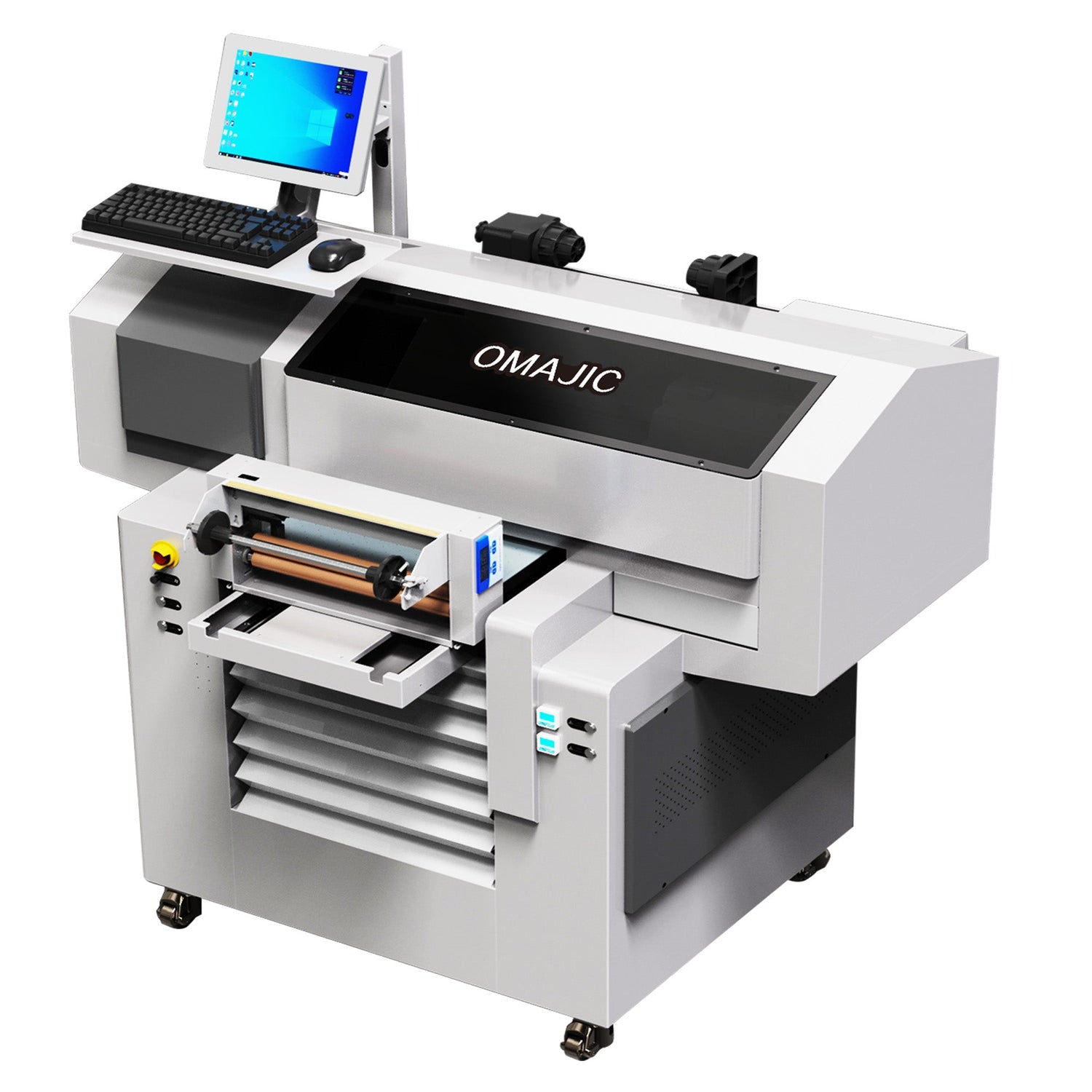
UV Flatbed (Direct-to-Object): The object sits on a flat vacuum bed. The print head travels over it, depositing UV-curable inks directly onto the surface — no transfer, no film, no secondary step. What you print is what you get, permanently bonded to the object. The machine prints on the object itself, so the object must be rigid, flat (within a defined height clearance), and able to withstand UV lamp exposure.
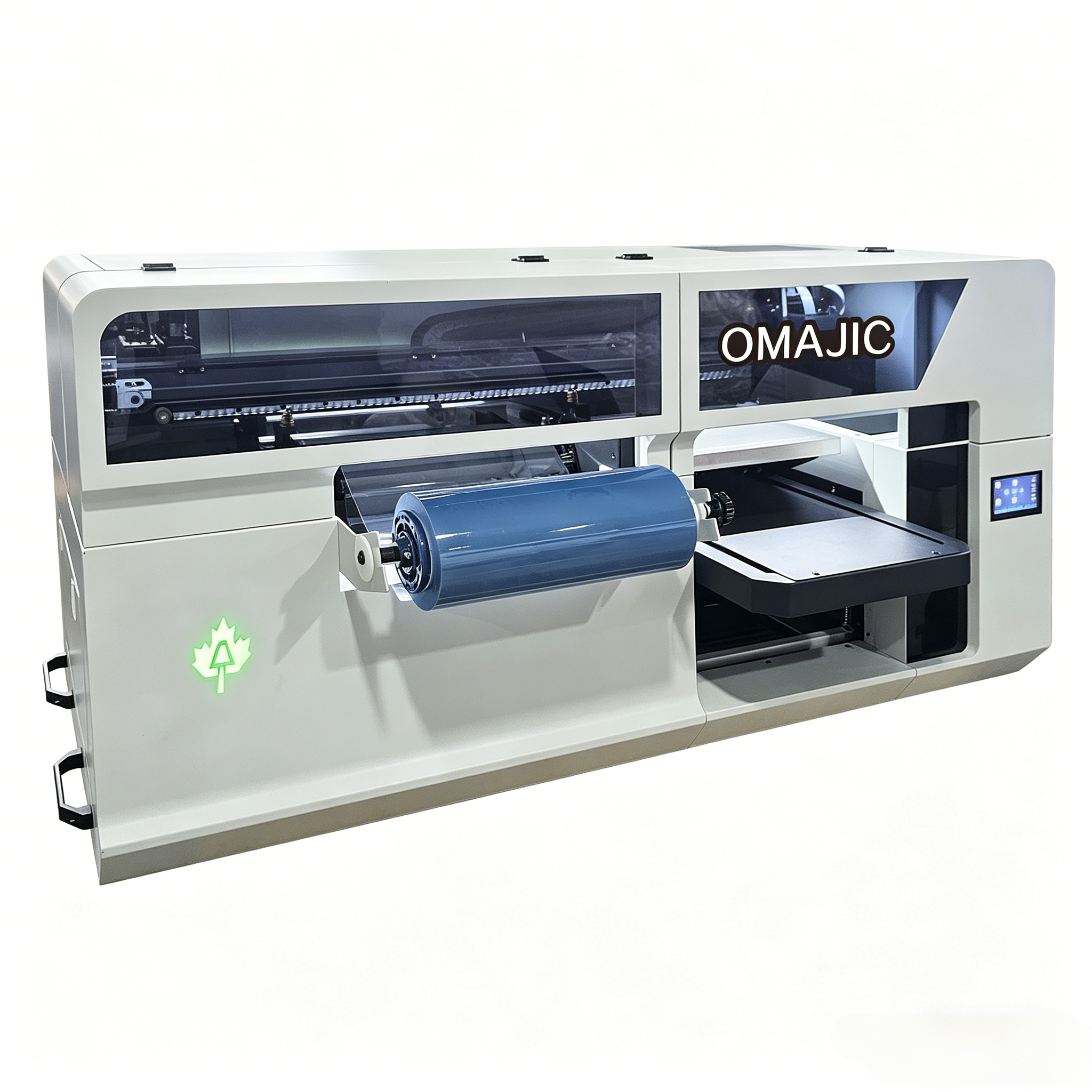
UV DTF (Print-and-Transfer): The design is printed in reverse onto Film A — a transparent PET transfer film — in the sequence White → Color → Varnish. Film B (a laminating adhesive film) is then bonded to Film A by the integrated laminator, and the combined film is applied by hand to any target surface. The printed transfer can go onto phone cases, tumblers, keychains, fabric, glass, metal, wood — essentially anything with a smooth enough surface to accept the adhesive.
UV Flatbed vs. UV DTF — Side-by-Side Breakdown
| Category | 🖨 UV Flatbed | ✨ UV DTF All-in-One |
|---|---|---|
| Entry Investment | $12,000–$40,000+ for entry-to-mid production models UV DTF Wins |
$8,000–$20,000 for capable all-in-one machines Lower Entry Cost |
| Substrate Types | Rigid flat objects: phone cases, acrylic, glass, wood, metal, ceramic tiles Best for Rigid Objects |
Any surface that accepts adhesive: curved, irregular, flexible, fabric, oversized Wider Versatility |
| Object Height Limit | Strictly limited by printhead clearance — typically 4–8 inches max. Taller objects cannot be printed. UV DTF Wins |
No height limit — the transfer film is applied by hand to any size or shape object No Limit |
| Print Workflow Steps | 1 step: place object → print → done Flatbed Wins |
3 steps: print Film A → laminate with Film B → hand-apply transfer More Labor |
| Labor Cost per Piece | Very low — operator loads objects and removes finished prints. Minimal handling. Flatbed Wins |
Moderate — application step requires operator time per piece. Labor cost increases with volume. Offset by lower machine cost |
| Minimum Order Feasibility | Efficient from 1 piece — no setup penalty for small runs Both Capable |
Efficient from 1 piece — film can be cut to any quantity Both Capable |
| Color Accuracy | Direct ink-on-substrate; color depends on substrate coating. White underbase often required for dark objects. Comparable |
Consistent output — white underbase is always part of the stack. Colors are vivid and substrate-independent. Comparable |
| Curved / Irregular Surfaces | Cannot print directly on curved surfaces — flatbed requires flat contact UV DTF Wins |
Transfers apply to any surface geometry — tumblers, helmets, bottles, keychains Major Advantage |
| Durability of Output | Direct UV cure on rigid substrates — extremely durable, scratch-resistant, no edge peeling Flatbed Wins |
Varnish top coat provides good durability; adhesive bond can be affected by heat, abrasion over time on flexible substrates Slight Flatbed Edge |
| Scalability | Scales well with jig-based multi-object printing; automated loading on high-end models Both Scale |
Scales via longer film runs; application step becomes bottleneck at very high volume Both Scale |
| Maintenance Complexity | UV lamp, printhead nozzle cleaning, vacuum bed maintenance Comparable |
UV lamp, printhead nozzles, laminating rollers, film path alignment Comparable |
Which Jobs Belong on Which Machine?
The clearest way to choose is to match your most frequent order types to the machine that handles them most efficiently.
🖨 Choose UV Flatbed If You Primarily Do…
- Custom phone case printing at volume (100+ cases/day)
- Acrylic award and trophy personalization
- Tile, glass, or ceramic surface decoration
- Wood sign and plaque customization
- Metal card or aluminum panel printing
- Corporate gift programs with standardized rigid items
- Photo products on flat rigid substrates (MDF, canvas board)
✨ Choose UV DTF If You Primarily Do…
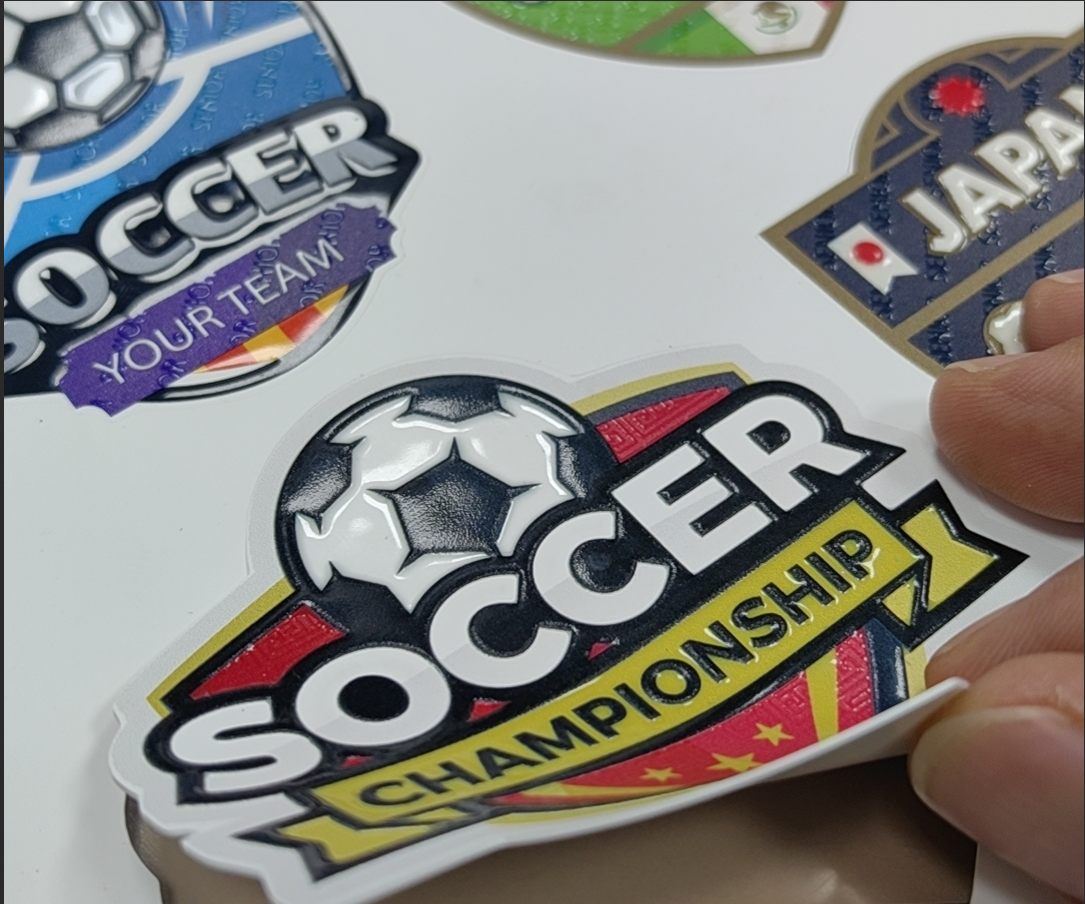
- Crystal sticker / domed label production for retail or wholesale
- Tumbler and drinkware decoration (curved surfaces)
- Food delivery packaging logos and branded stickers
- Irregular-shape logo patches for equipment or helmets
- Decal sheets for distributors or resellers
- Event signage and temporary branding applications
- Small-batch custom label production for brands and startups
Specific Scenarios — Which Machine Wins
High-Volume Phone Case Shop
You run 200–500 identical or custom phone cases per day. Buy UV Flatbed. One-step printing, jig-based loading, and zero application labor make it far more economical at this volume and substrate type.
Custom Label & Sticker Supplier
You supply branded crystal stickers and domed labels to retailers or direct to consumers. Buy UV DTF. Lower entry cost, faster setup per SKU, and output that works on any surface a customer needs.
Drinkware & Tumbler Decorator
Your core product is custom tumblers, mugs, and water bottles. Buy UV DTF. Flatbed cannot print curved surfaces — UV DTF transfers apply cleanly to any drinkware geometry.
Corporate Gift & Award Engraver Expanding to Color
You already engrave plaques and trophies and want to add full-color printing. Buy UV Flatbed. Direct printing on acrylic, wood, and metal — your existing substrates — with no extra application step.
Diversified Print Shop Entering Custom Market
You want to offer multiple product categories to maximize revenue per customer. Start with UV DTF (lower entry, wider versatility), then add UV Flatbed when phone case and rigid-object volume justifies a second machine.
E-commerce Brand Needing Custom Packaging
You ship products and want branded stickers, logo patches, and packaging labels. Buy UV DTF. The ability to print small batches on film and apply to irregular packaging shapes is exactly what UV DTF is designed for.
SHL Carries Both — and Helps You Choose the Right One
Most suppliers push whichever machine they have in stock. SHL carries both UV flatbed and UV DTF all-in-one machines — so our recommendation is based on your workflow, not our inventory position.
Free Line Consultation
Tell us your product mix and monthly volume. Our team designs a production line recommendation — at no charge, with no purchase commitment.
U.S. Warehouse Stock
Both UV flatbed and UV DTF machines ship from U.S. inventory. Delivery in days, not weeks. No sea freight surprises.
Operator Training Included
Every purchase includes machine setup training, RIP software configuration, and substrate-specific calibration for your product types.
Same-Day U.S. Support
English-speaking technicians during U.S. business hours. If something goes wrong in production, you reach a real person the same day — not a ticket queue.
Get a Free Custom Production Line Recommendation
Tell us about your shop and we'll match you to the right machine — or the right combination. No sales pressure. U.S.-based team responds within one business day.
We respond within 1 U.S. business day. Your information is never shared or sold.
FAQ: UV Flatbed vs. UV DTF

Leave a comment
This site is protected by hCaptcha and the hCaptcha Privacy Policy and Terms of Service apply.